Genomic Study Finds Key Genetic Factors for Disease Resistance

Greg Howard
14th March, 2025

Genomic Study Finds Key Genetic Factors for Disease Resistance

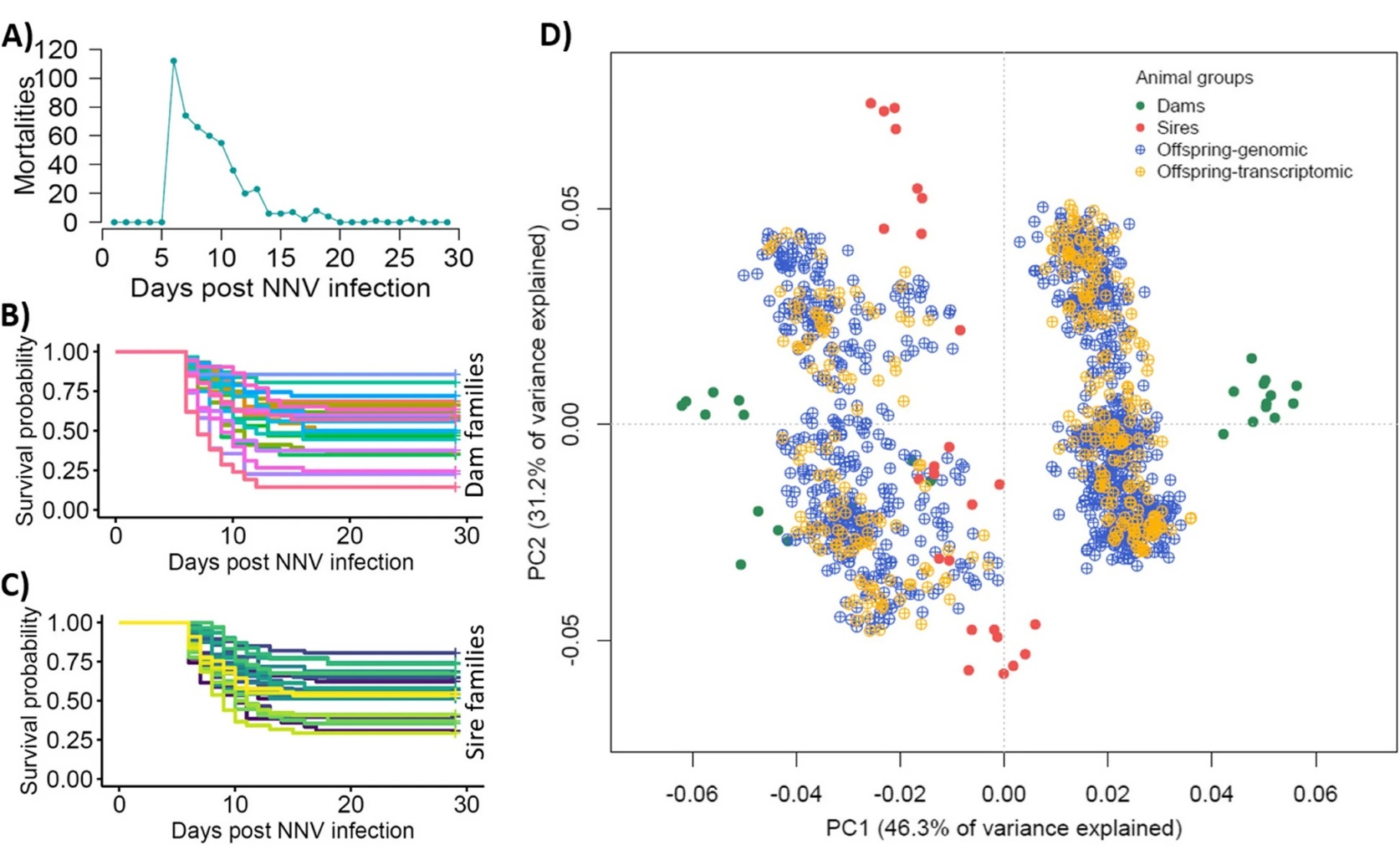
The viral nervous necrosis challenge in European sea bass (Dicentrarchus labrax) revealed substantial family-level variation in survival (14–86% across dam families, 29–81% across sire families) and genetic population structure reflecting Atlantic and Mediterranean origins, providing the phenotypic and genetic foundation for identifying a major disease resistance QTL.

Image adapted from: Mukiibi et al. / CC BY (Source)

Key Findings

  • Researchers in Europe discovered key genes in sea bass that help resist a deadly virus affecting fish farms
  • They identified specific DNA markers on chromosome 3 that increase survival rates by up to 90% during outbreaks
  • These findings enable selective breeding of disease-resistant sea bass, enhancing sustainable aquaculture practices
European sea bass is a cornerstone of European aquaculture, providing both economic benefits and cultural value. However, the industry faces significant challenges from diseases, particularly Viral Nervous Necrosis (VNN), which affects over 50 farmed and ecologically important fish species. VNN can cause high mortality rates, especially among the larval and juvenile stages, posing a threat to the sustainability of sea bass farming[2][3][4]. Understanding the genetic basis of resistance to VNN is crucial for developing effective breeding programs. Previous research has indicated that resistance to VNN in European sea bass has a heritable component, with heritability estimates ranging from moderate to high[2][3]. Studies have identified specific regions in the genome, known as quantitative trait loci (QTL), that are associated with resistance to the disease[2][3][4]. These findings have laid the groundwork for selective breeding programs aimed at enhancing disease resistance in farmed sea bass[5]. A recent study conducted by researchers at the University of Edinburgh has made significant strides in this area by pinpointing the exact genetic factors that confer resistance to VNN[1]. The research team estimated the heritability of VNN resistance to be approximately 0.40, indicating a strong genetic influence on the trait. They confirmed a major QTL on chromosome 3, which accounts for up to 38% of the genetic variance related to VNN resistance. Remarkably, sea bass carrying the resistant version of this QTL exhibited a 90% survival rate during VNN outbreaks. To uncover the underlying genetic mechanisms, the researchers conducted whole-genome resequencing, which allowed them to analyze the entire genetic makeup of the fish. This detailed analysis narrowed down the critical region of the QTL to a small segment containing several copies of interferon alpha inducible protein 27-like genes (IFI27L2A) and one copy of the IFI27L2 gene. These genes are known to play roles in the immune response, suggesting that they are key to the fish's ability to resist VNN. Further investigation using RNA sequencing revealed that the expression levels of two IFI27L2A genes and the IFI27L2 gene were closely linked to the QTL genotype. This means that the presence of certain genetic variants influences how these genes are expressed, thereby affecting the fish's resistance to the virus. Additionally, the study incorporated data on chromatin accessibility and histone modifications, which are indicators of how genes are regulated. This integrative approach helped identify two specific single nucleotide polymorphisms (SNPs) in active regulatory regions of the IFI27L2A and IFI27L2 genes. One of these SNPs, identified as CHR3:10,077,301, was found to be particularly significant. The SNP variant CHR3:10,077,301 was more prevalent in Eastern Mediterranean sea bass populations, which are known to exhibit higher resistance to VNN compared to their West Mediterranean and Atlantic counterparts. This variant is believed to enhance the binding of transcription factors, proteins that help regulate gene expression, thereby increasing the expression of the IFI27L2 and IFI27L2A genes. As a result, fish with this SNP variant are better equipped to manage the symptoms of VNN, leading to higher survival rates. This discovery is a breakthrough in the field of aquaculture genetics. By identifying a specific genetic mutation that confers resistance to VNN, the University of Edinburgh's study provides a clear target for marker-assisted selection. This technique allows breeders to select fish with the beneficial SNP variant, thereby increasing the proportion of resistant individuals in farmed populations. Such advancements not only improve the health and survival of farmed sea bass but also contribute to the overall sustainability of aquaculture practices by reducing the reliance on therapeutic treatments and minimizing economic losses due to disease outbreaks[2][3][4]. Moreover, the identification of the IFI27L2 and IFI27L2A genes as key players in disease resistance opens new avenues for biotechnological interventions. These genes are part of the interferon pathway, a critical component of the immune system's response to viral infections in many organisms, including fish, chickens, and humans. Understanding how these genes function and interact with the virus can lead to the development of novel strategies to enhance disease resistance not only in European sea bass but potentially in other susceptible fish species as well[4]. Incorporating these genetic insights into breeding programs represents a significant advancement from earlier efforts that relied primarily on phenotypic selection and less precise genetic information[5]. The use of whole-genome resequencing and integrative genomics allows for a more targeted and efficient approach to improving disease resistance. This modernized strategy aligns with the ongoing domestication and genetic improvement of European sea bass, which has rapidly evolved with the advent of genomic tools[5]. As the aquaculture industry continues to grow, the ability to produce disease-resistant fish through genetic means will be increasingly important. Studies like the one from the University of Edinburgh demonstrate the potential of genomic research to solve real-world problems in food production and sustainability. By leveraging genetic knowledge, the industry can enhance fish welfare, reduce economic losses, and ensure a stable supply of this valuable species for years to come[2][3][4][5].

HealthGeneticsMarine Biology

References

Main Study

1) Integrated functional genomic analysis identifies regulatory variants underlying a major QTL for disease resistance in European sea bass

Published 11th March, 2025

https://doi.org/10.1186/s12915-025-02180-4


Related Studies

2) Genome-wide association and genomic prediction of resistance to viral nervous necrosis in European sea bass (Dicentrarchus labrax) using RAD sequencing.

https://doi.org/10.1186/s12711-018-0401-2


3) Genetic Basis for Resistance Against Viral Nervous Necrosis: GWAS and Potential of Genomic Prediction Explored in Farmed European Sea Bass (Dicentrarchus labrax).

https://doi.org/10.3389/fgene.2022.804584


4) Whole-genome sequencing identifies interferon-induced protein IFI6/IFI27-like as a strong candidate gene for VNN resistance in European sea bass.

https://doi.org/10.1186/s12711-023-00805-2


5) The European sea bass: a key marine fish model in the wild and in aquaculture.

https://doi.org/10.1111/age.12779


Related Articles

An unhandled error has occurred. Reload 🗙