Blocking a Kidney Receptor Protects Against Kidney Disease

Greg Howard
11th March, 2025

Blocking a Kidney Receptor Protects Against Kidney Disease

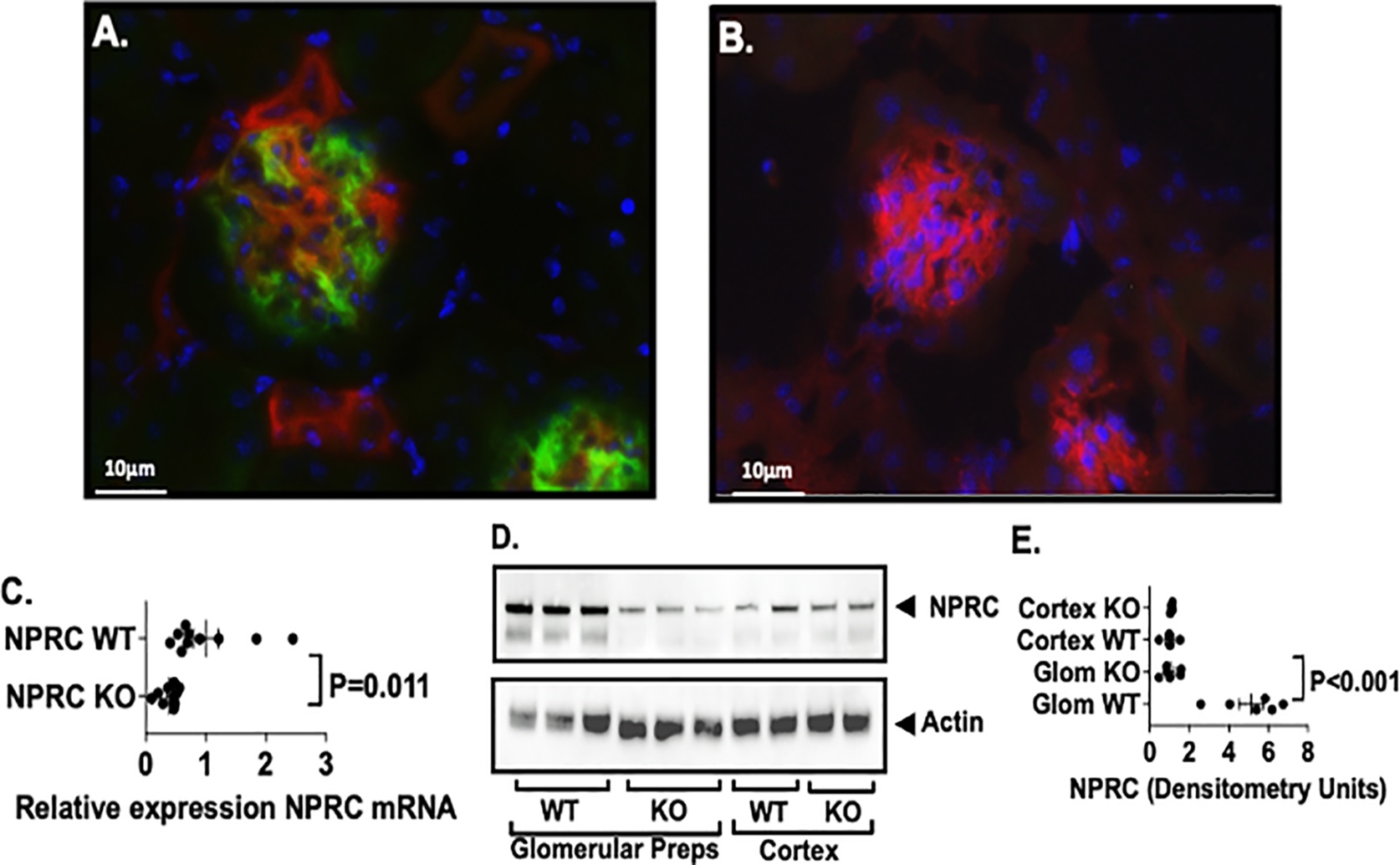
Doxycycline-induced Cre recombinase expression in triple transgenic mice (NPHS2-rtTA, tetO-Cre, td-Tomato) resulted in podocyte-specific green fluorescence (a), confirmed by significantly reduced NPRC mRNA (c) and protein (d, e) in glomerular preparations from knockout mice compared to wild-type controls, demonstrating efficient podocyte-targeted NPRC deletion in the focal segmental glomerulosclerosis model.

Image adapted from: Wang et al. / CC BY (Source)

Key Findings

  • Researchers at Duke University found that certain hormones protect key kidney cells from damage in a common kidney disease
  • They discovered that blocking the NPRC receptor boosts these hormones' protective effects, reducing kidney scarring and protein leakage in mice
  • This breakthrough suggests a new potential treatment approach for managing and slowing the progression of severe kidney disease
Focal segmental glomerulosclerosis (FSGS) is a major cause of kidney disease globally, characterized by scarring in the kidney's filtering units called glomeruli[2]. Understanding and treating FSGS is challenging due to its varied causes and complex pathology. Recent research from Duke University Medical Center[1] offers promising insights into new therapeutic approaches by exploring the role of natriuretic peptides (NPs) in protecting kidney cells known as podocytes. Podocytes are specialized cells that wrap around the glomeruli and play a crucial role in filtering blood. Damage to these cells can lead to protein leakage into the urine, a condition known as albuminuria, which is a common feature of FSGS. The study by Duke University investigators focused on how NPs interact with podocytes to prevent their death, a process called apoptosis. NPs, including atrial NP and C-type NP, are hormones that help regulate blood pressure and fluid balance. The researchers found that both types of NPs can inhibit podocyte apoptosis in cultured cells. However, their protective effects are significantly reduced when the NP clearance receptor (NPRC) is present. NPRC is highly expressed in podocytes and acts to remove NPs, thereby limiting their beneficial effects. Interestingly, the study revealed that atrial NP is more effective than CNP in preventing podocyte apoptosis. To further understand the potential therapeutic benefits, researchers created a podocyte-specific knockout of NPRC in mice. These genetically modified mice showed a notable reduction in albuminuria, glomerular sclerosis (a hallmark of FSGS), and inflammation in the kidney tissue when subjected to a mouse model of FSGS. This indicates that inhibiting NPRC can enhance the protective effects of NPs, offering a new avenue for treating FSGS. The implications of this study are significant when considered alongside previous research. For instance, earlier studies have classified FSGS into different categories based on underlying causes, such as genetic mutations, adaptive responses to increased kidney workload, and conditions associated with specific populations, like APOL1 risk allele-associated FSGS in individuals of sub-Saharan ancestry[2]. Additionally, research has highlighted the central role of podocytes in glomerular diseases, emphasizing that maintaining podocyte health is key to preventing kidney damage and progression to end-stage kidney disease[3]. Moreover, advancements over the past two decades have shown that primary FSGS, once thought to be unresponsive to treatments like prednisone or other immunosuppressive agents, can actually respond to such therapies, improving patient outcomes[4]. The current study builds on these findings by suggesting that targeting NPRC to enhance NP activity could be another effective strategy to protect podocytes and slow disease progression. The methods used in the Duke University study involved both in vitro and in vivo experiments. Cultured podocytes were treated with atrial NP and CNP to observe their effects on cell survival. Additionally, genetic manipulation was employed to delete NPRC specifically in podocytes of mice, allowing researchers to assess the impact on kidney function and disease markers in a living organism. The comprehensive approach provided robust evidence supporting the potential of NPRC inhibition as a therapeutic target. Integrating these findings with existing knowledge, it becomes clear that podocyte preservation is a critical factor in managing glomerular diseases like FSGS. The identification of NPRC as a negative regulator of NP's protective effects opens up new possibilities for treatment. By inhibiting NPRC, it may be possible to sustain higher levels of NPs in the kidney, thereby enhancing their ability to prevent podocyte apoptosis and reduce kidney scarring[2][3]. Furthermore, this research aligns with the broader understanding of podocytopathies, where various glomerular diseases are now seen through the lens of podocyte biology. Preserving podocyte function and preventing their loss are essential goals in reducing the progression of kidney diseases and improving patient prognosis[3]. The Duke University study not only reinforces the importance of podocytes in kidney health but also provides a specific molecular target that could be manipulated to achieve better clinical outcomes. In conclusion, the study from Duke University Medical Center advances our knowledge of FSGS by highlighting the protective role of natriuretic peptides in podocyte health and identifying NPRC as a potential therapeutic target. By building on previous research that underscores the complexity of FSGS and the pivotal role of podocytes, this work paves the way for developing more effective treatments that could significantly improve the lives of those affected by this challenging kidney disease.

MedicineHealthGenetics

References

Main Study

1) Podocyte specific knockout of the natriuretic peptide clearance receptor is podocyte protective in focal segmental glomerulosclerosis

Published 10th March, 2025

https://doi.org/10.1371/journal.pone.0319424


Related Studies

2) Focal Segmental Glomerulosclerosis.

https://doi.org/10.2215/CJN.05960616


3) The spectrum of podocytopathies: a unifying view of glomerular diseases.

Journal: Kidney international, Issue: Vol 71, Issue 12, Jun 2007


4) Treatment of primary FSGS in adults.

https://doi.org/10.1681/ASN.2012040389


Related Articles

An unhandled error has occurred. Reload 🗙