Comprehensive Study of RNA Roles in Rheumatoid Arthritis: From Data to Lab Tests

Jenn Hoskins
20th February, 2025

Comprehensive Study of RNA Roles in Rheumatoid Arthritis: From Data to Lab Tests

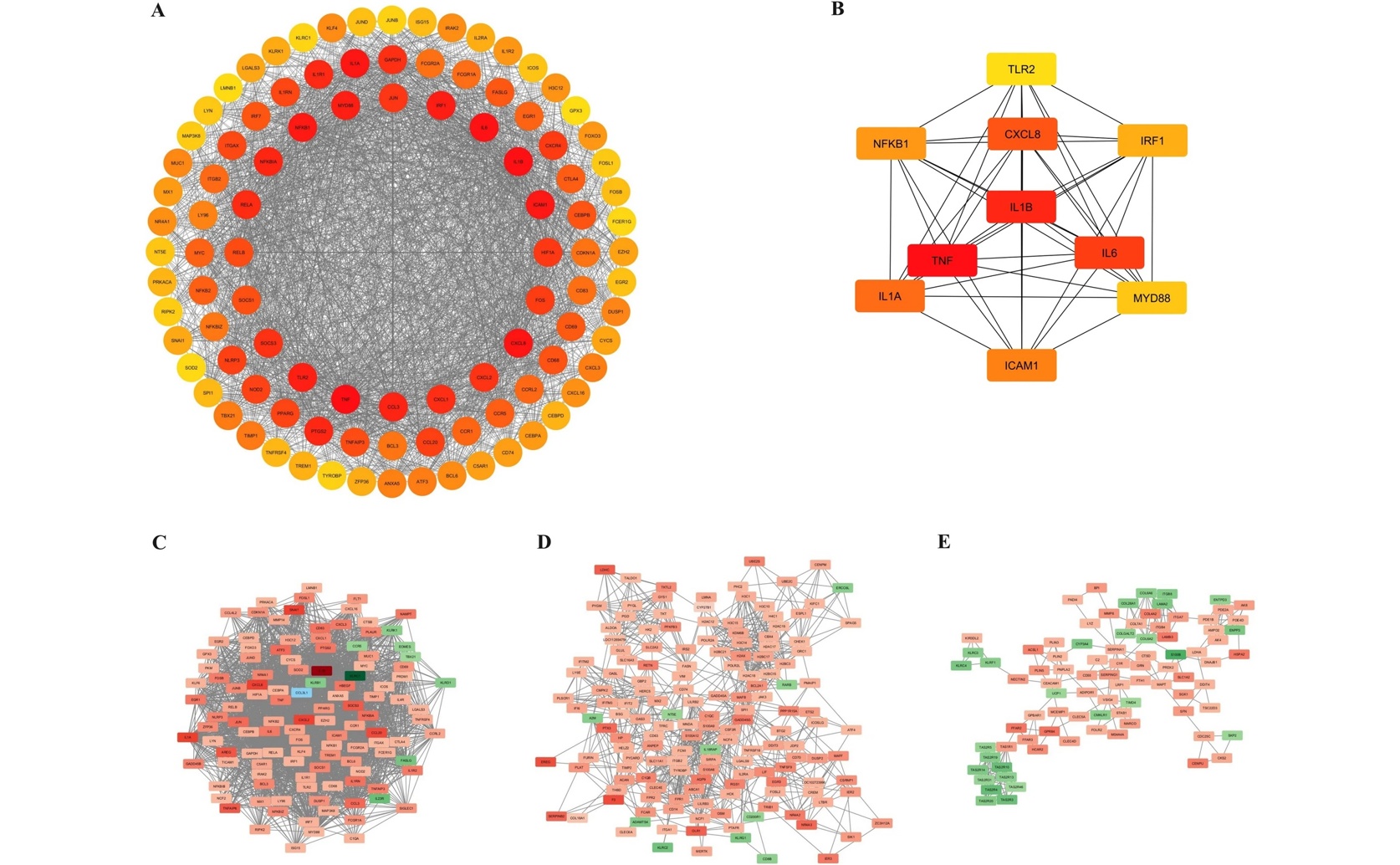
Analysis of the protein-protein interaction network for differentially expressed genes in rheumatoid arthritis revealed central hub genes (a, b) and key functional submodules (c–e), pinpointing the core protein-coding genes involved in the disease's molecular pathways.

Image adapted from: Golestanifar et al. / CC BY (Source)

Key Findings

  • Researchers at Hormozgan University discovered three specific RNA molecules are elevated in rheumatoid arthritis (RA) patients
  • These RNA markers are connected to increased inflammation and immune changes, enhancing understanding of RA
  • One RNA, SNHG3, shows strong promise as a reliable tool for diagnosing rheumatoid arthritis
Rheumatoid arthritis (RA) is a chronic autoimmune disease that leads to joint inflammation and progressive tissue damage, significantly impacting patients' quality of life. Early diagnosis and personalized treatment are crucial for managing RA effectively and preventing long-term disability. Despite advances in therapeutic options, many patients do not respond adequately to existing treatments, highlighting the need for new diagnostic markers and targeted therapies[2]. Recent research from Hormozgan University of Medical Sciences[1] has focused on the role of long non-coding RNAs (lncRNAs) in RA. lncRNAs are a type of RNA that do not code for proteins but are involved in regulating various cellular processes, including immune responses and inflammation. Understanding how these lncRNAs function could lead to better diagnostic tools and novel treatment strategies for RA. The study utilized data from two Gene Expression Omnibus (GEO) datasets, GSE169082 and GSE124373, to identify genes that are differentially expressed in the peripheral blood mononuclear cells of RA patients compared to healthy individuals. By analyzing these datasets, the researchers aimed to uncover specific lncRNAs that play a role in the disease's progression. Functional enrichment and pathway analyses were performed to understand the biological processes and pathways affected by these genes. Three key lncRNAs—LINC00963, SNHG15, and SNHG3—were identified as significantly up-regulated in RA patients. These findings were further validated using real-time PCR in patient samples, confirming their increased expression levels. The study also constructed protein-protein interaction networks and competing endogenous RNA (ceRNA) networks to explore how these lncRNAs interact with other molecular components in the body. The up-regulation of LINC00963, SNHG15, and SNHG3 was found to correlate with inflammatory markers and changes in immune cell profiles, suggesting that these lncRNAs are actively involved in the inflammatory processes characteristic of RA. Among them, SNHG3 showed particularly high diagnostic potential, with a Receiver Operating Characteristic (ROC) analysis indicating an area under the curve (AUC) of 84.3%. This suggests that SNHG3 could serve as a reliable biomarker for diagnosing RA. Pathway enrichment analysis revealed that these lncRNAs are associated with immune activation and disrupted autophagic processes. Autophagy is a cellular mechanism involved in the degradation and recycling of cellular components, and its disruption can contribute to the persistence of inflammation and tissue damage in RA[3][4]. By influencing these pathways, the identified lncRNAs may help sustain the inflammatory environment that drives RA progression. The integration of computational analysis with experimental validation in this study provides a robust approach to identifying potential biomarkers and therapeutic targets. By pinpointing specific lncRNAs involved in RA, the research lays the groundwork for precision medicine strategies. These strategies aim to tailor treatments based on individual molecular profiles, potentially leading to more effective and personalized management of RA[2]. Previous studies have highlighted the importance of non-coding RNAs in RA. For instance, research has shown that various miRNAs and lncRNAs regulate immune and inflammatory pathways, such as the NF-κB signaling pathway, which is crucial for activating cells involved in joint inflammation and damage[3]. Additionally, dysregulation of the immune response, influenced by these non-coding RNAs, is a key factor in the pathogenesis of RA[4]. The current study builds on these findings by identifying specific lncRNAs that could serve as both diagnostic markers and therapeutic targets, thereby expanding our understanding of the molecular mechanisms underlying RA. The identification of LINC00963, SNHG15, and SNHG3 as significant players in RA not only reinforces the role of non-coding RNAs in the disease but also offers new avenues for research and treatment. These lncRNAs could potentially be targeted to modulate the immune response and reduce inflammation, addressing some of the unmet needs in RA management[2]. In conclusion, the study from Hormozgan University of Medical Sciences advances our knowledge of RA by identifying novel lncRNAs that are significantly associated with the disease. By leveraging both computational and experimental methods, the research highlights the potential of these lncRNAs as diagnostic biomarkers and therapeutic targets. This approach underscores the importance of integrating molecular insights into clinical practice, paving the way for more effective and personalized treatments for RA patients.

MedicineHealthGenetics

References

Main Study

1) Integrative analysis of lncRNAs in rheumatoid arthritis: from bioinformatics to experimental validation.

Published 19th February, 2025

https://doi.org/10.1007/s10238-025-01589-z


Related Studies


3) Noncoding RNAs in rheumatoid arthritis: modulators of the NF-κB signaling pathway and therapeutic implications.

https://doi.org/10.3389/fimmu.2024.1486476


4) Dysregulation of non-coding RNAs in Rheumatoid arthritis.

https://doi.org/10.1016/j.biopha.2020.110617


Related Articles

An unhandled error has occurred. Reload 🗙