Genetic Changes in Staph Bacteria Cause Resistance to Powerful Antimicrobials

Jim Crocker
9th March, 2025

Genetic Changes in Staph Bacteria Cause Resistance to Powerful Antimicrobials

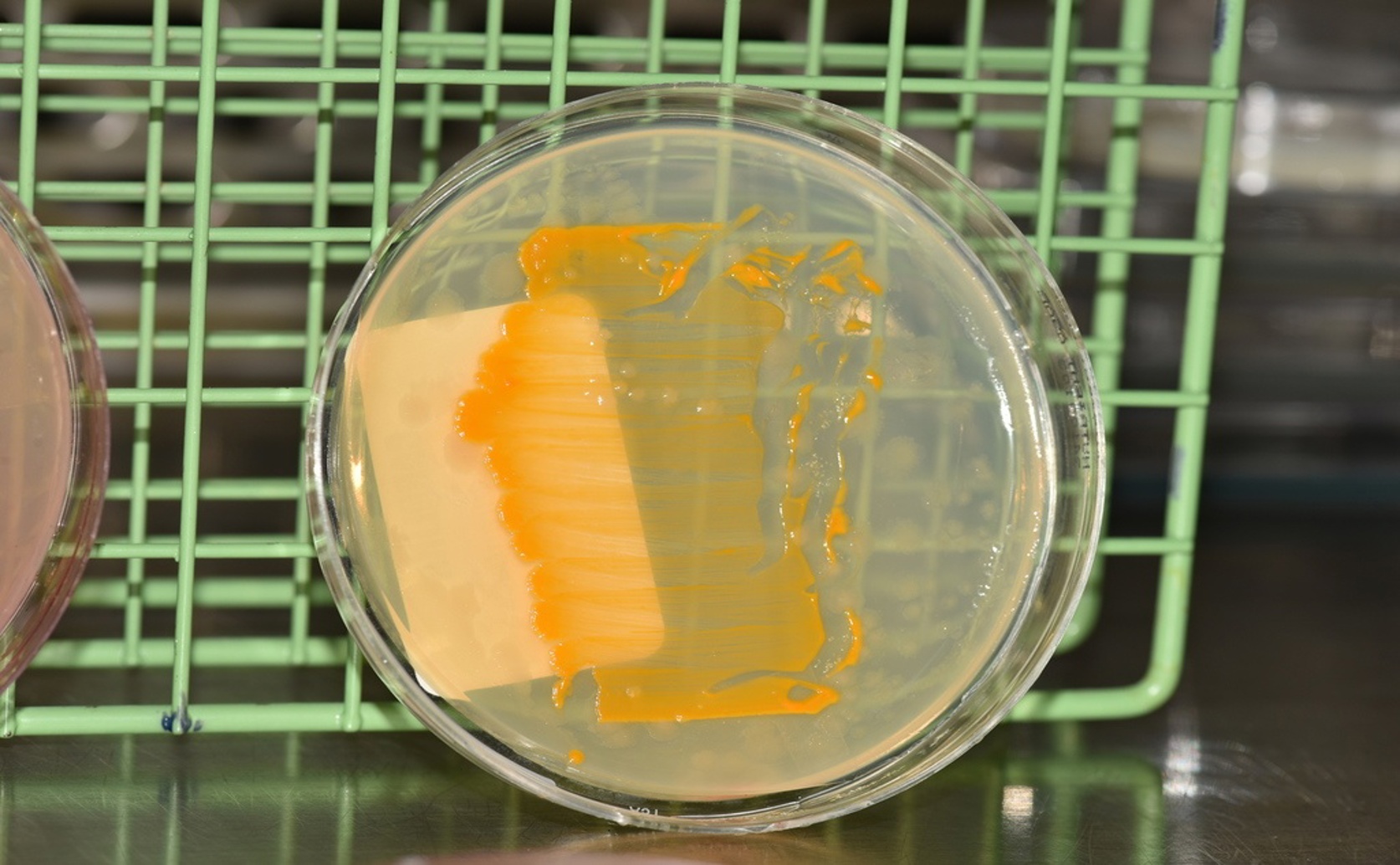
Staph aureus (Staphylococcus aureus)

Photo adapted from: Alan Rockefeller / CC BY (Source)

Key Findings

  • Researchers at the National Institutes of Health and Texas A&M found how S. aureus survives a toxin produced by P. aeruginosa
  • S. aureus develops mutations in the CodY gene, which help it withstand the toxic substance
  • These genetic changes reduce the bacteria’s metabolism and strengthen its stress defenses, enhancing its survival in infections
Bacteria often live in complex communities where different species interact, influencing each other's survival and evolution. Understanding how these interactions affect bacterial adaptation is crucial, especially as many bacteria are involved in infections that are difficult to treat. A recent study conducted by researchers at the National Institutes of Health and Texas A&M University explores how Staphylococcus aureus, a common pathogen, adapts to an antimicrobial substance produced by Pseudomonas aeruginosa, another pathogen frequently found in chronic infections[1]. Bacterial communities are highly diverse and dynamic, spanning environments from soil particles to the human body[2][3]. In these communities, bacteria compete for resources and space, developing various strategies to survive. Previous research has shown that the interactions within these communities can either help or hinder the evolution of individual species, depending on the ecological opportunities available[2]. Additionally, bacteria use multiple mechanisms to compete with each other, which can shape the development and function of their communities[3]. In the study, the focus is on how S. aureus adapts to pyocyanin, a toxic compound produced by P. aeruginosa. Pyocyanin acts as an antimicrobial agent, posing a significant threat to the survival of S. aureus in environments where both bacteria coexist, such as in wound and lung infections. The researchers used experimental evolution, a method where bacteria are subjected to specific conditions over multiple generations, to identify mutations that allow S. aureus to tolerate pyocyanin. The key finding of the study is the identification of mutations in a global transcriptional regulator called CodY. These mutations enable S. aureus to survive better in the presence of pyocyanin by altering its gene expression. Specifically, the CodY mutant strain showed enhanced survival not only when exposed to purified pyocyanin but also when co-cultured with P. aeruginosa. This indicates that the ability to tolerate pyocyanin provides a significant advantage to S. aureus in competitive environments. The study builds on previous findings that community context significantly influences bacterial evolution[2]. By focusing on the interaction between S. aureus and P. aeruginosa, the researchers demonstrate how specific interspecies interactions can drive the evolution of defensive strategies. The CodY mutant’s ability to tolerate pyocyanin is achieved through two main mechanisms. First, the mutant downregulates its core metabolism, particularly genes involved in translation, which reduces its overall energy consumption and makes it less susceptible to the disruptive effects of pyocyanin. This metabolic suppression is similar to strategies observed in other bacterial communities where reducing metabolic activity can enhance survival under stress[2]. Second, the CodY mutant upregulates oxidative stress response pathways more extensively than the wild type. While both strains activate these pathways in response to pyocyanin, the mutant’s heightened response includes the overexpression of catalase, an enzyme that breaks down hydrogen peroxide, a reactive oxygen species. This enhanced oxidative stress response is crucial for neutralizing the damaging effects of pyocyanin, ensuring better survival of the mutant strain. The importance of catalase in conferring pyocyanin tolerance was further validated by experiments showing that the absence of catalase eliminated the mutant’s tolerance, while overexpressing catalase in the wild-type strain provided similar protection. This finding highlights how specific genetic changes can equip bacteria with the tools needed to withstand hostile interactions within their communities. By elucidating the role of CodY and the associated genetic adaptations, the study provides new insights into how bacteria evolve in response to interspecies antagonism. It underscores the complexity of bacterial interactions and the sophisticated mechanisms that bacteria employ to survive in competitive environments. These insights are particularly relevant for understanding persistent infections, where multiple bacterial species coexist and interact, often making treatment more challenging. The research also ties into broader themes in microbial ecology, where the diversity and interactions within communities play a pivotal role in shaping evolutionary outcomes[2][3]. Understanding these dynamics can inform strategies to disrupt harmful bacterial communities or promote beneficial ones, with implications for healthcare, agriculture, and environmental management. Overall, the study by the National Institutes of Health and Texas A&M University advances our understanding of bacterial adaptation in multispecies communities. By revealing how S. aureus evolves to tolerate a specific antimicrobial produced by a competitor, it highlights the intricate balance of competition and cooperation that governs microbial ecosystems. This knowledge not only contributes to basic science but also has potential applications in developing new approaches to manage bacterial infections and control harmful bacterial populations.

MedicineGeneticsBiochem

References

Main Study

1) Mutations in the Staphylococcus aureus Global Regulator CodY confer tolerance to an interspecies redox-active antimicrobial

Published 7th March, 2025

https://doi.org/10.1371/journal.pgen.1011610


Related Studies

2) Bacterial adaptation is constrained in complex communities.

https://doi.org/10.1038/s41467-020-14570-z


3) Multifaceted Interfaces of Bacterial Competition.

https://doi.org/10.1128/JB.00275-16


Related Articles

An unhandled error has occurred. Reload 🗙