How Gut Bacteria Genes Help Them Live and Stick in the Intestine

Jenn Hoskins
12th March, 2025

How Gut Bacteria Genes Help Them Live and Stick in the Intestine

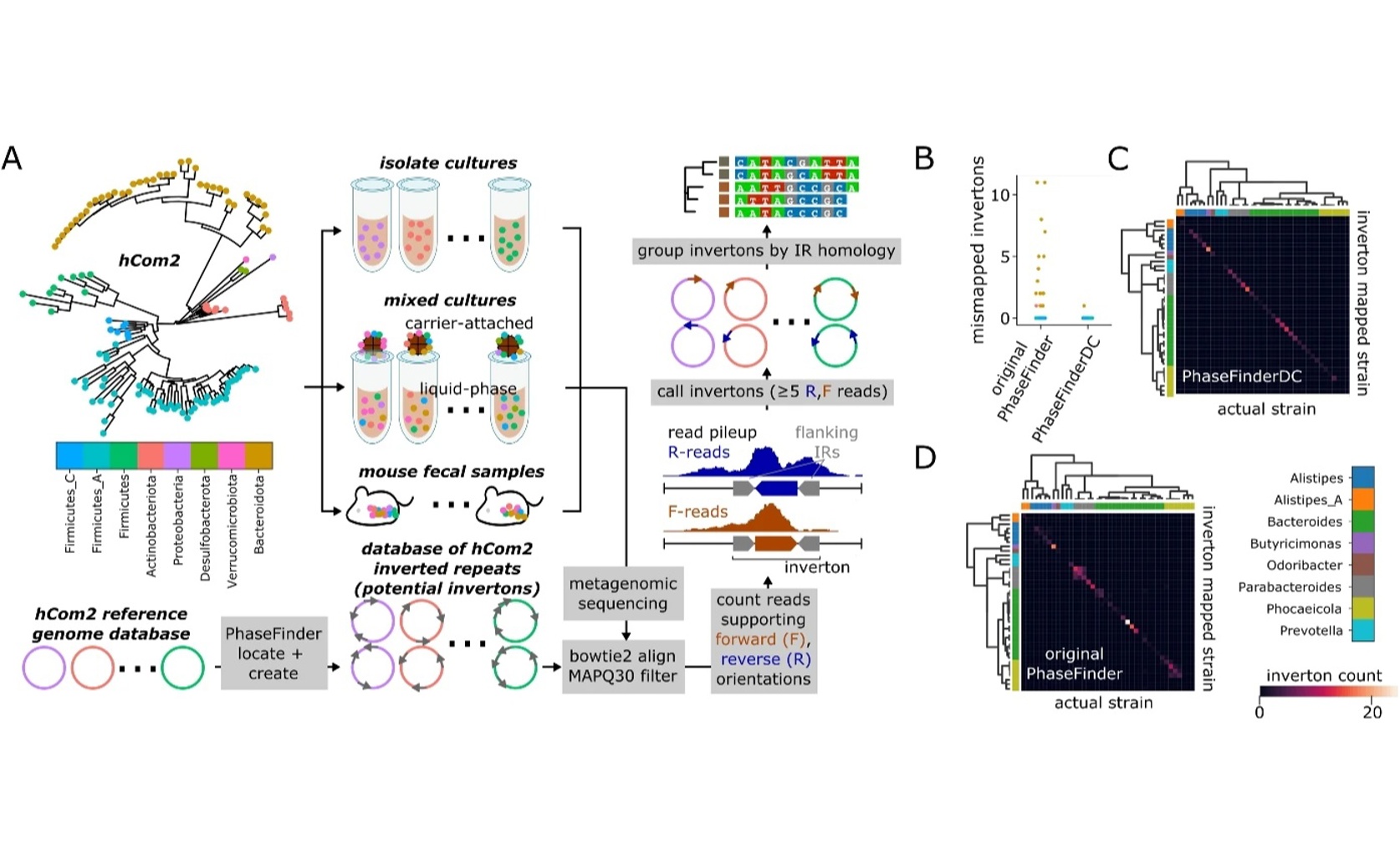
PhaseFinderDC, a modified bioinformatic workflow incorporating MAPQ filtering to remove ambiguously aligned reads, achieved near-perfect precision (556/557 correct calls) in detecting invertons from metagenomic data of a defined gut community containing closely related strains, substantially outperforming the original PhaseFinder algorithm (370/439 correct calls), particularly among Bacteroides species where mismapping between phylogenetically related strains was most problematic.

Image adapted from: Jin et al. / CC BY (Source)

Key Findings

  • The Gladstone Institutes in San Francisco developed a new tool to study gut bacteria in the human intestine
  • They discovered that most gut bacteria have DNA segments called invertons that flip to help bacteria adapt to different environments
  • These DNA flips change how bacteria stick to the gut walls and colonize, enhancing their survival and health
Understanding how gut bacteria adapt and thrive within the human intestine is crucial for comprehending overall health and disease. The human gut hosts a vast and diverse community of microorganisms, known as the microbiota, which play essential roles in digestion, immune function, and protecting against pathogens. However, the mechanisms by which these bacteria adapt to changing environments within the gut remain not fully understood. A recent study conducted by the Gladstone Institutes in San Francisco introduced a novel approach to unravel these adaptive mechanisms[1]. The research focused on genetic elements called invertons, which bacteria use to generate diversity within their populations. Invertons are segments of DNA that can invert their orientation, leading to changes in gene expression. This ability allows bacteria to modify their surface structures, aiding in processes like adhesion to the intestinal walls and colonization of new environments. Traditional methods of studying gut bacteria often involve isolating and culturing individual strains, which can be time-consuming and may not capture the full complexity of the gut microbiome. Metagenomic sequencing, which analyzes genetic material directly from environmental samples, offers a way to study these communities without the need for isolation. However, accurately identifying invertons using metagenomic data has been challenging due to ambiguities in how sequencing reads align to the bacterial genomes. To address this, the Gladstone Institutes developed a customized bioinformatic tool named PhaseFinderDC. This tool is designed to detect and track invertons within metagenomic datasets with higher accuracy. The researchers applied PhaseFinderDC to a well-defined yet complex gut community called hCom2, analyzing samples from both laboratory (in vitro) and living organisms (in vivo) environments over time. Their analysis revealed that most hCom2 strains possess invertons, and the orientation of these invertons changes in response to different environmental conditions. These changes are not random but are statistically associated with specific growth environments, indicating that invertons play a crucial role in bacterial adaptation. The study also employed motif enrichment techniques to identify potential promoters that control inverton flipping. Promoters are regions of DNA that initiate gene transcription, and their identification helps predict which genes are regulated by the inversion of invertons. This analysis suggested that inverton flipping influences genes involved in intestinal colonization and surface adhesion, key factors that allow bacteria to establish and maintain their presence in the gut. Additionally, the researchers identified candidate invertase enzymes, which may regulate the flipping of specific invertons, adding another layer to our understanding of how these genetic switches operate. These findings build upon previous research that has explored the evolutionary dynamics of gut microbiota. For instance, earlier studies have shown that gut bacteria evolve through mechanisms like mutation sweeps and strain replacement over time[2]. The current study complements these findings by demonstrating how invertons contribute to rapid genetic changes within bacterial populations, allowing for swift adaptation without the need for complete strain replacement. This mechanism aligns with the observation that resident bacterial strains often acquire a limited number of significant genetic changes to adapt to their environment[2]. Furthermore, the study ties into research on the spatial organization of gut microbiota[3][4]. Understanding where bacteria reside within the gut and how they interact spatially is essential for comprehending their functional roles. The ability of bacteria to modify their surface structures through invertons likely influences their spatial distribution and interactions with the host’s intestinal cells. By regulating surface adhesion, bacteria can position themselves optimally within the gut environment, enhancing their ability to colonize and persist. Another relevant study highlighted how certain gut bacteria, like Bacteroides fragilis, generate surface diversity to evade the host immune response[5]. The production of multiple distinct surface polysaccharides through genetic mechanisms similar to invertons allows these bacteria to avoid being targeted by the host's immune system continuously. The current research extends this understanding by showing that invertons not only help in immune evasion but also play a role in adapting to various environmental conditions within the gut, such as changes in nutrient availability or competing microbial species. The ability to track inverton dynamics in complex communities like the human gut microbiome opens new avenues for exploring how bacteria adapt on human-relevant timescales. This is particularly important given that the gut environment is dynamic, with fluctuations in diet, medication, and other factors influencing microbial communities. By using PhaseFinderDC, researchers can monitor how invertons respond to these changes, providing insights into the genetic strategies bacteria employ to maintain their ecological niches. In summary, the study from the Gladstone Institutes advances our understanding of the genetic mechanisms underlying gut bacterial adaptation. By developing a specialized tool to detect invertons and applying it to a complex gut community, the researchers demonstrated how these genetic elements facilitate rapid and environment-specific changes in bacterial populations. This work not only builds on previous findings related to microbial evolution and spatial organization but also highlights the intricate ways in which gut bacteria interact with their hosts and adapt to their ever-changing environment[2][3][4][5]. These insights are crucial for developing targeted therapies and interventions aimed at modulating the gut microbiota for improved health outcomes.

HealthGenetics

References

Main Study

1) Comprehensive profiling of genomic invertons in defined gut microbial community reveals associations with intestinal colonization and surface adhesion

Published 10th March, 2025

https://doi.org/10.1186/s40168-025-02052-7


Related Studies

2) Evolutionary dynamics of bacteria in the gut microbiome within and across hosts.

https://doi.org/10.1371/journal.pbio.3000102


3) The Gut Microbiome: Connecting Spatial Organization to Function.

https://doi.org/10.1016/j.chom.2017.03.010


4) The gut microbiota and its biogeography.

https://doi.org/10.1038/s41579-023-00969-0


5) Extensive surface diversity of a commensal microorganism by multiple DNA inversions.

Journal: Nature, Issue: Vol 414, Issue 6863, Nov 2001


Related Articles

An unhandled error has occurred. Reload 🗙