Gene editing improves soybean oil quality

Jim Crocker
16th February, 2026

Gene editing improves soybean oil quality

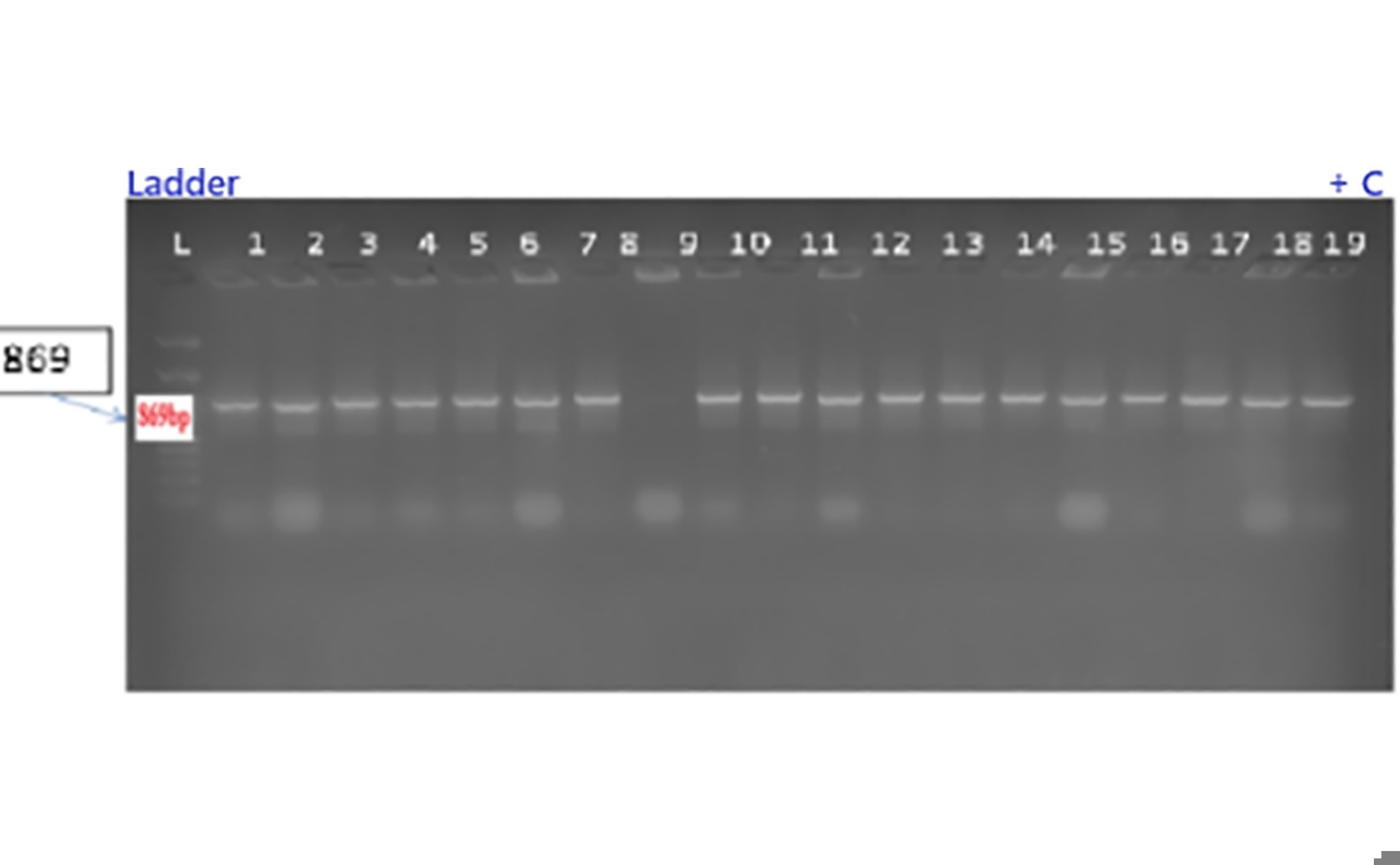
Colony PCR analysis confirmed the successful cloning of the Cas9 gene construct into E. coli DH5α, a critical preparatory step for editing the soybean FAD2 gene to enhance oil quality.

Image adapted from: Rathod et al. / CC BY (Source)

Key Findings

  • Researchers successfully used CRISPR gene editing in Indian soybean variety GJS-3 to improve its oil quality
  • Editing the FAD2 gene increased oleic acid content to 33–34% from 22%, reducing linoleic acid levels
  • The edited soybean lines were transgene-free, meaning they do not contain foreign DNA
Soybean oil is a widely used vegetable oil, but conventional varieties have drawbacks related to their fatty acid composition. Specifically, they contain a high proportion of linoleic acid, which makes the oil prone to oxidation – essentially, it goes rancid quickly. This instability often requires a process called hydrogenation to improve shelf life, but hydrogenation can create unhealthy trans fats. Improving the oil’s quality and stability is therefore a significant goal for soybean breeders.[2] Researchers at Junagadh Agricultural University and Jouf University[1] have now successfully used the CRISPR/Cas9 gene editing technique to enhance the oleic acid content of an Indian soybean variety, Gujarat Junagadh Soybean-3 (GJS-3). Oleic acid is a healthier, more stable monounsaturated fat, and increasing its levels in soybean oil would reduce the need for hydrogenation and improve the nutritional profile of the oil. The key to this improvement lies in a gene called fatty acid desaturase-2 (FAD2). This enzyme controls a step in the production of linoleic acid. By reducing the activity of FAD2, the production of linoleic acid decreases, and the levels of oleic acid increase. Previous research[3] identified two versions of the FAD2 gene, FAD2-1A and FAD2-1B, as crucial regulators of oleic acid content in soybean seeds. Importantly, naturally occurring mutations in these genes, including a deletion found in the PI 603452 soybean line, were shown to lead to higher oleic acid levels. These mutations served as a starting point for understanding how to manipulate the pathway. The team used CRISPR/Cas9 to precisely alter the FAD2 gene in GJS-3. CRISPR/Cas9 is a powerful gene editing tool derived from a bacterial immune system[4]. It allows scientists to target specific DNA sequences and make changes to the genome with remarkable accuracy. In this case, the researchers designed a guide RNA (sgRNA) to target the FAD2 gene in GJS-3. They then introduced the CRISPR/Cas9 system into soybean cells using Agrobacterium-mediated transformation – a common technique for introducing foreign DNA into plants. Out of 22 regenerated plants, over half (57.1%) showed evidence of successful Cas9/sgRNA activity. Further analysis confirmed that three lines (T3, T7, and T15) had specific single-nucleotide substitutions within the FAD2 gene, indicating that the editing process had worked as intended, with an editing efficiency of 13.63%. Crucially, these edited lines exhibited a substantial increase in oleic acid content, ranging from 42–45% compared to the 22% found in the original, non-edited GJS-3 plants. This was accompanied by a corresponding decrease in linoleic acid, from 54% to 30–32%, resulting in a nearly two-fold improvement in the ratio of oleic to linoleic acid. A significant advantage of this approach is that the resulting plants were transgene-free. The Cas9 gene and the sgRNA sequence – the components needed for the editing process – were completely removed from the genome, meaning that these edited lines do not contain any foreign DNA. This is an important consideration for regulatory approval and consumer acceptance of genetically modified crops. This study represents the first successful application of CRISPR/Cas9 technology to edit the FAD2 gene in an Indian soybean cultivar. The results demonstrate the potential of this technology to improve oil quality, oxidative stability, and processing efficiency in this important crop. The findings build upon earlier work[3] identifying key mutations in FAD2 genes and offer a precise and efficient method for developing high-oleic acid soybean varieties. The research also ties into the broader effort to improve seed oil production and composition[2], addressing growing concerns about food and energy security.

AgricultureGeneticsPlant Science

References

Main Study

1) CRISPR/Cas9-Mediated Editing in FAD2 Gene to Enhance Oil Quality in Soybean [Glycine max (L.) Merrill]

Published 13th February, 2026

https://doi.org/10.1371/journal.pone.0342660


Related Studies

2) Progress in understanding and improving oil content and quality in seeds.

https://doi.org/10.3389/fpls.2023.1116894


3) A novel FAD2-1 A allele in a soybean plant introduction offers an alternate means to produce soybean seed oil with 85% oleic acid content.

https://doi.org/10.1007/s00122-011-1627-3


4) The roles of CRISPR-Cas systems in adaptive immunity and beyond.

https://doi.org/10.1016/j.coi.2014.12.008


Related Articles

An unhandled error has occurred. Reload 🗙