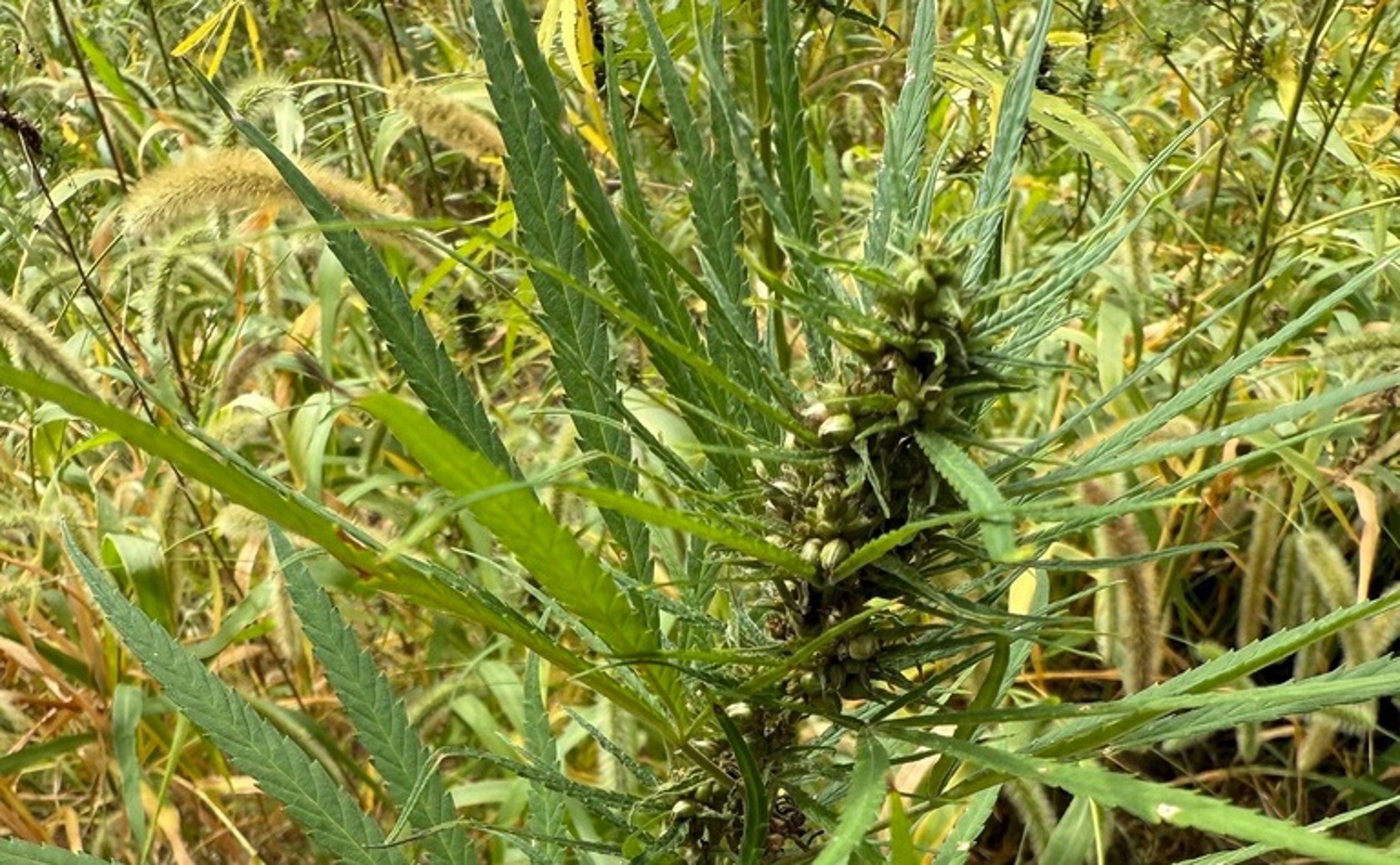
Hemp root growth patterns reveal how plants allocate resources

Jenn Hoskins
9th February, 2026

Hemp root growth patterns reveal how plants allocate resources

Cannabis (Cannabis sativa)

Photo adapted from: Hill Craddock / CC BY (Source)

Key Findings

  • Hemp genotypes grown in a greenhouse showed substantial variation in root and shoot traits, indicating breeding potential
  • Root and shoot biomass were strongly correlated, suggesting plants allocate resources in a coordinated manner
  • Researchers identified 74 candidate genes in hemp likely regulating root development, offering targets for improved breeding
Industrial hemp (Cannabis sativa L.) is rapidly becoming a significant agricultural commodity, currently valued at $16 billion annually. While traditionally grown for grain and fiber, increasing attention is being paid to its potential for carbon sequestration – the process of capturing and storing atmospheric carbon dioxide – due to its reportedly deep root systems. However, despite this promise, detailed knowledge of hemp’s root architecture and genetic basis for root development has been limited. Researchers at the Danforth Plant Science Center and Michigan State University set out to address this gap with a comprehensive study of root traits in a diverse collection of hemp varieties[1]. The core problem this research tackles is the need to optimize hemp for multiple goals: high yield of above-ground biomass for various industrial products, and efficient carbon capture through robust root systems. The increasing demand for resources driven by a rising population[2] necessitates crops that can thrive without depleting natural resources, and multifunctional plants like hemp offer a potential solution. The study involved carefully examining the root systems of 46 different hemp genotypes – essentially, 46 different varieties bred for industrial purposes. The researchers developed a specialized raised-bed greenhouse system to allow for unhindered root growth and detailed analysis. They then used 2D image analysis to quantify a range of root and shoot traits, including total root length, root biomass, and shoot biomass. A key finding was the substantial variation in root systems across the genotypes. Total root length differed by as much as 175% between the best and worst performing varieties, indicating a considerable genetic diversity in root development. Importantly, the traits measured showed high heritability – values between 0.51 and 0.88 – meaning these traits are reliably passed down from parent plants to offspring, making them suitable for targeted breeding programs. The research also revealed a strong positive correlation between root and shoot biomass (R = 0.93). This suggests that hemp plants allocate resources in a coordinated manner, with larger root systems generally supporting larger shoots, and vice versa. This finding is consistent with the idea that plants need to balance investment in below-ground and above-ground structures for optimal growth. To identify promising varieties for breeding, the researchers classified the hemp genotypes into groups based on their root and shoot biomass allocation and architectural traits, using what they termed a "root-to-shoot quadrant framework." This approach highlighted two genotypes that consistently exhibited the most significant differences across most of the traits analyzed. Further investigation involved comparative genomic analysis, comparing the hemp genome to those of other well-studied crops like maize, rice, and Arabidopsis. This identified 74 candidate genes in hemp that are likely involved in regulating root architecture. These genes, known to influence root development in other species, represent potential targets for breeders looking to improve root traits in hemp. This work builds upon earlier research emphasizing the importance of root traits for drought tolerance[3] and carbon sequestration[4]. The study by[3] highlights specific root characteristics – such as small root diameters, long specific root length, and deep root growth – that enhance productivity under water-limited conditions. The findings from suggest that similar root traits could be targeted in hemp to improve its resilience and carbon capture capabilities. The potential for breeding crop plants with deeper root systems, as discussed in[4], is directly supported by the phenotypic diversity observed in the hemp genotypes examined by the Danforth Plant Science Center and Michigan State University researchers. The study’s findings provide a crucial foundation for developing genotype grouping strategies and selecting breeding targets for mapping populations. By identifying varieties with superior root systems and pinpointing the genes responsible for these traits, breeders can accelerate the development of hemp cultivars optimized for both industrial applications and environmental sustainability.

AgricultureGeneticsPlant Science

References

Main Study

1) Diversity of root system architecture and root-shoot biomass allocation in industrial hemp (Cannabis sativa L.)

Published 6th February, 2026

https://doi.org/10.1371/journal.pone.0339929


Related Studies

2) Evaluation of hemp (Cannabis sativa L.) as an industrial crop: a review.

https://doi.org/10.1007/s11356-021-16264-5


3) Root traits contributing to plant productivity under drought.

https://doi.org/10.3389/fpls.2013.00442


4) Breeding crop plants with deep roots: their role in sustainable carbon, nutrient and water sequestration.

https://doi.org/10.1093/aob/mcr175


Related Articles

An unhandled error has occurred. Reload 🗙