
Gene delays flowering in tomatoes, impacting pollen production
Greg Howard
8th January, 2026


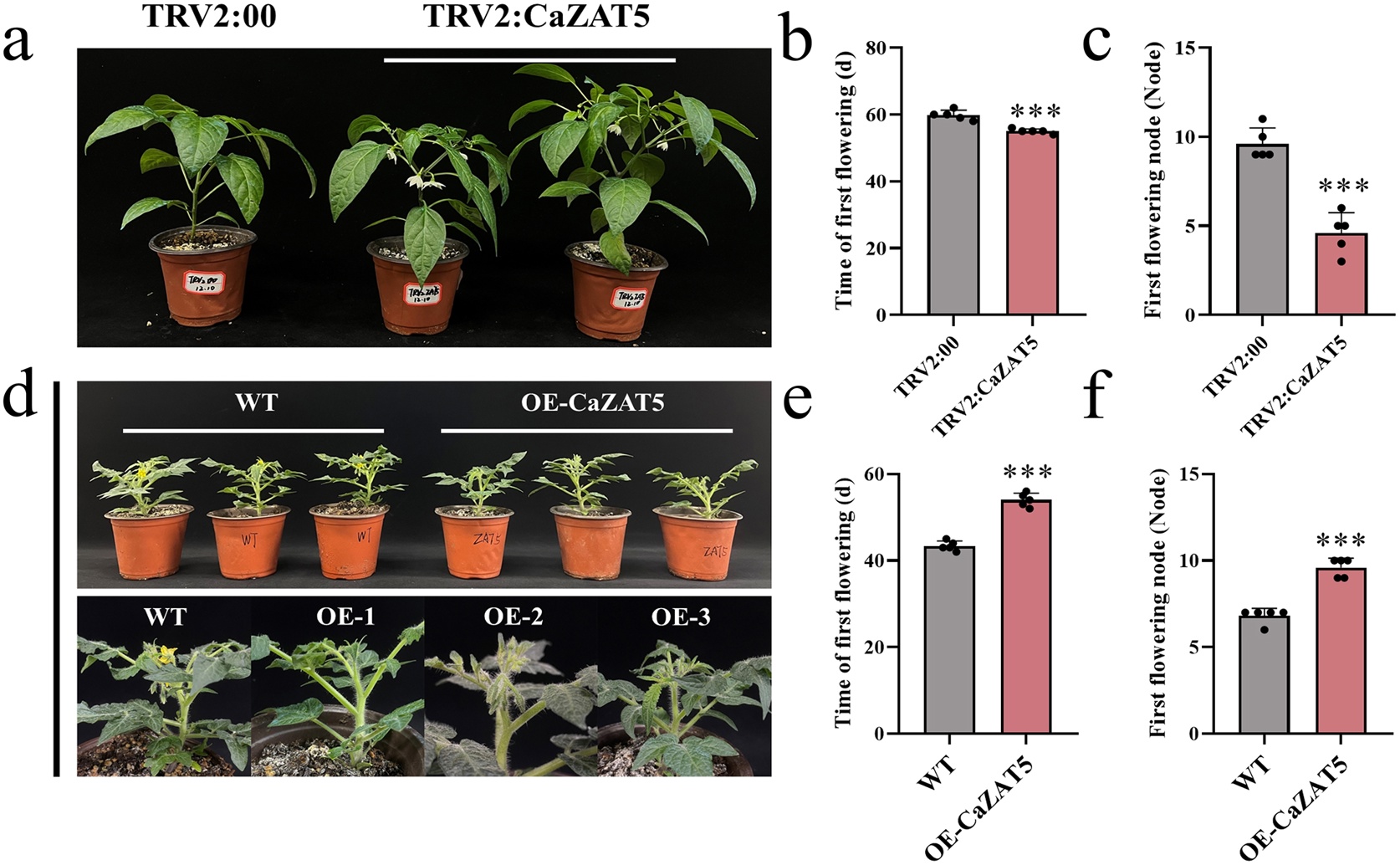
Silencing the CaZAT5 gene in pepper (Capsicum annuum) promotes earlier flowering (a–c), whereas overexpressing it in tomato (Solanum lycopersicum) delays flowering (d–f), demonstrating the gene's role as a negative regulator of this process.
Key Findings
- In pepper plants, the CaZAT5 protein regulates flowering time and is more active during flower development
- Reducing CaZAT5 levels accelerates flowering, while increasing them delays it, indicating a negative regulatory role
- CaZAT5 overexpression disrupts pollen development, leading to abnormal pollen shape and reduced viability, ultimately decreasing fruit production
AgricultureGeneticsPlant Science
References
Main Study
1) CaZAT5 delays the flowering time in tomato and affects pollen viability and anther dehiscence
Published 6th January, 2026
https://doi.org/10.1371/journal.pgen.1012016
Related Studies
2) A putative bHLH transcription factor is a candidate gene for male sterile 32, a locus affecting pollen and tapetum development in tomato.
3) The SlHB8 acts as a negative regulator in tapetum development and pollen wall formation in Tomato.
4) Phytochrome interacting factor 3 regulates pollen mitotic division through auxin signalling and sugar metabolism pathways in tomato.
Related Articles
 1st November, 2025 | Jenn Hoskins