Nearly complete genetic transfer from a wild grass into wheat

Jenn Hoskins
12th February, 2026

Nearly complete genetic transfer from a wild grass into wheat

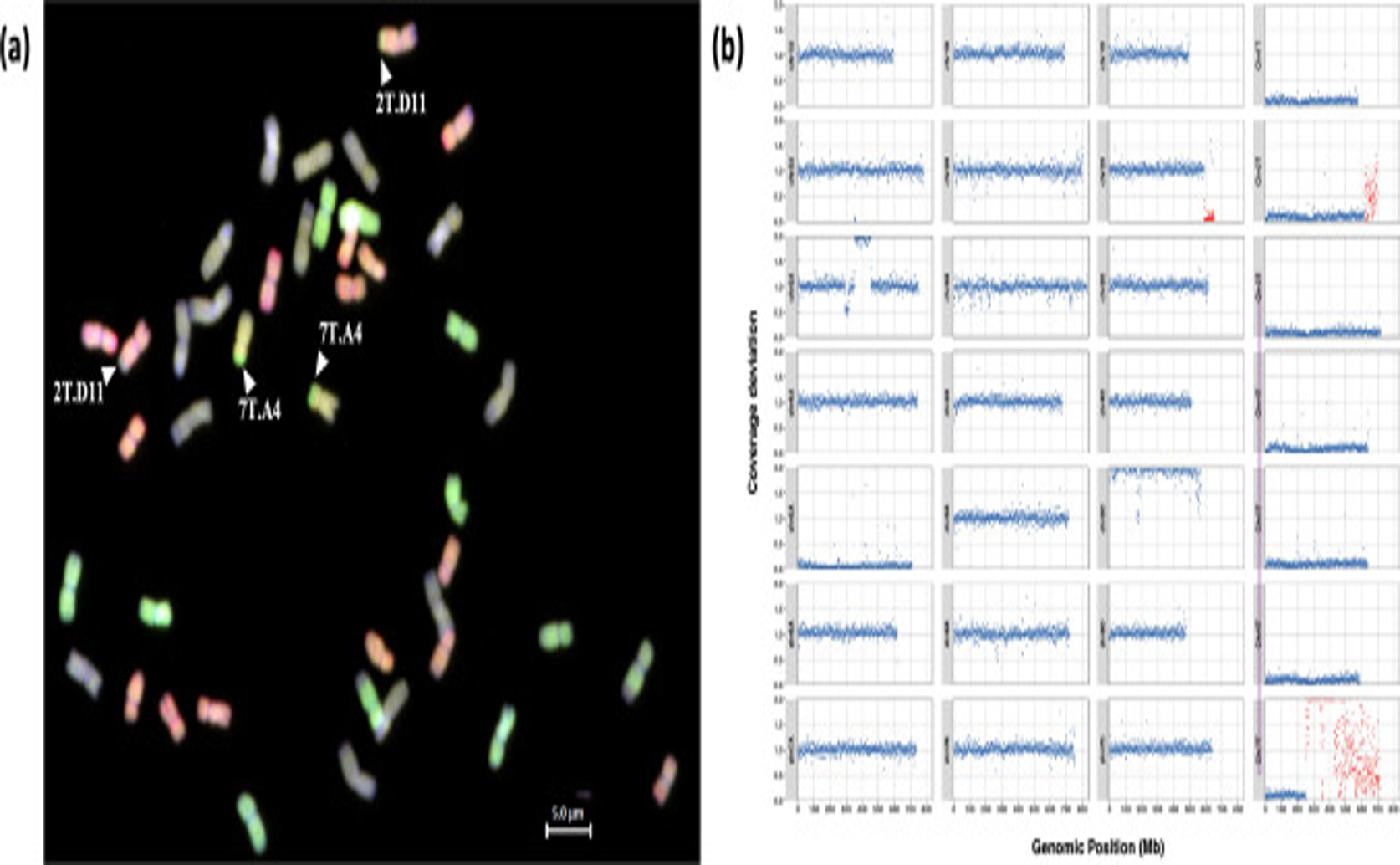
Combined analysis of introgression line Mut15 using multi-colour GISH (a) and sequencing-based coverage mapping (b) confirms a simple substitution of wheat chromatin with an Aegilops mutica segment on chromosome 2D, while also revealing a more complex non-homoeologous translocation of a second segment onto chromosome 3A.

Image adapted from: King et al. / CC BY (Source)

Key Findings

  • Researchers created 68 new wheat lines containing nearly complete genetic material from wild wheat Ae. mutica, significantly increasing wheat’s genetic diversity
  • Detailed analysis identified hotspots where genes from Ae. mutica integrated into wheat chromosomes, revealing more complex gene transfer patterns than previously known
  • The study confirmed that Ae. mutica carries genes promoting genetic exchange between wheat chromosomes, aiding in the efficient transfer of beneficial traits
Wheat breeding continually seeks to improve crop yield, resilience, and quality. A significant challenge is the limited genetic diversity within modern wheat varieties. Wild relatives of wheat, possessing a broader range of genes, offer a potential solution, but transferring these genes into wheat can be complex.[1] The University of Nottingham’s Wheat Research Centre (WRC) has been at the forefront of utilising Aegilops mutica, a wild relative, to address this issue, and a recent study from the centre represents a major advancement in this area. For decades, breeders have sought to incorporate desirable traits from wild wheat relatives into cultivated varieties. However, traditional breeding methods often struggle with the complete transfer of genetic material and identifying which specific genes have been successfully introduced. Previous work with Thinopyrum elongatum demonstrated the potential of introgression – the transfer of genetic material from one species to another – using SNP markers to track these transfers[2]. However, this method has limitations in detecting all introgressed segments, particularly smaller ones. Furthermore, understanding where these genes are integrating into the wheat genome is crucial for efficient breeding. The recent study aimed to create a more comprehensive collection of wheat lines containing genetic material from Ae. mutica. The researchers successfully transferred approximately 98% of the Ae. mutica genome into wheat, creating 68 new introgression lines, each containing 57 unique introgressions. This represents a substantial increase in the genetic diversity available to wheat breeders. To characterize these lines, the researchers employed several techniques. Kompetitive allele-specific PCR (KASP) genotyping was used to identify the presence of Ae. mutica genes within the wheat genome. Multi-colour genomic in situ hybridisation allowed for visual confirmation of the location of these genes on the wheat chromosomes. Critically, they also used low-coverage whole-genome sequencing – a technique where the entire genome is sequenced, but not to the highest possible depth – which has become increasingly accessible due to advancements in sequencing technology[3]. This approach allows for cost-effective genotyping of large populations, overcoming the limitations of earlier array-based methods. The whole-genome sequencing revealed a key finding: the distribution of “homoeologous recombination” sites between wheat and Ae. mutica chromosomes. Homoeologous recombination refers to genetic exchange between similar chromosomes, in this case, those from wheat and Ae. mutica. The study identified “hotspots” where this recombination occurred frequently, and importantly, uncovered previously undetectable introgressed segments. This is significant because it demonstrates that genes from Ae. mutica are integrating into the wheat genome in a more complex pattern than previously understood. This work builds upon earlier research showing the importance of recombination rates in genome evolution[4]. That study found that regions of the wheat genome with higher recombination rates tend to have more gene diversity and are more prone to evolution. The identification of recombination hotspots in these new introgression lines suggests that these regions may be particularly useful for incorporating Ae. mutica genes into wheat. The comprehensive characterisation of these introgression lines provides a powerful resource for wheat researchers and breeders. The ability to link specific genes to traits of interest is a critical step in modern breeding programs. Furthermore, understanding the distribution of homoeologous recombination sites will allow for more targeted breeding strategies, maximizing the efficiency of gene transfer and accelerating the development of improved wheat varieties. The work also sheds light on the complex genomic relationships between wheat and its wild relatives, contributing to a broader understanding of wheat evolution[5].

AgricultureGeneticsPlant Science

References

Main Study

1) The transfer of 98% of the genome of Aegilops mutica into wheat (Triticum aestivum)

Published 9th February, 2026

https://doi.org/10.1007/s00122-026-05173-1


Related Studies

2) Exploiting the genome of Thinopyrum elongatum to expand the gene pool of hexaploid wheat.

https://doi.org/10.1007/s00122-020-03591-3


3) A high-throughput skim-sequencing approach for genotyping, dosage estimation and identifying translocations.

https://doi.org/10.1038/s41598-022-19858-2


4) The organization and rate of evolution of wheat genomes are correlated with recombination rates along chromosome arms.

Journal: Genome research, Issue: Vol 13, Issue 5, May 2003


5) Genome-wide sequence information reveals recurrent hybridization among diploid wheat wild relatives.

https://doi.org/10.1111/tpj.14641


Related Articles

An unhandled error has occurred. Reload 🗙