Gene Sequences Boost Activity in B Cells but Not Consistently in T Cells

Jenn Hoskins
8th March, 2025

Gene Sequences Boost Activity in B Cells but Not Consistently in T Cells

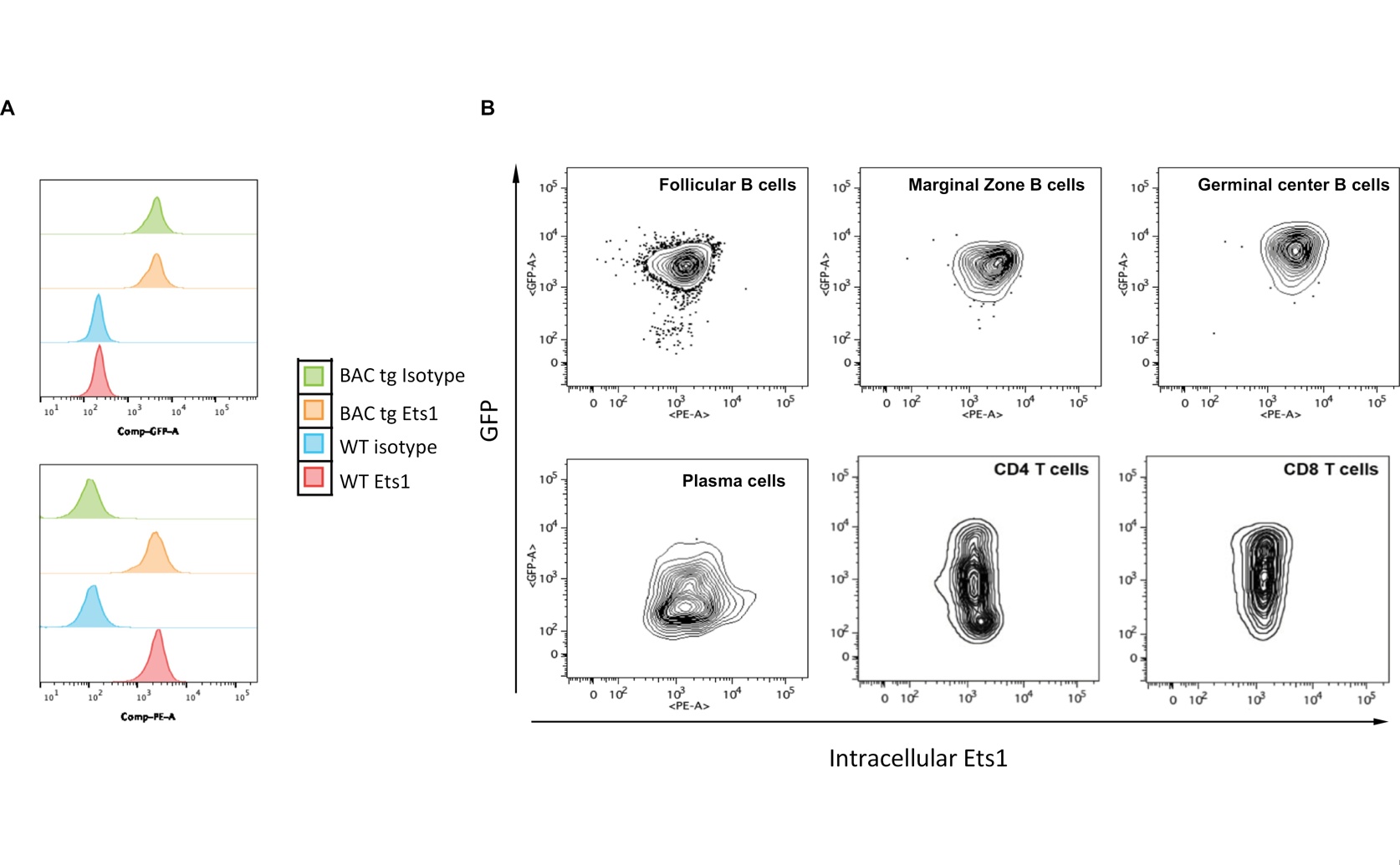
Flow cytometry demonstrates that the −113 kb to + 105 kb Ets1 BAC transgene faithfully recapitulates high, regulated Ets1 expression across B cell subsets, including downregulation in plasma cells, but drives heterogeneous (variegated) expression in CD4 and CD8 T cells, supporting the conclusion that this regulatory region is sufficient for consistent B cell—but not T cell—expression.

Image adapted from: Kearly et al. / CC BY (Source)

Key Findings

  • Researchers at SUNY Buffalo found key DNA regions that control Ets1 levels in B cells, crucial for preventing autoimmune diseases like lupus
  • They discovered multiple overlapping DNA elements work together to keep Ets1 properly regulated, stopping immune cells from overreacting
  • These insights enhance our understanding of autoimmune disease mechanisms and may help develop targeted treatments in the future
Systemic lupus erythematosus (SLE) is a chronic autoimmune disease where the immune system mistakenly attacks the body’s own tissues, leading to inflammation and damage in various organs. Understanding the genetic factors that contribute to SLE is crucial for developing targeted treatments. One key player in this process is the transcription factor Ets1, which helps regulate the activity of immune cells. Research from the State University of New York at Buffalo[1] has shed light on how Ets1 expression is controlled in B cells, a type of immune cell involved in producing antibodies. In healthy individuals, Ets1 levels are high in resting B and T cells, preventing them from becoming overactive. However, in autoimmune conditions like SLE, Ets1 levels are reduced, leading to excessive activation of these cells and the production of autoantibodies[2]. The study identified a specific region in the DNA of B cells, known as a topologically-associating domain (TAD), which includes the Ets1 gene. This region acts as an interaction hub, extending over 100 kilobases (kb) upstream and into the gene body. Within this hub, several potential regulatory elements were found. These elements are areas of the DNA that can enhance or suppress the activity of genes. The researchers used reporter constructs, which are DNA sequences attached to a visible marker, to demonstrate that these regulatory elements can direct gene expression specifically in lymphoid tissues, such as B cells, in transgenic mice. Further analysis revealed that when B cells are stimulated through their receptors, the accessibility of certain regions within the Ets1 locus changes. This alteration in chromatin structure correlates with the downregulation of Ets1 gene expression. Chromatin accessibility refers to how tightly DNA is packed, which affects whether genes can be turned on or off. The study used ATAC-seq, a technique that measures chromatin accessibility, to identify four regions within and upstream of the Ets1 gene that become less accessible upon B cell activation, leading to reduced Ets1 expression. Interestingly, the functional analysis showed that multiple regulatory elements within the interaction hub can compensate for each other, indicating a high level of redundancy. This means that even if one regulatory element is altered, others can maintain the proper expression of Ets1. Such redundancy is important for the stability of gene regulation, ensuring that critical functions like immune regulation are preserved. These findings build on previous research that identified genetic variations in the ETS1 gene associated with SLE[3]. Specifically, variations in the 3'-UTR of ETS1, such as rs1128334, are linked to lower expression levels of Ets1, which contributes to the development of autoimmune diseases[3]. Additionally, other studies have shown that Ets1 interacts with molecules like microRNA-146a, which also play roles in regulating immune responses and are associated with autoimmune conditions[4]. By mapping the regulatory elements that control Ets1 expression, the current study provides a deeper understanding of how genetic and epigenetic factors interact to maintain immune balance. Disruptions in these regulatory networks can lead to the inappropriate activation of B and T cells, culminating in autoimmune diseases like SLE. This knowledge opens up potential avenues for therapeutic interventions aimed at restoring proper Ets1 levels and preventing the overactivation of immune cells. In summary, the research from the State University of New York at Buffalo advances our understanding of the genetic regulation of Ets1 in B cells. By identifying key regulatory elements and their interactions, the study highlights the complex mechanisms that maintain immune homeostasis and how their dysregulation can lead to autoimmune diseases. This work not only builds on existing studies linking ETS1 to SLE and other autoimmune conditions[2][3][4] but also provides a foundation for future research aimed at targeting these regulatory pathways for therapeutic benefit.

GeneticsBiochem

References

Main Study

1) Sequences within and upstream of the mouse Ets1 gene drive high level expression in B cells, but are not sufficient for consistent expression in T cells

Published 7th March, 2025

https://doi.org/10.1371/journal.pone.0308896


Related Studies

2) The Role of the Transcription Factor Ets1 in Lupus and Other Autoimmune Diseases.

https://doi.org/10.1615/CritRevImmunol.2017020284


3) Genome-wide association study in Asian populations identifies variants in ETS1 and WDFY4 associated with systemic lupus erythematosus.

https://doi.org/10.1371/journal.pgen.1000841


4) MicroRNA-146a and Ets-1 gene polymorphisms are associated with pediatric uveitis.

https://doi.org/10.1371/journal.pone.0091199


Related Articles

An unhandled error has occurred. Reload 🗙