Akt3 Links Cell Powerhouses to Proper Cell Division

Greg Howard
7th March, 2025

Akt3 Links Cell Powerhouses to Proper Cell Division

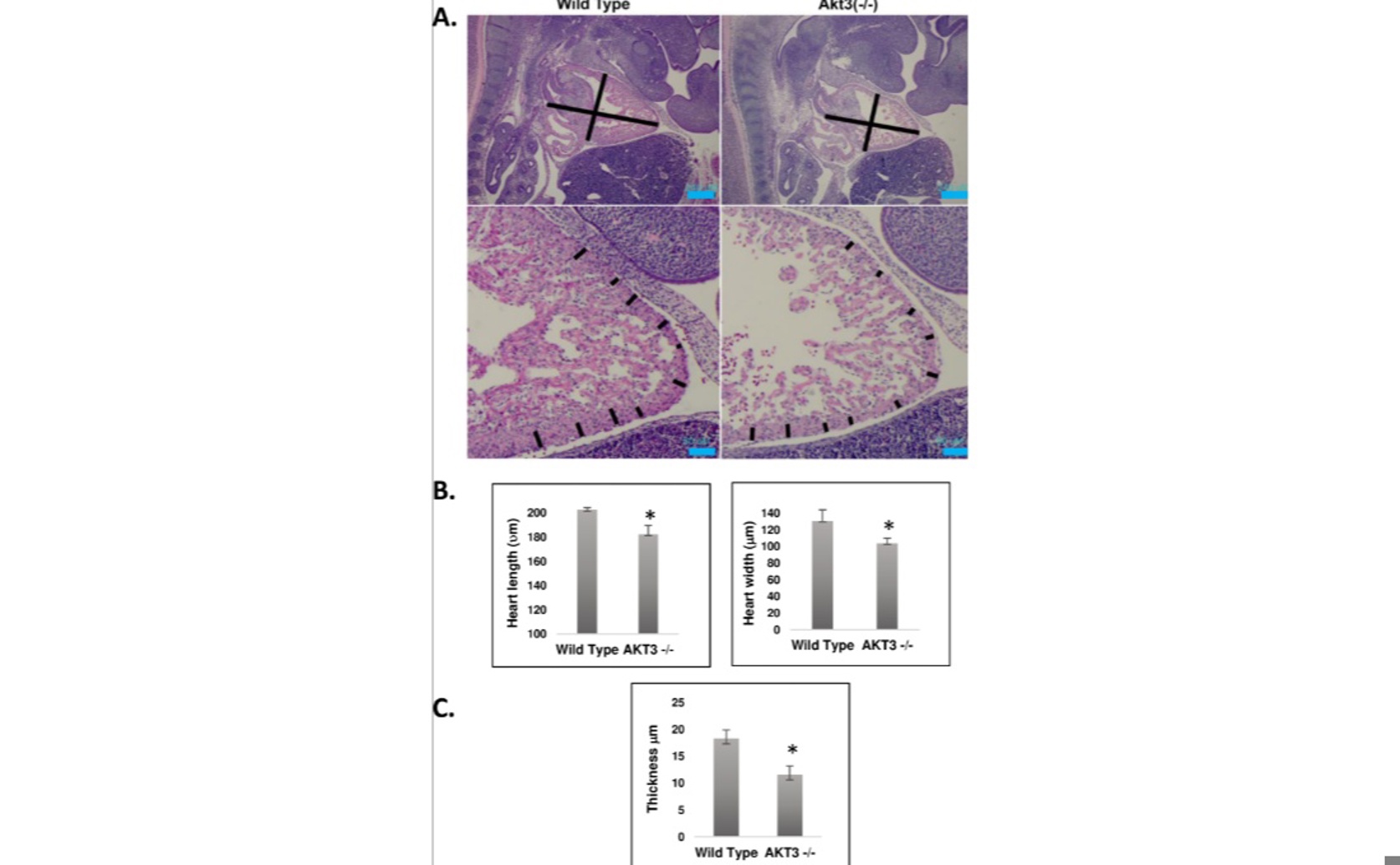
Morphometric analysis demonstrates that Akt3 null embryonic hearts are significantly smaller and have thinner compact myocardial layers than wild-type hearts, supporting the study’s central finding that loss of Akt3 impairs cardiac growth consistent with defective proliferation and mitotic regulation.

Image adapted from: Hough et al. / CC BY (Source)

Key Findings

  • Researchers at the Medical University of South Carolina found that the protein Akt3 is vital for keeping mitochondria healthy in cells lining blood vessels
  • When Akt3 levels drop, mitochondria malfunction and the growth of new blood vessels is hindered, increasing the risk of heart disease
  • The study also showed that using antioxidants can prevent these negative effects, suggesting new ways to treat heart disease
Mitochondria, often referred to as the powerhouses of the cell, play crucial roles beyond energy production. In endothelial cells, which line the interior of blood vessels, mitochondria are essential for regulating processes like vascular tone and angiogenesis—the formation of new blood vessels. Recent research from the Medical University of South Carolina[1] has shed light on a specific protein, Akt3, and its pivotal role in maintaining mitochondrial health and ensuring proper cell division in these endothelial cells. Akt3 is identified as a key regulator of mitochondrial homeostasis within the endothelium. When Akt3 levels are reduced, mitochondria within these cells become dysfunctional. This dysfunction leads to decreased mitochondrial biogenesis, the process by which new mitochondria are formed, and a reduction in angiogenesis. Angiogenesis is vital for delivering oxygen and nutrients to tissues, especially those that are inflamed or lack sufficient blood supply[2][3]. The impairment of this process can contribute to various heart diseases, as efficient blood vessel formation is crucial for heart health. The study links mitochondrial health directly to mitotic fidelity, which is the accuracy of chromosome segregation during cell division. Depletion of Akt3 causes chromosomes to missegregate, leading to cells with abnormal numbers of nuclei, a condition known as multinucleation and the formation of micronuclei. This missegregation is connected to Aurora B, a protein crucial for proper chromosome alignment and separation during mitosis. Akt3 was found to localize in the nucleus, where it interacts with another protein, WDR12. Both WDR12 and Aurora B levels drop when Akt3 is depleted, disrupting normal cell division. To explore the relationship between mitochondrial dysfunction and mitotic errors, the researchers used paraquat, a chemical that induces oxidative stress by generating reactive oxygen species (ROS). ROS are chemically reactive molecules containing oxygen, which can damage cell structures if not regulated. The study demonstrated that paraquat treatment leads to reduced expression of Akt3, WDR12, and Aurora B, resulting in chromosome missegregation similar to Akt3 depletion. However, when ROS were inhibited, the negative effects on cell division and protein expression were rescued, highlighting the role of oxidative stress in this process. This finding builds on earlier research that has established the importance of ROS in endothelial cell function and vascular health. For instance, previous studies have shown that mitochondrial ROS contribute to endothelial damage and the development of heart disease[4]. Additionally, ROS play a role in angiogenesis by modulating the expression of genes related to blood vessel formation[2][3]. By linking ROS to both mitochondrial dysfunction and mitotic errors, the current study provides a more comprehensive understanding of how oxidative stress can impact heart health at the cellular level. Moreover, the study reveals that Akt3 influences the expression of CRM-1, a major nuclear export protein. Akt3 phosphorylates CRM-1, increasing its expression and thereby inhibiting the localization of PGC-1, the master regulator of mitochondrial biogenesis. This connection suggests that Akt3 not only maintains mitochondrial function but also regulates the production of new mitochondria, further emphasizing its role in cellular health and vascular function. In Akt3 null mice, which lack the Akt3 gene, the hearts at midgestation displayed significant abnormalities. These hearts had lower levels of Aurora B, higher levels of CRM-1, reduced cell proliferation, and increased cell death (apoptosis). The affected hearts were smaller and had a thinner layer of cells, along with abnormal nuclear structures indicative of mitotic catastrophe, a severe form of cell division failure. These observations underline the critical role of Akt3 in heart development and the maintenance of mitochondrial and cellular integrity. Integrating these findings with previous research, it becomes evident that maintaining mitochondrial health is essential for both the proper functioning of endothelial cells and the prevention of heart disease. Endothelial mitochondria balance calcium levels, ROS production, and nitric oxide (NO) to regulate vascular tone and prevent atherosclerosis, a condition characterized by the buildup of plaques in arteries[4]. Additionally, mitochondrial dynamics, the continuous process of mitochondrial fission and fusion, are crucial for stem cell function and tissue repair[5]. Disruptions in these processes can lead to impaired angiogenesis and endothelial dysfunction, contributing to various cardiovascular diseases[2][3]. The study from the Medical University of South Carolina not only highlights the significance of Akt3 in maintaining mitochondrial and cellular health in endothelial cells but also connects these processes to broader mechanisms of heart disease development. By understanding how Akt3 regulates mitochondrial function and mitotic fidelity, new therapeutic targets can be identified to prevent or treat heart disease. For example, targeting ROS with specific scavengers or modulating the Akt3/Aurora B pathway could offer strategies to maintain endothelial health and promote effective angiogenesis[2][3][4]. In summary, Akt3 plays a multifaceted role in endothelial cell biology by ensuring mitochondrial function, regulating oxidative stress, and maintaining accurate cell division. These functions are critical for heart development and the prevention of cardiovascular diseases. Future research building on these findings may lead to innovative treatments that protect mitochondrial health and enhance vascular function, ultimately improving heart health and reducing the risk of heart failure.

BiotechGeneticsBiochem

References

Main Study

1) Akt3 links mitochondrial function to the regulation of Aurora B and mitotic fidelity

Published 6th March, 2025

https://doi.org/10.1371/journal.pone.0315751


Related Studies

2) The role of mitochondria in angiogenesis.

https://doi.org/10.1007/s11033-018-4488-x


3) Mitochondria in endothelial cells: Sensors and integrators of environmental cues.

https://doi.org/10.1016/j.redox.2017.04.021


4) Endothelial mitochondria and heart disease.

https://doi.org/10.1093/cvr/cvq195


5) Mitochondrial Dynamics: Fission and Fusion in Fate Determination of Mesenchymal Stem Cells.

https://doi.org/10.3389/fcell.2020.580070


Related Articles

An unhandled error has occurred. Reload 🗙