
Tracking Whale Movements and Ship Encounters in the Northwest Atlantic
Jim Crocker
17th January, 2025


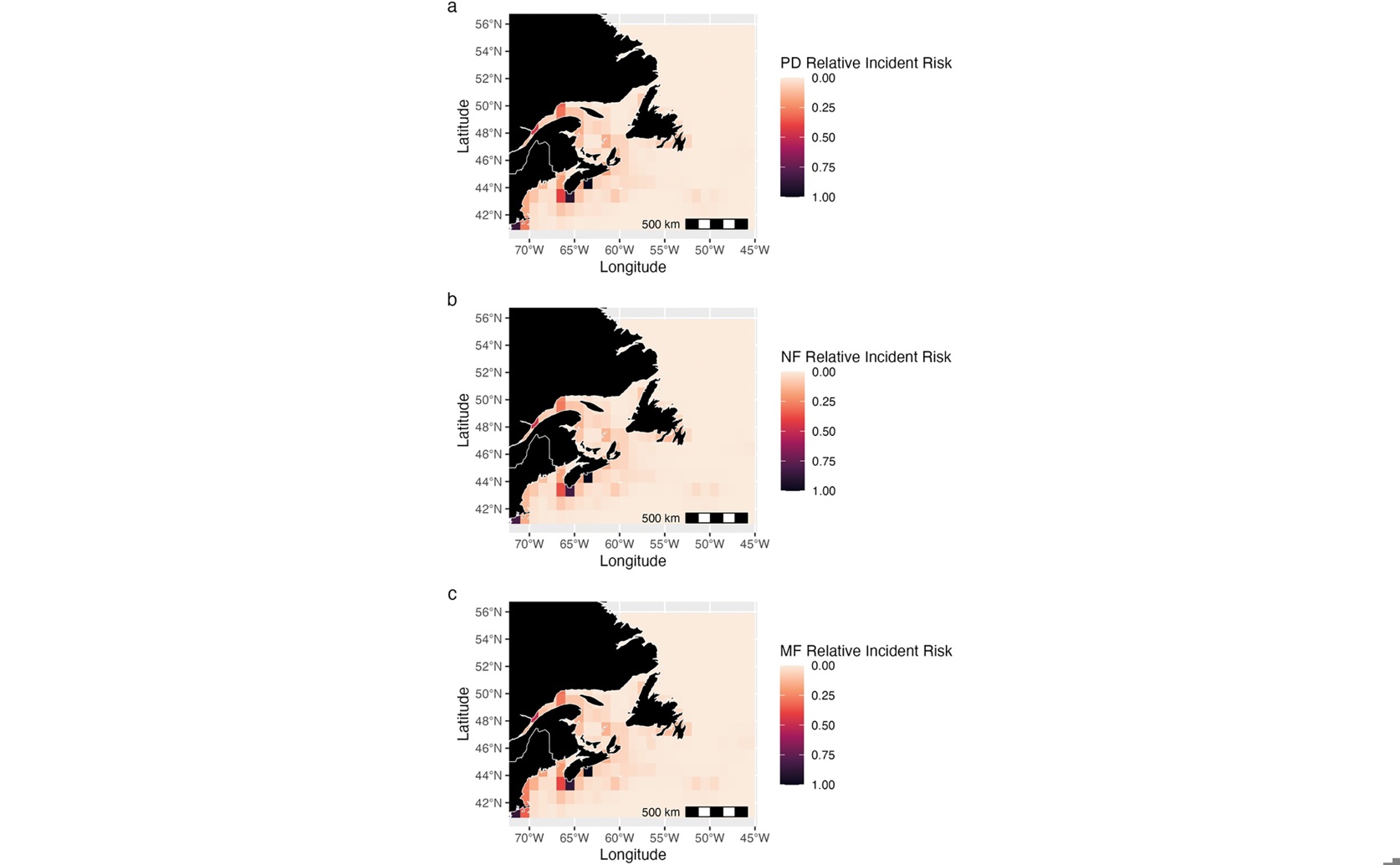
Projections show that areas of high relative incident risk for the blue whale (Balaenoptera musculus), concentrated in coastal and shelf areas as well as the Flemish Cap (a), are expected to remain largely stable through the near-future (b) and mid-future (c), indicating persistent vulnerability to vessel activity despite climate change.
Key Findings
- The study analyzed whale sightings, incident reports, and vessel activity in Atlantic Canadian waters to assess risks to baleen whales
- High-risk areas for whale incidents are near densely populated regions, major shipping routes, and fishing grounds
- The study's predictions align with independent data, highlighting the need for effective conservation strategies for multiple whale species
EnvironmentAnimal ScienceMarine Biology
References
Main Study
1) Assessing changing baleen whale distributions and reported incidents relative to vessel activity in the Northwest Atlantic.
Published 15th January, 2025
https://doi.org/10.1371/journal.pone.0315909
Related Studies
2) Exploring movement patterns and changing distributions of baleen whales in the western North Atlantic using a decade of passive acoustic data.
3) Current and future patterns of global marine mammal biodiversity.
Related Articles
 12th July, 2024 | Jim Crocker