How Catch-and-Release Fishing Affects Stress Levels in Young Sharks

Greg Howard
6th January, 2025

How Catch-and-Release Fishing Affects Stress Levels in Young Sharks

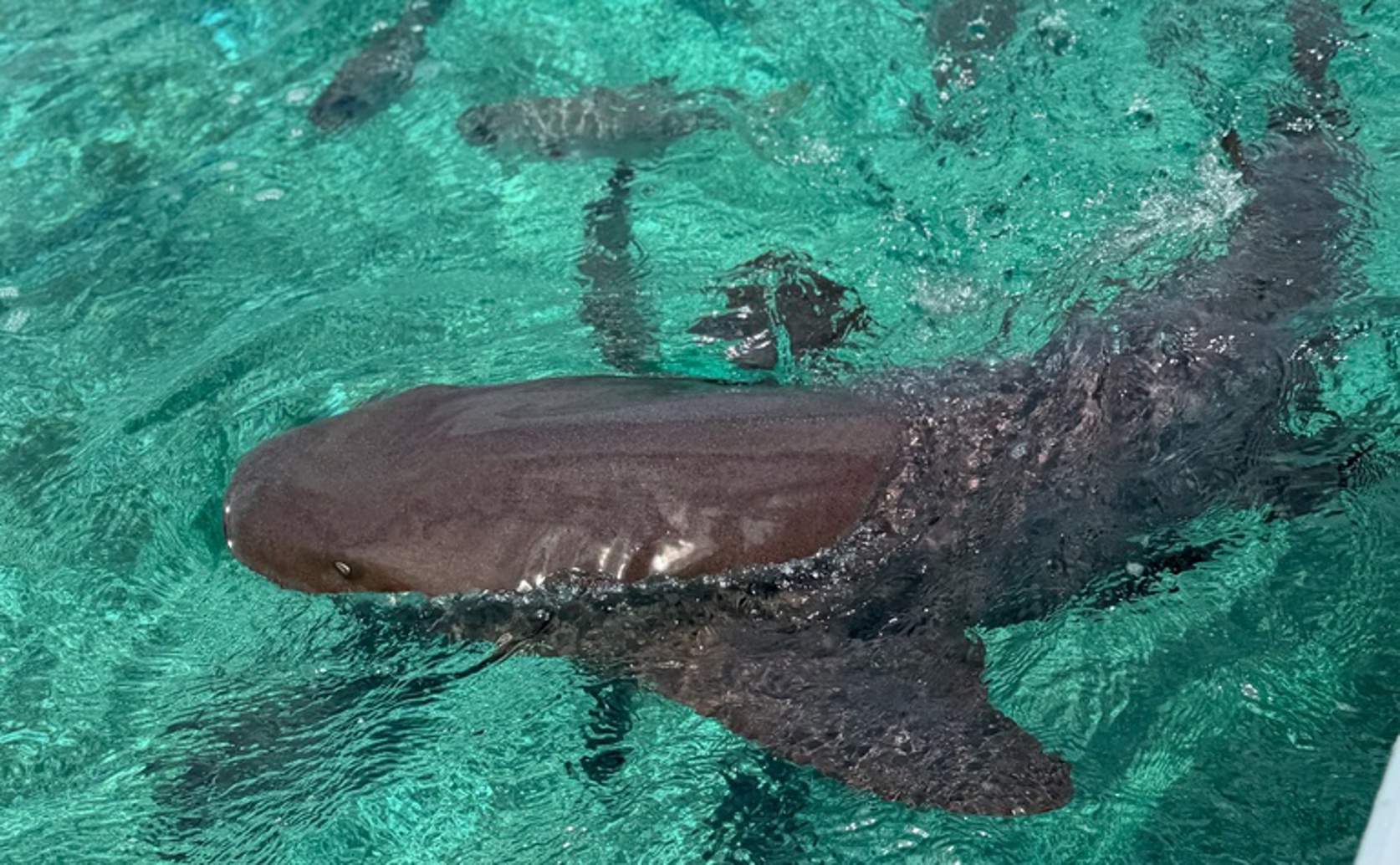
Nurse Shark (Ginglymostoma cirratum)

Public Domain Photograph

Key Findings

  • The study from the University of Miami examined the stress responses of juvenile nurse sharks to recreational angling
  • Blood tests showed a significant increase in lactate levels, indicating high stress and muscle exertion during capture
  • The findings suggest that juvenile nurse sharks are more vulnerable to capture-related stress, highlighting the need for adjusted fishing practices to protect them
The rapid expansion of human activities poses a significant threat to marine biodiversity, with numerous marine animal populations in decline[2]. Among these, chondrichthyan fishes, which include sharks, rays, and chimaeras, are particularly at risk due to overfishing. Recent research from the University of Miami has focused on understanding the physiological stress responses of juvenile nurse sharks (Ginglymostoma cirratum) to recreational angling, revealing important insights that could inform conservation strategies[1]. Juvenile nurse sharks are often caught by recreational anglers near shore, but there has been limited understanding of their physiological responses to capture. This study aimed to fill that gap by examining the sub-lethal effects of hook-and-line fishing on 27 juvenile nurse sharks across 31 angling events. Blood samples were taken at randomized intervals over a 30-minute period to measure various physiological parameters, including lactate, glucose, hematocrit, and osmolality. The results showed a significant increase in lactate levels, which rose by an average of 611% (6.7 ± 2.17 mmol/L) over the 30-minute fight. Lactate, a byproduct of anaerobic metabolism, is often used as an indicator of stress and muscle exertion. The study found strong correlations between lactate levels and factors such as the number of blood draws, fight time, and water temperature, suggesting that these variables significantly influence the stress response in juvenile nurse sharks. In addition to lactate, significant relationships were observed between blood draw number, glucose, and hematocrit. Glucose levels, which indicate energy mobilization in response to stress, also increased, while hematocrit, a measure of the proportion of red blood cells in the blood, varied with the number of blood draws. Interestingly, osmolality, which reflects the concentration of solutes in the blood, was only affected by the fishing site, suggesting that environmental factors at different locations may influence this parameter. These findings indicate that juvenile nurse sharks exhibit a more pronounced physiological stress response to recreational angling than previously thought, especially when compared to adult sharks captured using other fishing methods. This aligns with earlier research showing that different species and life stages of sharks respond variably to capture stress. For instance, a study on juvenile lemon sharks (Negaprion brevirostris) found that fight time and water temperature significantly influenced physiological disturbance and short-term mortality[3]. Similarly, Atlantic sharpnose sharks (Rhizoprionodon terraenovae) exhibited seasonal variations in their stress responses, with higher stress parameters observed during the summer[4]. The implications of this study are significant for the management and conservation of nurse sharks. Given that juvenile sharks are more vulnerable to capture-related stress, recreational angling practices may need to be adjusted to minimize their impact. This could include measures such as reducing fight times, avoiding fishing during periods of high water temperatures, and implementing best practices for handling and releasing sharks. Overall, the study conducted by the University of Miami highlights the importance of understanding species-specific and life stage-specific responses to capture stress. By incorporating these findings into fisheries management and conservation strategies, we can better protect vulnerable shark populations and promote their recovery in the face of ongoing human activities.

HealthAnimal ScienceMarine Biology

References

Main Study

1) The physiological stress response of juvenile nurse sharks (Ginglymostoma cirratum) to catch-and-release recreational angling.

Published 3rd January, 2025

https://doi.org/10.1371/journal.pone.0316838


Related Studies

2) Extinction risk and conservation of the world's sharks and rays.

https://doi.org/10.7554/eLife.00590


3) Hooking injury, physiological status and short-term mortality of juvenile lemon sharks (Negaprion bevirostris) following catch-and-release recreational angling.

https://doi.org/10.1093/conphys/cot036


4) Seasonal modulation in the secondary stress response of a carcharhinid shark, Rhizoprionodon terraenovae.

https://doi.org/10.1016/j.cbpa.2011.05.002


Related Articles

An unhandled error has occurred. Reload 🗙