Nutritional Quality of Seaweed Across Different Ice Cover Levels

Jenn Hoskins
13th January, 2025

Nutritional Quality of Seaweed Across Different Ice Cover Levels

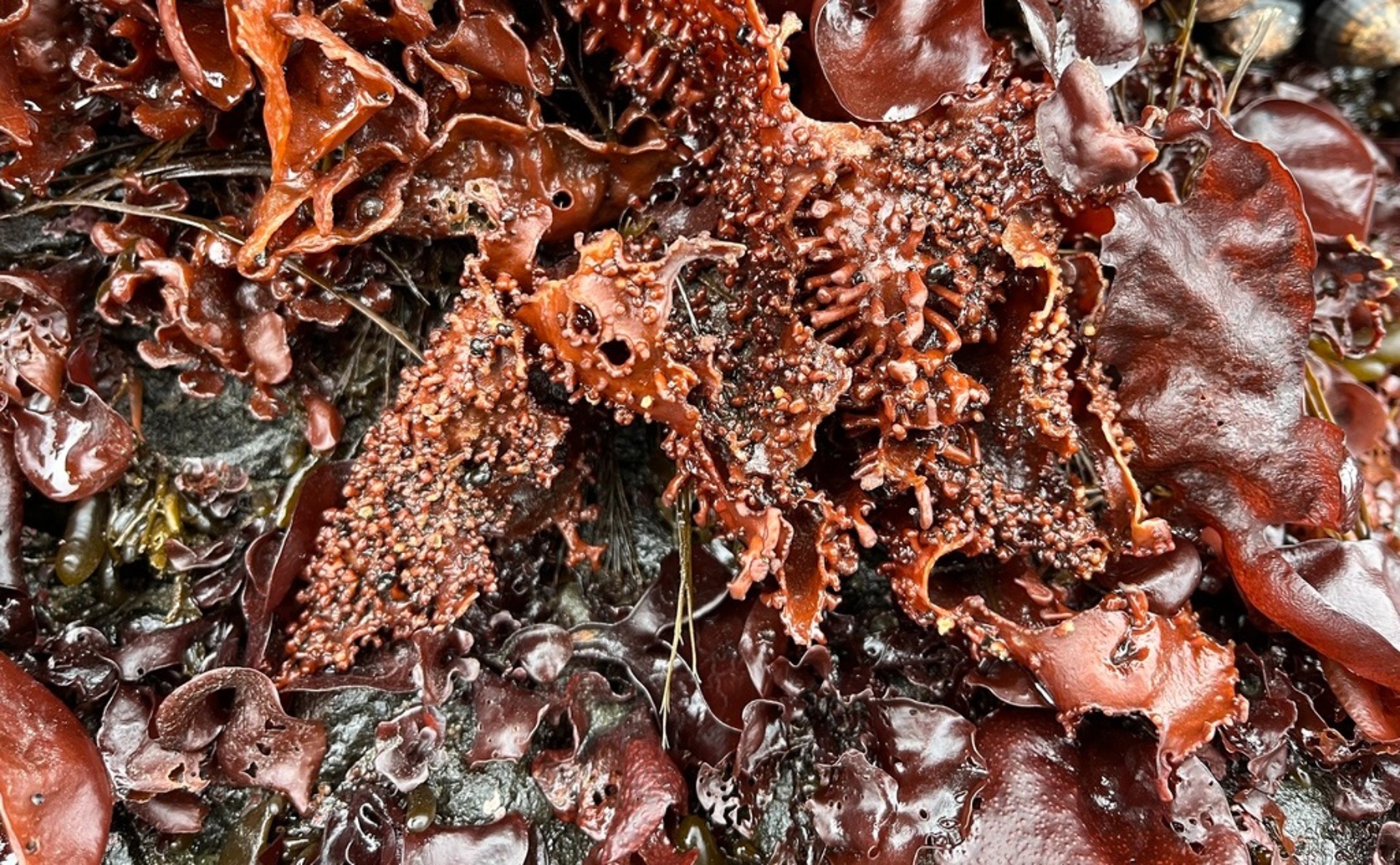
Sarcopeltis antarctica, one of the species mentioned.

Photo adapted from: Erasmo Macaya Horta / CC BY (Source)

Key Findings

  • The study focused on the Western Antarctic Peninsula, where sea ice coverage has decreased due to warming
  • Researchers found that sea ice coverage impacts the overall abundance of macroalgae
  • However, the nutritional quality of macroalgae remains stable regardless of changes in sea ice coverage
The impact of sea ice on marine ecosystems is a significant area of study, particularly in the context of climate change. The Western Antarctic Peninsula (WAP) has experienced substantial warming, leading to a noticeable decrease in sea ice coverage during the latter part of the 20th century. This decline in sea ice can affect photosynthetic organisms, such as macroalgae, by altering the amount of light that penetrates the water[1]. Researchers from the University of Alabama at Birmingham aimed to investigate how these changes in sea ice coverage influence the biochemical composition of macroalgae, which are essential components of the marine food web. In their study, the researchers used satellite imagery to track annual sea ice duration and extent, as well as water turbidity, across 14 different sites along the central WAP. These sites were chosen for their varying sea ice coverage but similar turbidity levels. The team collected samples of common macroalgal species, including Desmarestia menziesii, Himantothallus grandifolius, Sarcopeltis antarctica, and Iridaea sp., at depths ranging from 5 to 35 meters. The goal was to analyze the biochemical components of these macroalgae and determine how they correlate with different sea ice indices. The findings revealed that, contrary to expectations, most biochemical components of the macroalgae did not show significant correlations with sea ice cover. This suggests that while sea ice coverage impacts the overall abundance of macroalgae, it does not significantly affect their nutritional quality on a per-biomass basis. The few significant correlations observed varied between species and specific chemical components, indicating a complex relationship between sea ice dynamics and macroalgal biochemistry. These results are intriguing, especially when considered alongside previous studies. For example, earlier research demonstrated that the retreat of glaciers along the WAP opens up new habitats for marine organisms like macroalgae[2]. This increased availability of macroalgal detritus in shallow subtidal sediments can influence the benthic ecosystem, with different species contributing to nutrient cycling in distinct ways. The current study expands on this by showing that while sea ice affects macroalgal abundance, it does not necessarily alter their biochemical contributions to the food web on a per-biomass basis. Another relevant study highlighted how changes in sea ice duration can lead to abrupt ecological shifts, with earlier ice melt increasing sunlight exposure and favoring algae over invertebrate communities[3]. This study aligns with the current findings by emphasizing the role of light in shaping marine ecosystems. However, the current research adds a new dimension by showing that the biochemical composition of macroalgae remains relatively stable despite variations in sea ice cover. Furthermore, the relationship between sea ice dynamics and benthic community structure has been well-documented. Sea ice duration influences light and sedimentation patterns, which in turn affect the composition of benthic communities[4]. The current study complements this understanding by demonstrating that although sea ice impacts macroalgal abundance, it does not significantly alter their nutritional quality, suggesting a degree of resilience in the biochemical composition of these organisms. In summary, the research conducted by the University of Alabama at Birmingham provides valuable insights into the complex interactions between sea ice coverage and macroalgal biochemistry. While sea ice significantly affects the abundance of macroalgae, it does not appear to impact their nutritional contributions to the marine food web on a per-biomass basis. This finding is crucial for understanding how polar marine ecosystems may respond to ongoing climate change and highlights the resilience of macroalgal biochemical composition in the face of environmental variability.

EnvironmentNutritionMarine Biology

References

Main Study

1) Nutritional consistency of macroalgae across a sea ice cover gradient along the Western Antarctic Peninsula.

Published 12th January, 2025

https://doi.org/10.1111/jpy.13541


Related Studies

2) Degradation of macroalgal detritus in shallow coastal Antarctic sediments.

https://doi.org/10.1002/lno.11125


3) Light-driven tipping points in polar ecosystems.

https://doi.org/10.1111/gcb.12337


4) The Roles of Sea-Ice, Light and Sedimentation in Structuring Shallow Antarctic Benthic Communities.

https://doi.org/10.1371/journal.pone.0168391


Related Articles

An unhandled error has occurred. Reload 🗙