Discovering New Roles of Active and Abundant Bacteria in a Salt Marsh Ecosystem

Jim Crocker
26th December, 2024

Discovering New Roles of Active and Abundant Bacteria in a Salt Marsh Ecosystem

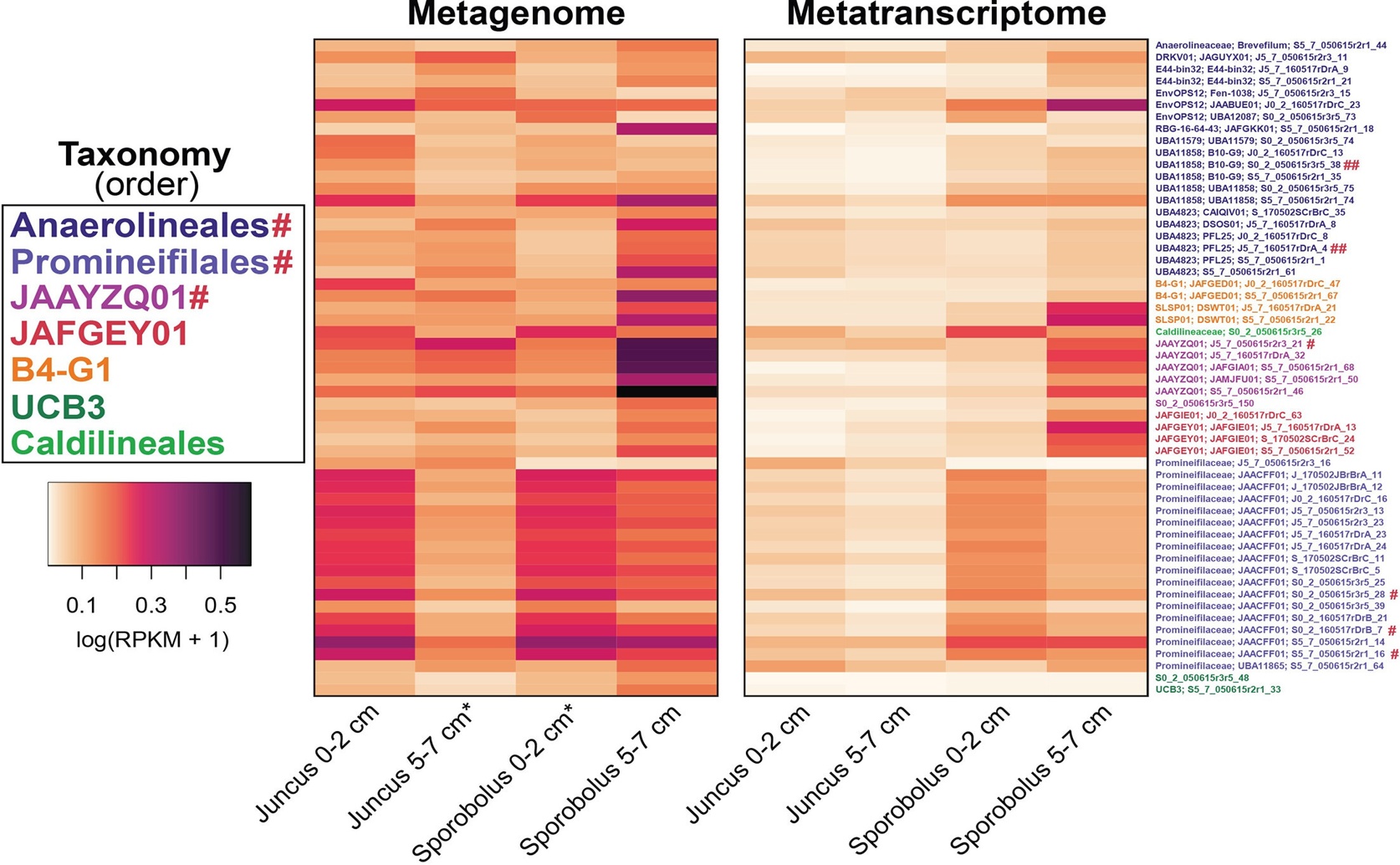
Mapping of community DNA and RNA reveals that the abundant Anaerolineae bacteria are both more numerous and significantly more active in the soil around Sporobolus roots compared to Juncus, particularly at 5–7 cm depth, underpinning their differential role in carbon cycling between the two plant rhizospheres.

Image adapted from: Payne et al. / CC BY (Source)

Key Findings

  • Researchers at Florida State University studied Anaerolineae bacteria in coastal salt marshes to understand their role in carbon cycling
  • They found that Anaerolineae can break down a wide range of carbon compounds, from simple sugars to complex plant materials
  • The bacteria can perform both anaerobic and aerobic respiration, showing they adapt to different oxygen levels in the environment
Understanding the functional roles of microbial populations in coastal salt marshes is crucial due to their significant contribution to biogeochemical cycles. A recent study conducted by researchers at Florida State University focused on Anaerolineae, a class of bacteria abundant in the belowground rhizosphere of these ecosystems but generally poorly understood[1]. This study generated novel metagenome-assembled genomes (MAGs) from the salt marsh rhizosphere, shedding light on the metabolic capabilities of Anaerolineae and their role in carbon cycling. Anaerolineae are known to be prevalent in various anaerobic environments, including anaerobic digesters and marine sponges[2][3]. Previous studies have highlighted their presence and potential metabolic functions, but their role in the salt marsh context remained unclear. The Florida State University study aimed to fill this gap by analyzing the metagenomes and metatranscriptomes of Anaerolineae from the salt marsh rhizosphere. The researchers identified several orders within Anaerolineae, including Anaerolineales, Promineifilales, and Caldilineales, among others. They discovered that nearly all Anaerolineae encoded and transcribed genes necessary for oxidizing a wide range of carbon compounds, from simple sugars to complex polysaccharides. This indicates that Anaerolineae play a significant role in degrading both labile and recalcitrant plant materials in the salt marsh rhizosphere. Interestingly, the study found that Anaerolineae expressed genes involved in both anaerobic and aerobic respiration. This was unexpected, given the typically reduced (low oxygen) conditions of the salt marsh rhizosphere. This dual capability suggests that Anaerolineae can adapt to varying oxygen levels, enhancing their role in carbon cycling within these ecosystems. The study also revealed that Anaerolineae are involved in secondary metabolite production, indicating that they could be a reservoir of novel and potentially important secondary metabolites. Secondary metabolites are compounds produced by microbes that often have ecological functions, such as antimicrobial properties or signaling molecules. Previous research on Anaerolineae in anaerobic digesters showed that their prevalence might be linked to cellular adhesiveness rather than their ability to degrade cellulose or participate in anaerobic syntrophy[2]. In marine sponges, Anaerolineae were found to have a massively expanded genomic repertoire for carbohydrate degradation, suggesting their role in dissolved organic matter recycling[3]. The Florida State University study builds on these findings by demonstrating that Anaerolineae in salt marshes possess versatile metabolic capabilities, including fermentation and carbon fixation, further underscoring their importance in carbon cycling. In conclusion, the Florida State University study provides valuable insights into the metabolic functions of Anaerolineae in coastal salt marshes. By revealing their ability to oxidize a wide range of carbon compounds, engage in both anaerobic and aerobic respiration, and produce secondary metabolites, this research highlights the significant role of Anaerolineae in the biogeochemical processes of these ecosystems. The findings also suggest that Anaerolineae could be a source of novel secondary metabolites, opening new avenues for biotechnological applications.

EnvironmentEcologyMarine Biology

References

Main Study

1) Uncovering novel functions of the enigmatic, abundant, and active Anaerolineae in a salt marsh ecosystem.

Published 26th December, 2024

https://doi.org/10.1128/msystems.01162-24


Related Studies

2) Cellular adhesiveness and cellulolytic capacity in Anaerolineae revealed by omics-based genome interpretation.

https://doi.org/10.1186/s13068-016-0524-z


3) Marine Sponges as Chloroflexi Hot Spots: Genomic Insights and High-Resolution Visualization of an Abundant and Diverse Symbiotic Clade.

https://doi.org/10.1128/mSystems.00150-18


Related Articles

An unhandled error has occurred. Reload 🗙