How Water Clarity Affects Feeding and Survival of Young European Smelt

Jim Crocker
12th July, 2024

How Water Clarity Affects Feeding and Survival of Young European Smelt

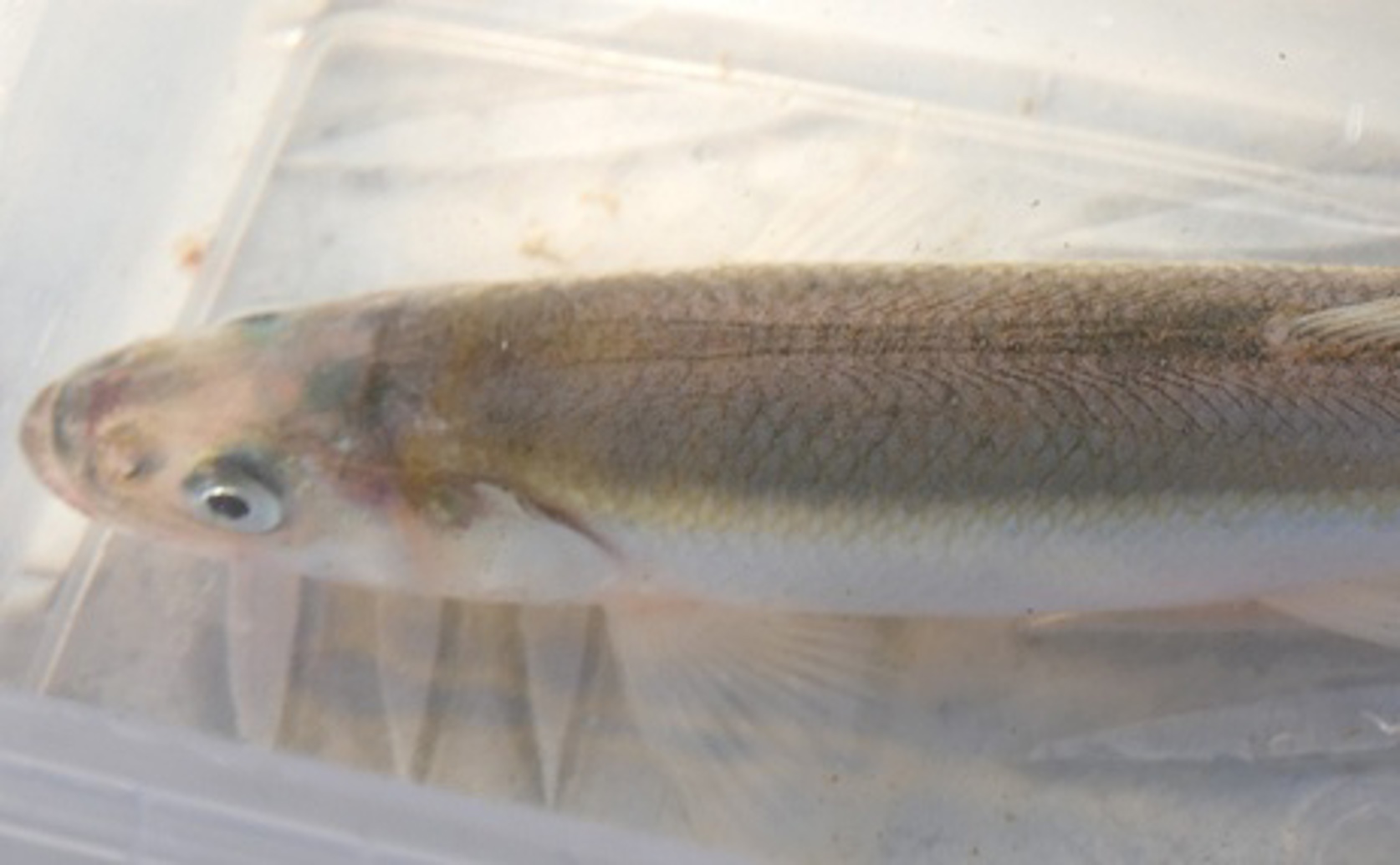
European Smelt (Osmerus eperlanus)

Photo adapted from: Roland Gromes / CC BY (Source)

Key Findings

  • The study, conducted in German rivers like the Elbe and Weser, found that European smelt larvae have optimal prey consumption at turbidity levels between 100 and 200 NTU
  • Prey consumption decreases significantly at turbidity levels above 300 NTU, indicating that excessive turbidity negatively impacts feeding
  • Survival rates of European smelt larvae also decline at turbidity levels above 300 NTU, suggesting that high turbidity can be detrimental to their survival
The anadromous European smelt (Osmerus eperlanus) is a crucial component of riverine food webs in Europe, but its population has seen significant declines in several German rivers, such as the Elbe and Weser. Turbidity, the cloudiness or haziness of water caused by large numbers of individual particles, is one of the suspected stressors impacting the recruitment success of this species. A recent study conducted by the Thünen Institute[1] aimed to investigate the impact of elevated turbidity on the prey consumption and survival of European smelt larvae. The study exposed smelt larvae to six different turbidity levels, ranging from 0 to 500 nephelometric turbidity units (NTU), over four separate trials. The researchers found that prey uptake increased at low turbidity levels and decreased at high turbidity levels, with an optimal range between 100 and 200 NTU. Survival rates began to decline at turbidity levels above 300 NTU. These findings suggest that while some turbidity may be beneficial for larval smelt, excessive turbidity can have detrimental effects. This study builds on earlier research that has explored the effects of turbidity on fish populations. For instance, one study found that turbidity associated with river plumes can influence the predation rates on larval fish, with higher predation occurring in less turbid waters[2]. Another study suggested that turbid river plumes could enhance the survival of fish larvae by providing more food and reducing vulnerability to predators[3]. However, the current study provides a more nuanced understanding by establishing specific turbidity thresholds for optimal larval performance. The researchers also conducted a systematic literature review to contextualize their findings within the broader body of research. They found that most studies on the effects of turbidity on fish have focused on pelagic prey items and juvenile stages, rather than larval stages. This gap in the literature highlights the importance of the Thünen Institute's focus on larval European smelt, as early life stages are particularly sensitive to environmental changes. The findings of this study have practical implications for managing European smelt populations. By identifying the optimal turbidity levels for larval performance, this research can inform the development of mechanistic models to predict the impact of turbidity on smelt recruitment dynamics. These models could be valuable for conservation efforts aimed at mitigating the effects of increased turbidity due to anthropogenic activities, such as construction and agriculture, which often elevate fine sediment levels in freshwater systems[4]. In summary, this study by the Thünen Institute provides critical insights into the relationship between turbidity and the early life stages of European smelt. It establishes specific turbidity thresholds that can be used to optimize the survival and growth of larval smelt, thereby contributing to more effective conservation and management strategies.

EnvironmentAnimal ScienceMarine Biology

References

Main Study

1) Turbidity effects on prey consumption and survival of larval European smelt (Osmerus eperlanus)

Published 9th July, 2024

https://doi.org/10.1007/s00027-024-01103-9


Related Studies

2) Novel molecular approach demonstrates that turbid river plumes reduce predation mortality on larval fish.

https://doi.org/10.1111/mec.12927


3) Benefits of Turbid River Plume Habitat for Lake Erie Yellow Perch (Perca flavescens) Recruitment Determined by Juvenile to Larval Genotype Assignment.

https://doi.org/10.1371/journal.pone.0125234


4) Clear as mud: a meta-analysis on the effects of sedimentation on freshwater fish and the effectiveness of sediment-control measures.

https://doi.org/10.1016/j.watres.2014.02.047


Related Articles

An unhandled error has occurred. Reload 🗙