Fish Choosing Their Own Alternative Diets

Jim Crocker
11th July, 2024

Fish Choosing Their Own Alternative Diets

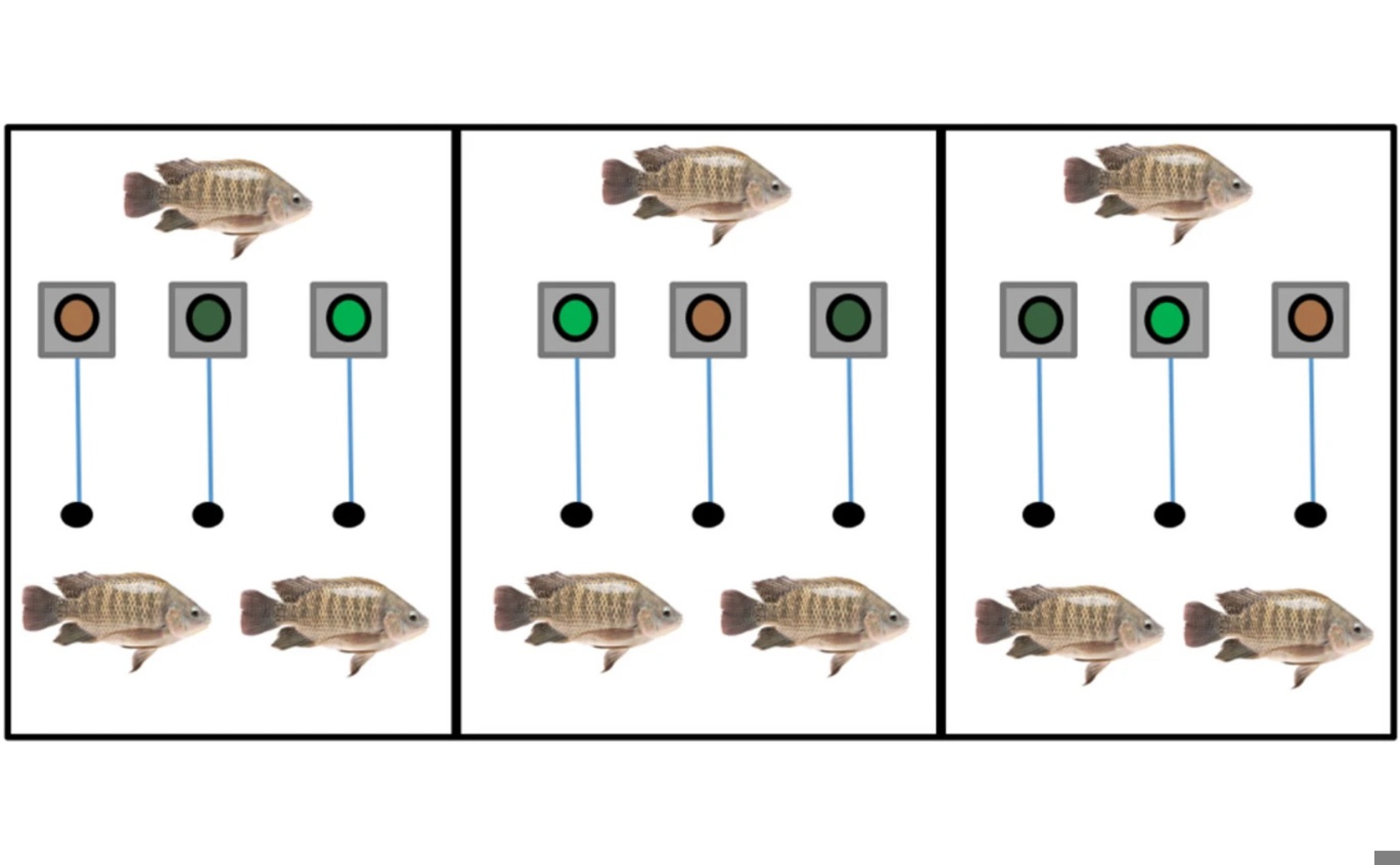
Experimental setup using Nile tilapia (Oreochromis niloticus). Each of the three feeders inside each tank, contained a specific feed (PD, ORG1 and ORG2)

Image adapted from: Mendes et al. / CC BY (Source)

Key Findings

  • The study took place at Universidad de Murcia and focused on Nile tilapia and gilthead seabream
  • Tilapia showed a clear preference for the ORG2 diet, consuming 46.5% of it
  • Seabream did not show a significant preference for any of the feeds offered
Aquaculture, the farming of aquatic organisms, is a rapidly growing industry, but traditional methods of assessing fish feeds often focus on growth metrics from a human perspective rather than considering the fish's own preferences and behaviors. A recent study conducted by researchers at Universidad de Murcia aimed to shift this paradigm by investigating the behavioral responses and feed preferences of Nile tilapia (Oreochromis niloticus) and gilthead seabream (Sparus aurata) through a self-selection trial using self-feeders[1]. This study offers insights into how fish might choose their diets when given the option, potentially leading to more ethical and environmentally sustainable aquaculture practices. In this study, three groups of tilapia and four groups of seabream were offered three different feeds: a control commercial-like feed (PD) and two experimental diets (ORG1 and ORG2) formulated with alternative ingredients to address environmental and ethical concerns. The tilapia showed a clear preference for the ORG2 diet, consuming 46.5% of it, while the seabream showed no significant preference for any of the feeds. This indicates that tilapia might be more responsive to changes in feed composition, potentially due to the sensory properties of the feed and post-ingestion signals. This study builds on previous research that has explored the dietary preferences and feeding behaviors of fish. For instance, a study on sea bass demonstrated their ability to distinguish between diets with varying macronutrient compositions, showing a preference for protein over fat and carbohydrates[2]. Similarly, the current study found that tilapia's preference for ORG2 might be influenced by its sensory properties and post-ingestion effects, aligning with earlier findings that fish can select diets based on their nutritional needs. Additionally, the role of taste and pre-absorptive sensing of amino acids in food intake control has been studied in rainbow trout, revealing that certain amino acids can trigger satiety signals and reduce food intake[3]. The current study's findings suggest that similar mechanisms might be at play in tilapia, where the sensory properties of ORG2 could be influencing their feeding behavior. The methodology used in this study, involving self-feeders and self-selection trials, is significant as it allows fish to express their natural feeding behaviors and preferences. This approach contrasts with traditional anthropocentric methods that primarily focus on growth metrics. By considering the fish's perspective, researchers can develop feeds that are not only nutritionally adequate but also more aligned with the fish's natural preferences, potentially improving their welfare and reducing the environmental impact of aquaculture. Moreover, personality traits in fish, such as boldness and shyness, have been shown to influence their feeding behavior and competitive abilities[4]. Bold fish tend to explore their environment more quickly and are more successful in competitive feeding scenarios. While the current study did not specifically examine personality traits, the observed preference for ORG2 in tilapia could be influenced by individual differences in behavior, suggesting an area for future research. In conclusion, the study conducted by Universidad de Murcia highlights the importance of considering fish behavior and preferences in the design of new aquaculture feeds. By allowing fish to self-select their diets, researchers can gain valuable insights into their nutritional needs and preferences, leading to more ethical and sustainable aquaculture practices. This study, supported by earlier research on dietary preferences and feeding behaviors in fish, underscores the potential of self-selection experiments as a powerful tool for improving aquaculture feed formulations.

NutritionAnimal ScienceMarine Biology

References

Main Study

1) Nile tilapia and gilthead seabream dietary self-selection of alternative feeds

Published 10th July, 2024

https://doi.org/10.1007/s10695-024-01373-y


Related Studies

2) Self-design of fish diets by means of self-feeders: validation of procedures.

Journal: Journal of physiology and biochemistry, Issue: Vol 56, Issue 3, Sep 2000


3) Oral and pre-absorptive sensing of amino acids relates to hypothalamic control of food intake in rainbow trout.

https://doi.org/10.1242/jeb.221721


4) Behaviour of personality-screened juvenile Oreochromis niloticus in different challenges: Bold fish present more exploratory capacity and learning to face imposed challenges.

https://doi.org/10.1590/0001-3765202220210976


Related Articles

An unhandled error has occurred. Reload 🗙