How Diet, CO2, and Plant Type Impact Grapevine Quality and Insect Development

Greg Howard
12th January, 2025

How Diet, CO2, and Plant Type Impact Grapevine Quality and Insect Development

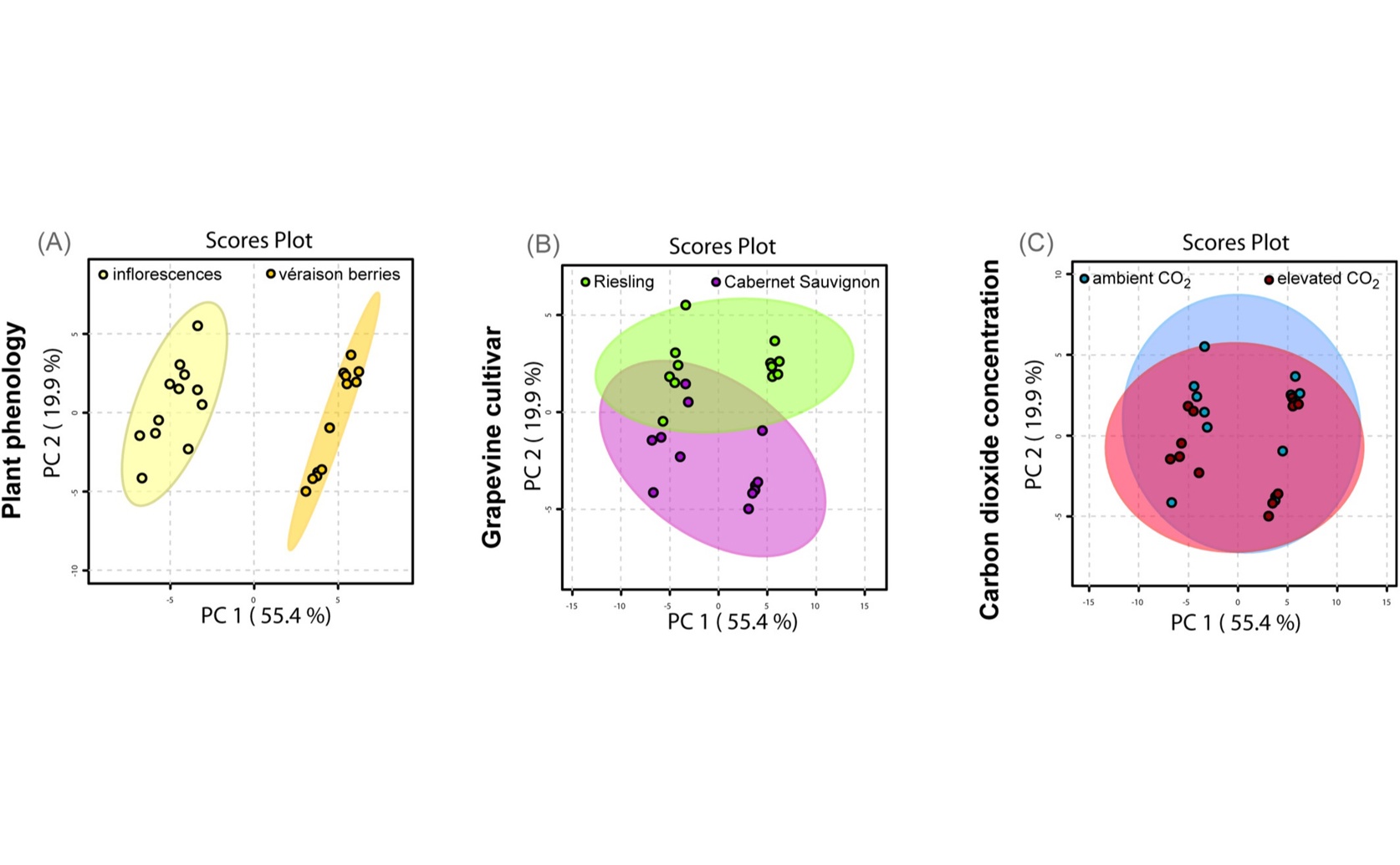
Principal component analysis reveals that the biochemical composition of grapevine reproductive organs is most strongly influenced by the plant's phenological stage (a), followed by the cultivar (b), and is only minimally affected by elevated atmospheric CO2 concentration (c).

Image adapted from: Becker et al. / CC BY (Source)

Key Findings

  • Researchers at Hochschule Geisenheim University studied how elevated CO2 levels affect grapevines and the European grapevine moth
  • Elevated CO2 had a smaller impact on grapevine-moth interactions than natural seasonal changes in grapevines
  • The larvae of the moth can adapt their gene expression to cope with changes in the nutritional and defensive properties of grapevines
The European grapevine moth, Lobesia botrana, is a significant pest in viticulture, affecting both flowers and berries of grapevines. As climate change progresses, elevated atmospheric CO2 concentrations are expected to influence plant-insect interactions, potentially altering the nutritional value and defense mechanisms of grapevines. Researchers at Hochschule Geisenheim University in Germany conducted a study to understand how future elevated CO2 levels might impact the host plant quality of grapevines and the performance and gene expression of L. botrana larvae[1]. The study utilized the Geisenheim VineyardFACE facility to cultivate 'Riesling' and 'Cabernet Sauvignon' grapevines under ambient and elevated CO2 conditions (approximately +20%). The researchers examined the nutrient content (amino acids and sugars) and defense compounds (phenolic compounds) in grapevine inflorescences and ripening berries. They found that these biochemical traits varied significantly with plant phenology (the seasonal cycle of plant development) and were less influenced by the grapevine cultivar or CO2 concentration. The larval performance of L. botrana, assessed through growth rates and gene expression, showed that the larvae's transcriptomic plasticity (the ability of their genes to respond to environmental changes) mirrored the biochemical changes in the grapevines. This indicates that the larvae can adapt their gene expression to cope with the varying nutritional and defensive properties of the grapevine organs they feed on. Interestingly, the study found that elevated CO2 concentrations had a smaller impact on the grapevine-L. botrana interaction than the natural changes occurring within a single growing season. This suggests that the seasonal phenological changes in grapevines are more critical for pest management than the projected future increases in atmospheric CO2. This research builds on previous findings regarding the interaction between plant biochemistry and herbivorous insects. For example, another study highlighted how nitrogen and water availability affect plant quality, influencing herbivore and parasitoid performance[2]. The current study supports the idea that abiotic factors like CO2 levels can alter plant-insect dynamics, though the seasonal changes in plant phenology seem to play a more significant role. Additionally, the study's findings align with earlier research on the genetic mechanisms of insect herbivory. For instance, Spodoptera exigua larvae showed different gene expression patterns when feeding on various host plants, indicating that herbivores can deploy specific genes for digestion and detoxification depending on the host plant[3]. This genetic flexibility is crucial for herbivores like L. botrana to adapt to changing plant biochemistry. Moreover, the study touches on the concept of plant defense suppression by herbivores. Previous research demonstrated that insect oral secretions could suppress plant defenses, enhancing larval growth[4]. While the current study did not focus on this mechanism, it highlights the complex interactions between plant defenses and herbivore adaptations. In conclusion, the study by Hochschule Geisenheim University suggests that elevated CO2 levels may have a limited impact on the grapevine-L. botrana interaction compared to the natural phenological changes within a growing season. This insight is crucial for developing effective pest management strategies in the face of climate change. Understanding the intricate relationships between plant biochemistry and herbivore gene expression can help optimize agricultural practices and ensure sustainable crop production.

AgricultureGeneticsPlant Science

References

Main Study

1) Change Your Diet: How CO2, Plant Phenology and Genotype Alter Grapevine Quality and Affect Performance and Larval Transcriptome of an Insect Herbivore.

Published 9th January, 2025

https://doi.org/10.1111/mec.17636


Related Studies

2) Feeding guild determines strength of top-down forces in multitrophic system experiencing bottom-up constraints.

https://doi.org/10.1016/j.scitotenv.2021.148544


3) An influential meal: host plant dependent transcriptional variation in the beet armyworm, Spodoptera exigua (Lepidoptera: Noctuidae).

https://doi.org/10.1186/s12864-019-6081-7


4) Insect oral secretions suppress wound-induced responses in Arabidopsis.

https://doi.org/10.1093/jxb/err308


Related Articles

An unhandled error has occurred. Reload 🗙