Most Plant Mutations Are Specific to Certain Layers

Jim Crocker
25th July, 2024

Most Plant Mutations Are Specific to Certain Layers

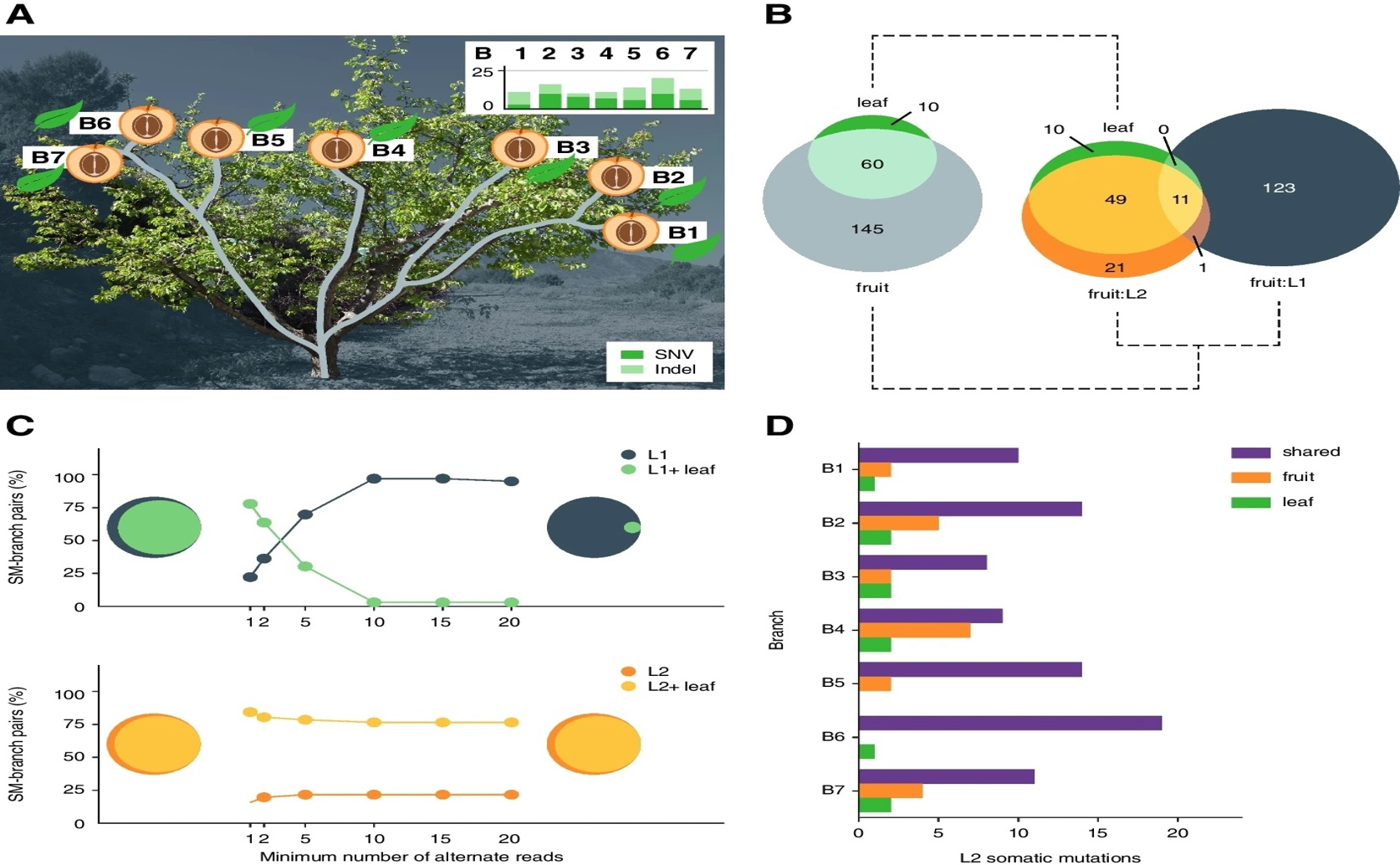
Comparing adjacent fruit and leaf tissue reveals that most somatic mutations from the inner cell layer (L2) are shared between the two organs (b, d), while mutations from the outer layer (L1) are not (b), confirming their distinct meristematic origin and layer-specific propagation.

Image adapted from: Goel et al. / CC BY (Source)

Key Findings

  • The study, conducted in an apricot tree in Murcia, Spain, found that somatic mutations in meristematic layers are mostly layer-specific and rarely shared between layers
  • Layer 1 (epidermis) showed significantly more mutations than Layer 2 (mesophyll), suggesting different mutational processes in these layers
  • Somatic mutations in meristematic layers are propagated during branching and clonal reproduction, leading to genomic heterogeneity between different tissues
Understanding the genetic basis of somaclonal phenotypic variation in plants has long been a subject of scientific curiosity. This study, conducted by researchers at LMU Munich[1], sheds light on the characteristics of meristematic mutations and their propagation in plant tissues, offering new insights into plant development and genetic variation. Meristems are specialized regions in plants containing stem cells that differentiate into various tissues, contributing to the growth of new plant structures. These meristems are organized into distinct layers, each with specific roles in the development of the plant. Mutations occurring in these layers can spread and affect large parts of the plant, leading to observable phenotypic changes. The study from LMU Munich aimed to investigate the nature of these meristematic mutations. By analyzing the genetic and phenotypic outcomes of such mutations, the researchers hoped to gain a deeper understanding of how somaclonal variation arises and propagates through plant tissues. This research builds on previous studies that have explored related phenomena in plant development. For instance, earlier research has shown that chimeras—organisms composed of cells from different genotypes—can provide valuable insights into plant development[2]. The 'Bizzaria', a historical example of a chimera, demonstrated how cells from different genetic backgrounds can coexist and contribute to the overall phenotype of a plant. This study extends that understanding by focusing specifically on meristematic mutations and their role in generating somaclonal variation. Additionally, research on the shoot apical meristem of Arabidopsis thaliana has revealed the distinct contributions of different cell layers to the development of floral organs[3]. By labeling cells in each layer, scientists were able to map their contributions and understand how cell division patterns are regulated during development. The LMU Munich study builds on this knowledge by exploring how mutations in these layers can lead to phenotypic changes. The phenomenon of bud sports—lateral shoots or flowers with visibly different phenotypes from the rest of the plant—also provides context for understanding somaclonal variation[4]. Bud sports often result from stable somatic mutations that can be propagated vegetatively. By examining the molecular and cytological changes in these sports, researchers have gained insights into developmental processes and gene function. The current study adds to this body of knowledge by focusing on the genetic basis of such variations. One of the significant findings of the LMU Munich study is the identification of specific mutations in meristematic layers that can propagate and cause phenotypic changes. By using advanced genomic techniques, the researchers were able to pinpoint the genetic alterations responsible for these changes. This detailed analysis provides a clearer picture of how somaclonal variation arises and propagates in plant tissues. Moreover, the study highlights the role of epigenetic changes in contributing to somaclonal variation. Previous research has shown that plants can transmit somatic mutations and epimutations to their offspring, affecting their fitness and adaptation[5]. The LMU Munich study corroborates these findings by demonstrating that epigenetic changes, such as DNA methylation, play a crucial role in the propagation of meristematic mutations. In summary, the LMU Munich study offers valuable insights into the genetic basis of somaclonal phenotypic variation in plants. By investigating the characteristics of meristematic mutations, the researchers have expanded our understanding of plant development and genetic variation. This study builds on previous research on chimeras[2], meristematic cell layers[3], and bud sports[4], providing a comprehensive view of how somaclonal variation arises and propagates in plant tissues.

GeneticsBiochemPlant Science

References

Main Study

1) The vast majority of somatic mutations in plants are layer-specific

Published 24th July, 2024

https://doi.org/10.1186/s13059-024-03337-0


Related Studies

2) Plant chimeras: The good, the bad, and the 'Bizzaria'.

https://doi.org/10.1016/j.ydbio.2016.07.003


3) Regulation of cell proliferation patterns by homeotic genes during Arabidopsis floral development.

Journal: Development (Cambridge, England), Issue: Vol 127, Issue 6, Mar 2000


4) Attention sports fans! The far-reaching contributions of bud sport mutants to horticulture and plant biology.

https://doi.org/10.1038/s41438-018-0062-x


5) A genome assembly and the somatic genetic and epigenetic mutation rate in a wild long-lived perennial Populus trichocarpa.

https://doi.org/10.1186/s13059-020-02162-5


Related Articles

An unhandled error has occurred. Reload 🗙