
How Long Non-Coding RNAs Help Rapeseed Seedlings Cope with Drought Stress
Jenn Hoskins
20th July, 2024


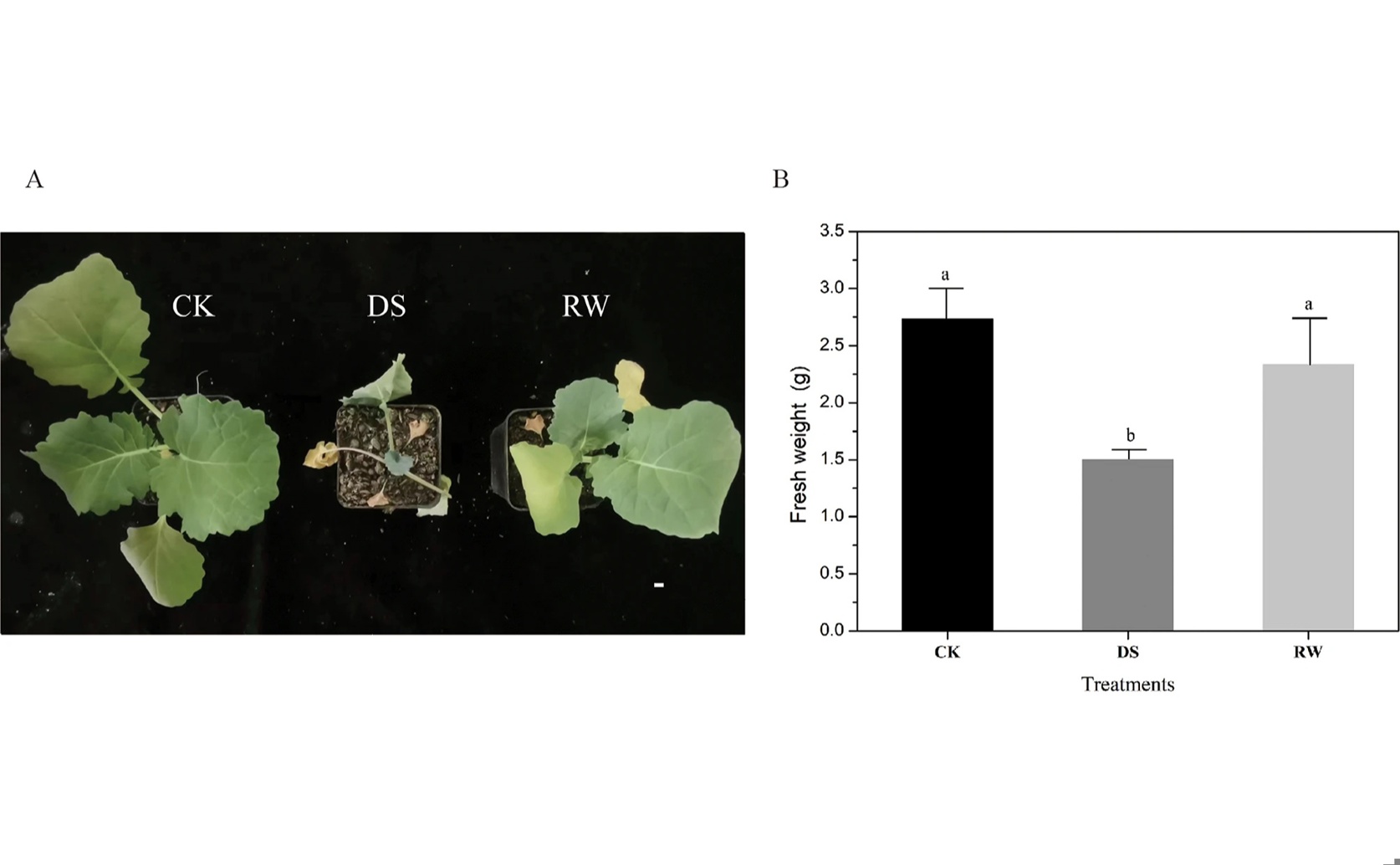
Rapeseed (Brassica napus L.) seedlings exhibited clear physiological stress under drought, showing wilting (a) and significantly lower fresh weight (b), but recovered these traits after re-watering, demonstrating the stress-response phenomena this study investigates at a molecular level.
Key Findings
- The study from Jiangsu Vocational College focused on rapeseed's response to drought and rehydration
- Researchers identified 381 lncRNAs and 10,253 mRNAs that changed under drought, and 477 lncRNAs and 12,543 mRNAs that changed during rehydration
- Key plant hormones like abscisic acid (ABA), auxin, cytokinins, and gibberellins were crucial in rapeseed's drought response
References
Main Study
1) Transcriptome analysis suggested that lncRNAs regulate rapeseed seedlings in responding to drought stress by coordinating the phytohormone signal transduction pathways
Published 19th July, 2024
https://doi.org/10.1186/s12864-024-10624-4
Related Studies
2) Transcriptional regulation of drought response: a tortuous network of transcriptional factors.
3) Evolutionary Conservation of ABA Signaling for Stomatal Closure.
4) Differentiate responses of tetraploid and hexaploid wheat (Triticum aestivum L.) to moderate and severe drought stress: a cue of wheat domestication.
5) ABA-dependent and ABA-independent signaling in response to osmotic stress in plants.
Related Articles
 18th July, 2024 | Jenn Hoskins