Reliable Genes for Measuring Disease Resistance in Different Banana Varieties

Jenn Hoskins
18th July, 2024

Reliable Genes for Measuring Disease Resistance in Different Banana Varieties

Musa acuminata

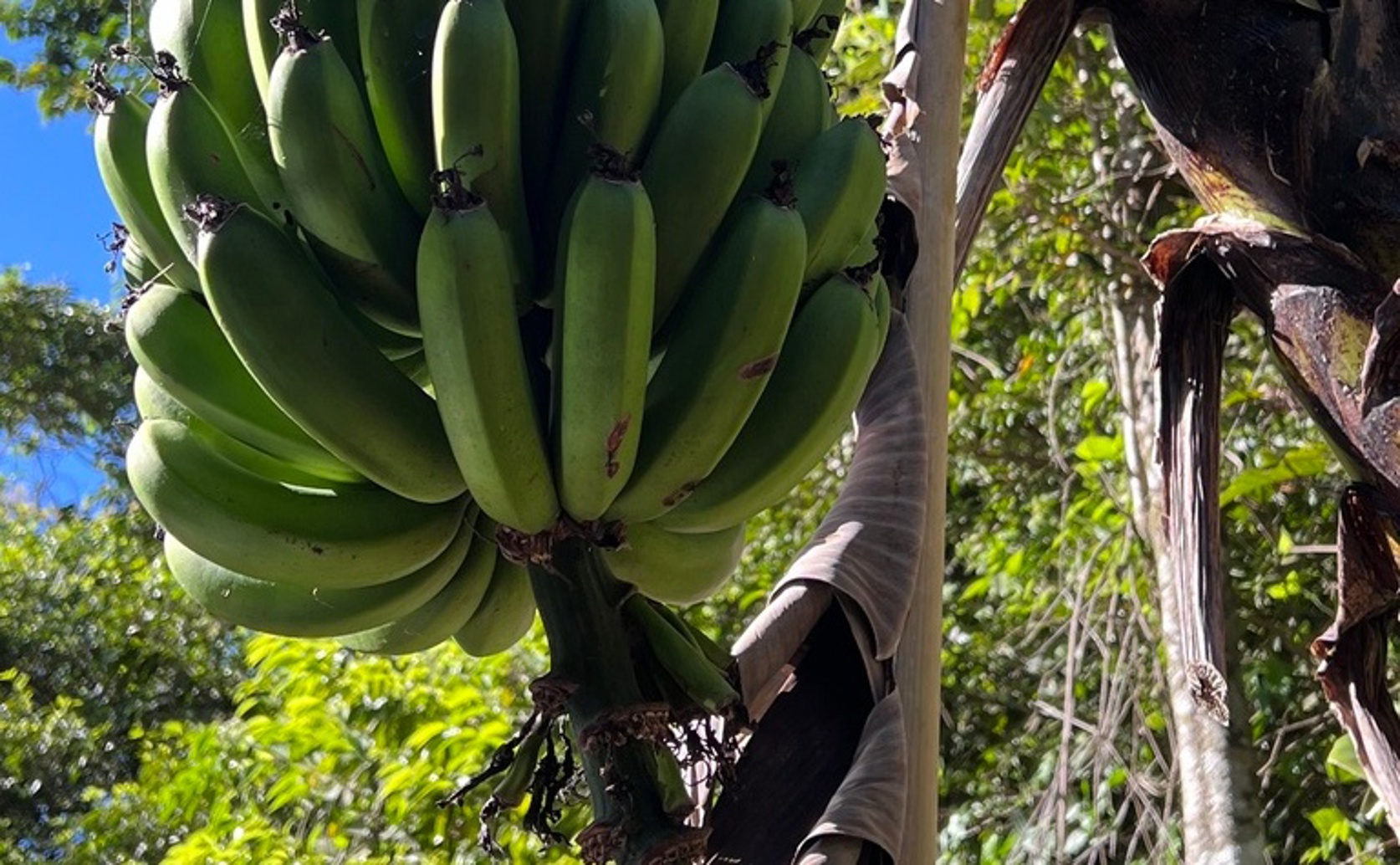
Photo adapted from: Mark Richman / CC BY (Source)

Key Findings

  • Researchers at the Universidade de Brasília studied genetic resistance in bananas against Fusarium wilt
  • They identified stable reference genes crucial for analyzing gene expression in resistant and susceptible banana genotypes
  • The study found βTUB3 and L2 genes most stable in resistant bananas, and ACTA1 and GAPDH genes most stable in susceptible ones
Banana (Musa spp.) is the most widely consumed fruit globally. However, its production is severely threatened by Fusarium wilt, a disease caused by the soil-borne fungus Fusarium oxysporum f. sp. cubense (Foc). This disease has historically devastated banana cultivars and continues to pose a significant threat to current varieties, particularly the Cavendish cultivars, which make up a substantial portion of global banana production[2][3]. A recent study conducted by researchers at the Universidade de Brasília[1] has made significant strides in understanding the genetic resistance mechanisms in bananas against Fusarium wilt. The study specifically focused on identifying stable reference genes in banana genotypes that are resistant and susceptible to Fusarium wilt. These reference genes are crucial for accurate analysis of gene expression, particularly in pathways involved in host defense responses. The research team evaluated the stability of several potential host reference genes, including ACT1, APT, EF1α, GAPDH, αTUB, RAN, UBIQ1, UBIQ2, βTUB1, βTUB3, L2, and ACTA1. These genes were analyzed in total RNA samples extracted from root tissues of two banana genotypes: Calcutta 4, a wild resistant genotype, and Prata-anã, a susceptible cultivar. The samples were taken during their interaction with Foc subtropical race 4 (STR4). To determine the stability of these reference genes, the researchers used three different algorithms: geNorm, NormFinder, and BestKeeper. These computational tools help in assessing the expression stability of genes under specific conditions. The study found that βTUB3 and L2 were the most stable reference genes in the resistant Calcutta 4 genotype, while ACTA1 and GAPDH were the most stable in the susceptible Prata-anã cultivar. The identification of these stable reference genes is a critical advancement in the field. It allows for more accurate normalization of gene expression data, which is essential for understanding the molecular mechanisms behind the host defense responses to Fusarium wilt. This, in turn, can lead to the development of more effective management strategies and potentially resistant banana cultivars. This study builds upon earlier findings that have highlighted the significant threat posed by Fusarium wilt to banana production worldwide. For instance, previous studies have documented the historical impact of Fusarium wilt on the Gros Michel banana industry and the subsequent adoption of Cavendish cultivars[2][3]. However, the emergence of new Foc strains such as tropical race 4 (TR4) has once again put banana production at risk, as these strains can infect Cavendish clones and a diverse range of other banana varieties[3][4]. The research conducted by the Universidade de Brasília addresses some of the gaps identified in earlier studies regarding the epidemiology and management of Fusarium wilt. By focusing on the genetic resistance mechanisms in bananas, this study provides valuable insights that could inform breeding programs aimed at developing resistant cultivars. The use of stable reference genes for gene expression analysis is a crucial step in this direction, as it enables researchers to accurately assess the effectiveness of different resistance genes and pathways. In summary, the identification of stable reference genes in resistant and susceptible banana genotypes represents a significant advancement in the fight against Fusarium wilt. This study not only enhances our understanding of the molecular mechanisms underlying host defense responses but also provides a foundation for future research and breeding efforts aimed at developing resistant banana cultivars.

GeneticsBiochemPlant Science

References

Main Study

1) Reference genes for RT-qPCR analysis in Musa acuminata genotypes contrasting in resistance to Fusarium oxysporum f. sp. cubense subtropical race 4.

Published 17th July, 2024

https://doi.org/10.1038/s41598-024-67538-0


Related Studies


3) Fusarium Wilt of Banana: Current Knowledge on Epidemiology and Research Needs Toward Sustainable Disease Management.

https://doi.org/10.3389/fpls.2018.01468


4) First Report on the Occurrence of a Virulent Strain of Fusarium Wilt Pathogen (Race-1) Infecting Cavendish (AAA) Group of Bananas in India.

https://doi.org/10.1094/PDIS-05-10-0330


Related Articles

An unhandled error has occurred. Reload 🗙