
How to best build successful floodplain wetlands: lessons from eight projects
Jenn Hoskins
18th January, 2026


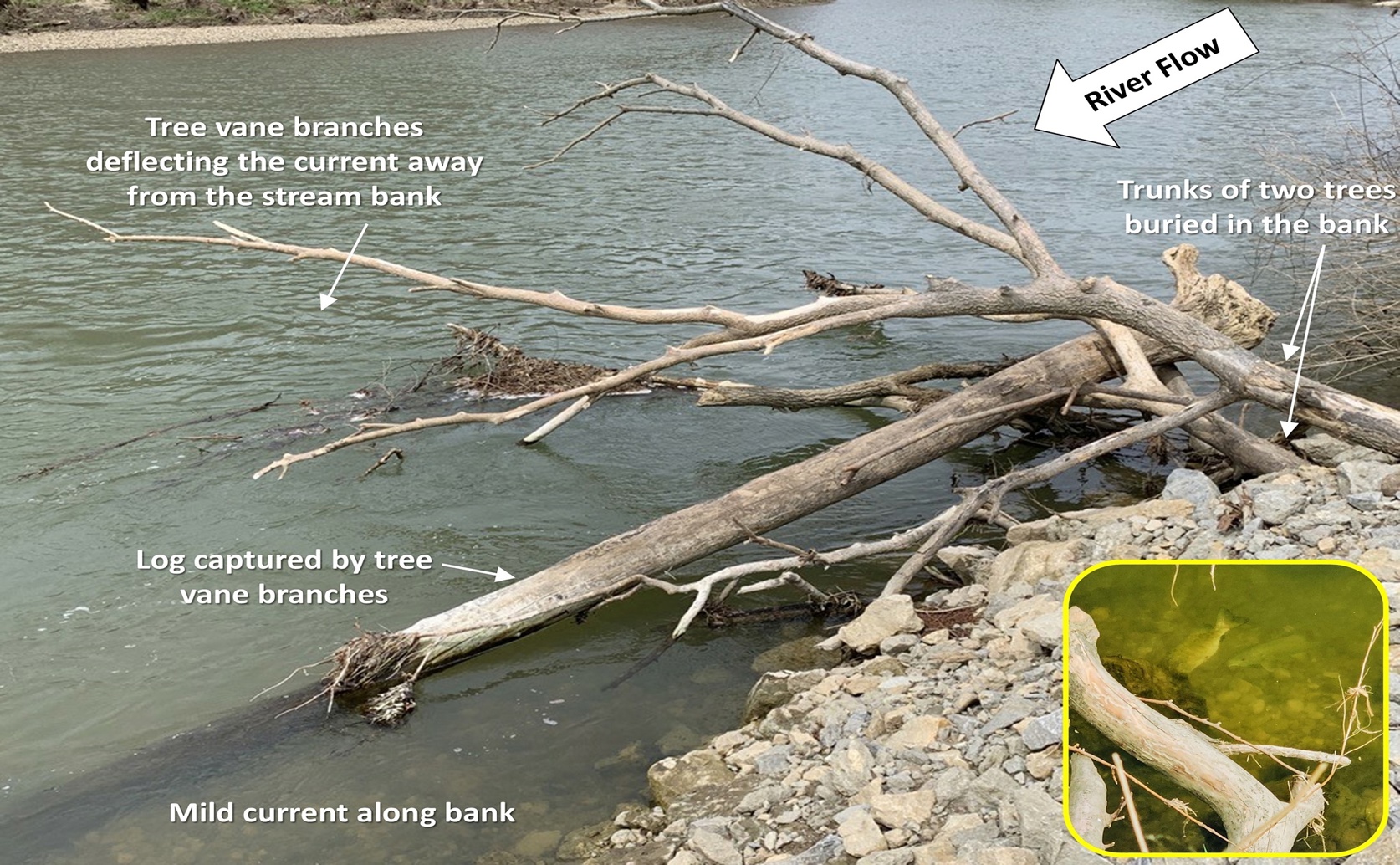
A purposefully buried tree vane effectively deflects erosive flow to stabilize the river-wetland connection, while also creating beneficial habitat for sport fish such as smallmouth bass (Micropterus dolomieu).
Key Findings
- Historic deforestation and sediment accumulation have reduced floodplain capacity in southwest Ohio and northern Kentucky, impacting flood control and ecosystem health
- Restoring floodplains by removing accumulated sediment can revitalize wetlands, offering a cost-effective alternative to traditional stormwater infrastructure
- Strategic project design, including connection elevation and multi-stage treatment systems, maximizes benefits like flood reduction, erosion control, and water quality improvement
References
Main Study
1) Success criteria comparison of eight implemented projects to improve the planning, design, and construction of floodplain wetlands
Published 16th January, 2026
https://doi.org/10.1371/journal.pwat.0000426
Related Studies
2) The human impact on North American erosion, sediment transfer, and storage in a geologic context.
3) Human alterations of the global floodplains 1992-2019.
4) Implementing constructed wetlands for nutrient reduction at watershed scale: Opportunity to link models and real-world execution.
Related Articles
 27th October, 2025 | Greg Howard