Bacteria found on centipede claws reveal unique microbial communities

Jenn Hoskins
17th January, 2026

Bacteria found on centipede claws reveal unique microbial communities

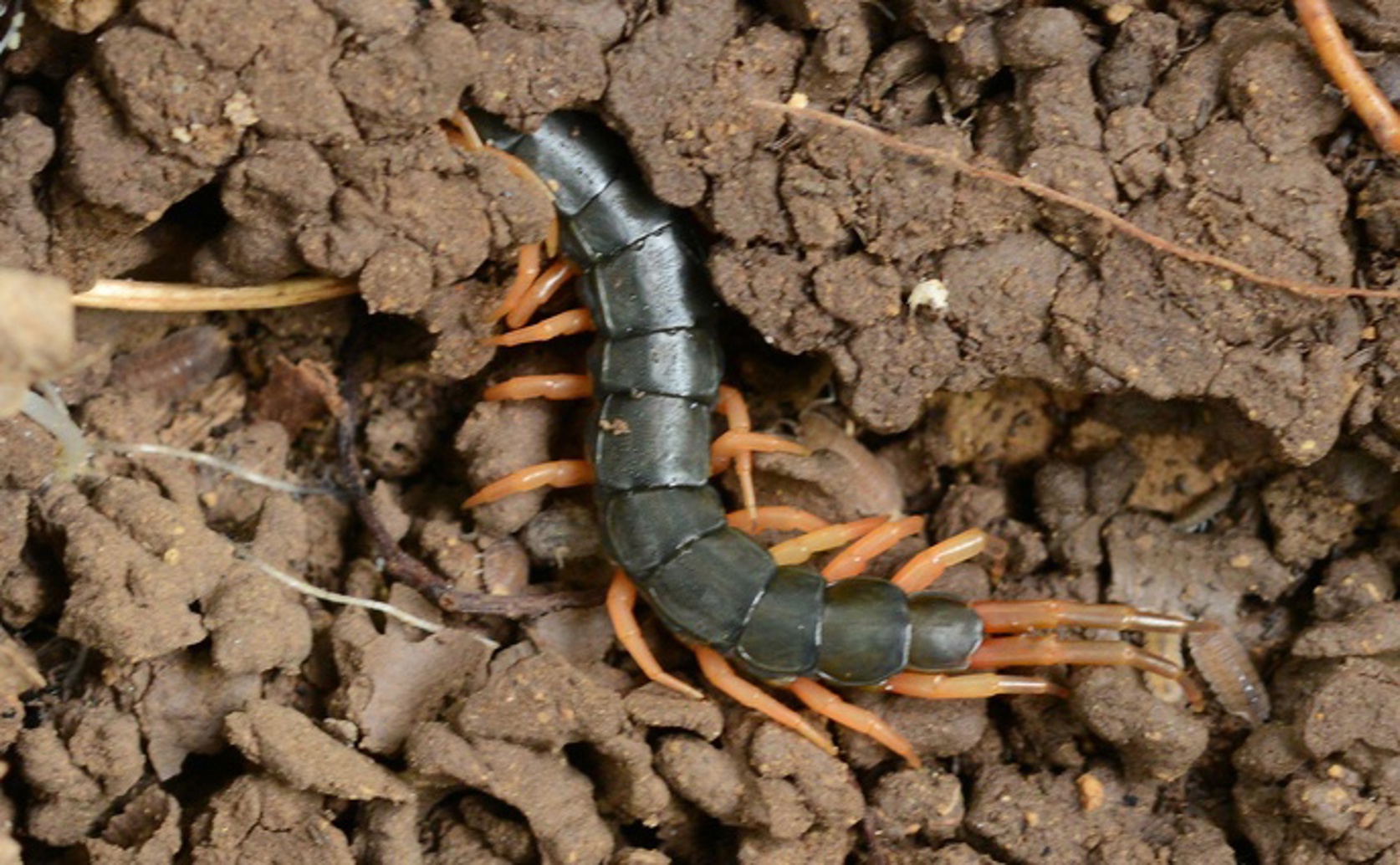
Although the venom-injecting forcipules of the centipede Scolopendra mutilans (pictured) host a diverse bacterial community, this study suggests they are an unlikely source of severe post-bite infections, which are more probably caused by the introduction of the victim's own skin bacteria into the wound.

Photo adapted from: Kim, Hyun-tae / CC BY (Source)

Key Findings

  • Centipede bites, common in warmer areas, usually cause pain but can sometimes lead to serious infections
  • Researchers found diverse bacteria on centipede fangs, but those causing severe infections were rarely present
  • Infections after centipede bites likely come from skin bacteria entering the wound, not from the centipede itself, highlighting the importance of wound cleaning
Centipede bites are a common occurrence in warmer climates, typically causing localized pain and swelling. While most bites are relatively harmless, serious complications, including severe infections, can sometimes develop. Understanding the cause of these infections is crucial for effective treatment and prevention. Historically, centipede bites were often considered to be primarily caused by the venom injected during the bite[2][3], but increasing evidence suggests that bacteria may play a significant role, particularly in cases of necrotizing soft tissue infection (NSTI) – a life-threatening condition where tissue rapidly breaks down. A recent study conducted by researchers at Jichi Medical University and Makerere University[1] investigated the bacterial species living on and within the forcipules – the fang-like appendages – of centipedes. The goal was to determine if centipedes carry bacteria that could contribute to post-bite infections. The researchers collected specimens of three centipede species – Scolopendra mutilans, Scolopendra japonica, and Bothropolys rugosus – from different regions of Japan. They then used a technique called 16S ribosomal ribonucleic acid (rRNA) gene sequencing to identify the types of bacteria present on the centipedes’ forcipules. 16S rRNA gene sequencing is a method used to identify bacteria based on their genetic material; each bacterial species has a unique sequence, allowing researchers to determine which bacteria are present in a sample. The study revealed a surprisingly diverse bacterial community on the centipedes’ forcipules. While many different types of bacteria were identified, the researchers specifically looked for three genera known to be associated with NSTI: Escherichia, Staphylococcus, and Streptococcus. Of these, only Staphylococcus was found, and it was present in relatively small numbers. This finding is significant because it suggests that centipedes themselves may not be a major source of the bacteria that cause severe infections following a bite. However, the presence of any bacteria on the forcipules highlights the importance of proper wound care. As noted in earlier case reports[3][4][5], bacterial superinfections can occur after centipede bites, sometimes leading to serious complications like cellulitis (a skin infection) or even necrotizing fasciitis (a severe, rapidly spreading tissue infection). The research team's findings support the idea that bacteria already present on the skin can enter the wound during a bite and cause infection. The study builds upon previous observations that commensal bacteria – those normally living on the skin – are often the causative agents in these secondary infections[5]. The study’s results also contrast with some earlier assumptions about the primary cause of centipede bite complications. While venom is undoubtedly responsible for the initial pain and inflammation[2], this research suggests that the risk of infection from bacteria on the centipede itself is relatively low. This doesn’t eliminate the risk of infection altogether; wounds can still become contaminated from other sources, such as the environment or the victim’s own skin. Therefore, thorough cleaning of the bite wound with disinfectant and ensuring tetanus vaccination is up-to-date remain essential steps in preventing complications[4]. The research team emphasizes that further investigation is needed to fully understand the relationship between centipede bacteria and post-bite infections. It's possible that certain centipede species carry more virulent bacteria than others, or that the bacteria on the forcipules play a role in weakening the skin’s defenses, making it more susceptible to infection. Nevertheless, this study provides valuable new insights into the microbiology of centipede bites and reinforces the importance of diligent wound care.

EcologyAnimal ScienceMycology

References

Main Study

1) Bacterial community associated with the surface and inside of centipede forcipules: Identification and characterization

Published 16th January, 2026

https://doi.org/10.1371/journal.pone.0341165


Related Studies

2) Patients with centipede bites presenting to a university hospital in Bangkok: a 10-year retrospective study.

https://doi.org/10.1080/15563650.2020.1865543


3) An unusual two-stage infection following a scolopendra bite.

Journal: Acta bio-medica : Atenei Parmensis, Issue: Vol 91, Issue 14-S, Dec 2020


4) [Necrotizing fasciitis and cellulitis of the upper limb resulting from centipede bite: two case reports].

https://doi.org/10.1016/j.main.2009.05.001


5) Necrotizing Soft-Tissue Infection of the Trunk Resulting From Wound Caused by a Centipede: A Case Report.

https://doi.org/10.12659/AJCR.937869


Related Articles

An unhandled error has occurred. Reload 🗙