Sandflies in Laos reveal new species and disease risks

Greg Howard
4th January, 2026

Sandflies in Laos reveal new species and disease risks

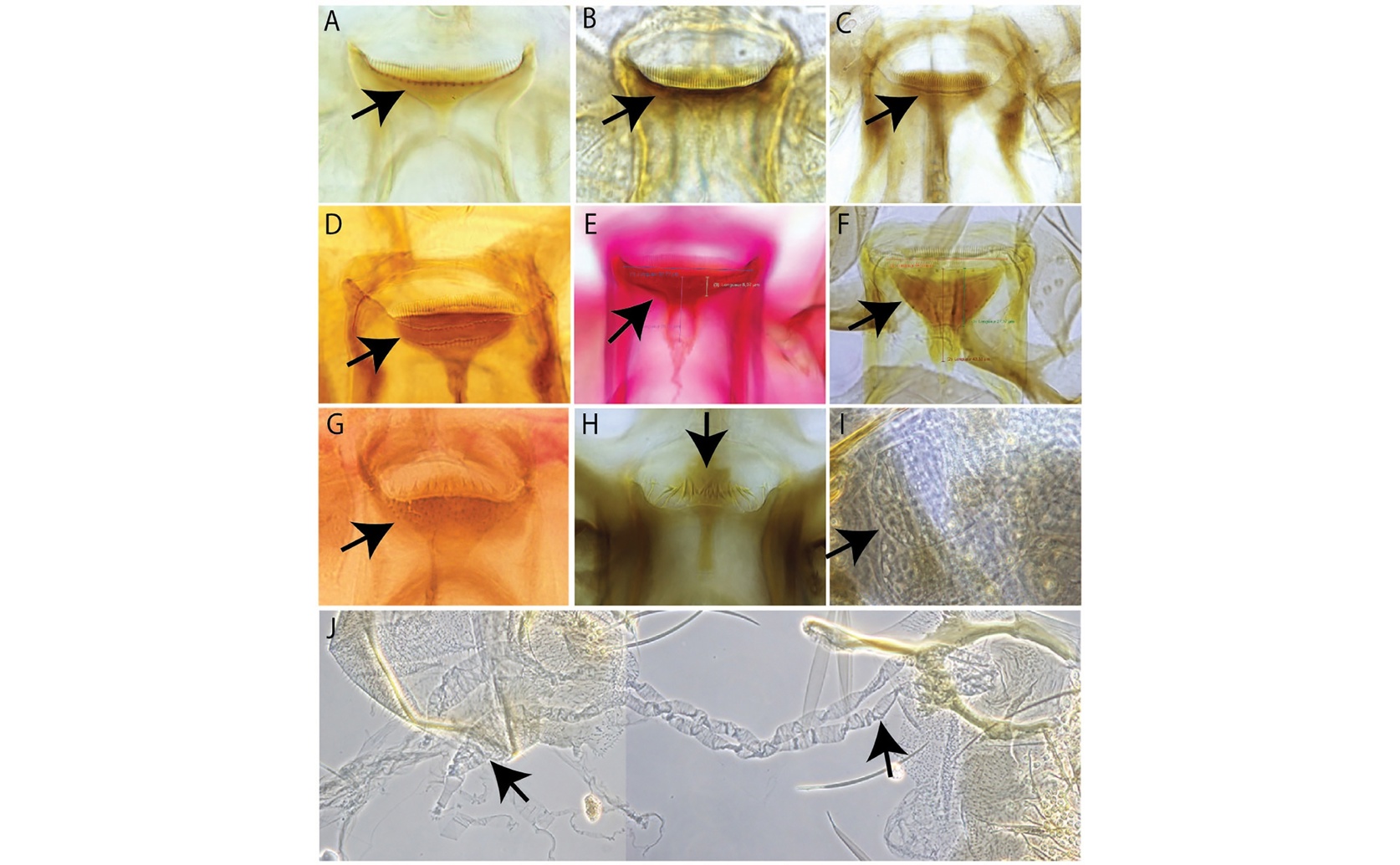
Key morphological features of the female cibarium and spermathecae distinguish the diverse sandfly species found in Laos, including variations within the Sergentomyia barraudi (a, b) and Se. brevicaulis (c, d) groups, as well as the unique characteristics of the newly described Sergentomyia sutherlandi n. sp. (f) and the newly recorded Phlebotomus (Adlerius) sp. 1 (j).

Image adapted from: Vongphayloth et al. / CC BY (Source)

Key Findings

  • This study, conducted across seven provinces of Laos, identified 25 different sandfly species, including two new to science, revealing high sandfly diversity in the region
  • Despite extensive sampling, no Leishmania parasite DNA was found in any of the collected sandflies, indicating a lack of detectable infection in the surveyed areas
  • Unexpectedly, DNA from previously unknown Trypanosoma species was detected in 24 sandflies, highlighting the presence of other parasites circulating within the sandfly population of Laos
Leishmaniasis is a disease spread by sandflies, posing a significant global health challenge, particularly in regions where vector-borne diseases are emerging or re-emerging[2]. The disease is caused by parasites of the Leishmania genus, transmitted to humans and animals through the bite of infected female sandflies. Understanding the distribution of sandfly species and the pathogens they carry is crucial for effective disease control. Laos, a country bordering Thailand where cases of leishmaniasis have been reported, currently lacks comprehensive data on the status of these diseases due to limited testing infrastructure. A recent study conducted by researchers at the Institut Pasteur du Laos, in collaboration with Université de Reims and other international institutions[1], aimed to address this knowledge gap by investigating sandfly diversity and Leishmania presence across seven provinces of Laos. The study involved collecting nearly 4,000 sandflies from diverse habitats over a ten-year period (2014-2024), including caves, animal shelters, forests, and plantations. These sandflies were then identified using both traditional morphological examination and molecular techniques – analyzing their DNA to confirm species. The researchers identified an impressive 25 different sandfly species from five genera: Chinius, Idiophlebotomus, Phlebotomus, Sergentomyia, and Grassomyia. Notably, the highest diversity was found in karstic areas, specifically within and around caves. The research team even described a new sandfly species, Sergentomyia sutherlandi n. sp., highlighting the potential for undiscovered biodiversity in the region. They also reported the first record of a Phlebotomus female belonging to the Adlerius subgenus in Southeast Asia, and further clarified the taxonomy of Sergentomyia brevicaulis. While the primary goal was to detect Leishmania DNA using a PCR technique targeting the ITS1 region of the parasite’s genome, surprisingly, no Leishmania was found in any of the collected sandflies. However, the PCR assay also detected DNA from unknown Trypanosoma species in 24 individual sandflies – specifically, in Chinius eunicegalatiae and Idiophlebotomus longiforceps. This unexpected finding suggests the presence of other, currently unidentified trypanosomatid parasites circulating within the sandfly populations of Laos. This study builds upon the broader understanding of the factors driving vector-borne disease emergence, as outlined in earlier research[2], which highlighted habitat changes, climate influences, and globalization as key contributors. The high diversity of sandflies found in karstic cave environments may be linked to specific ecological conditions within these habitats, creating favorable breeding grounds for these insects. Furthermore, the discovery of unknown Trypanosoma species emphasizes the complexity of pathogen interactions within sandfly populations. The fact that sandflies were sampled across a variety of habitats, including those in close proximity to human and animal populations, underlines the potential for disease transmission, even in the absence of confirmed Leishmania detection. The concept of “anthropophily” – the preference of sandflies to feed on humans – is often used to assess disease risk[3]. However, as discussed in that same study, classifying species as strictly anthropophilic can be misleading. The authors propose that many sandflies are “anthropportunists,” generalists that will feed on humans when available, rather than exhibiting a strong preference. The findings from Laos, with its diverse sandfly population and lack of detected Leishmania, support this idea – the presence of numerous sandfly species doesn't necessarily equate to high disease transmission risk, and the level of contact between sandflies and humans is likely influenced by a range of environmental factors. The study also highlights the importance of considering the evolutionary history of Leishmania and its vectors[4], as understanding these relationships can provide insights into parasite distribution and adaptation. The research in Thailand, which identified Leishmania martiniquensis in a patient[5], demonstrates that even seemingly rare parasites can emerge in new geographic locations, further emphasizing the need for continued surveillance. The researchers emphasize the need for broader geographic surveillance and increased sampling efforts in Laos to fully understand sandfly ecology and the pathogens they carry. Further studies are required to identify the unknown Trypanosoma species detected in this study, and to assess their potential role in disease transmission.

WildlifeEcologyAnimal Science

References

Main Study

1) Analysis of Phlebotomine sandflies in Laos from 2014–2024: Inventory, description of a new species, screening for Leishmania and detection of Trypanosoma

Published 2nd January, 2026

https://doi.org/10.1371/journal.pntd.0013641


Related Studies

2) Drivers for the emergence and re-emergence of vector-borne protozoal and bacterial diseases.

Journal: International journal for parasitology, Issue: Vol 35, Issue 11-12, Oct 2005


3) A review of Leishmania infections in American Phlebotomine sand flies - Are those that transmit leishmaniasis anthropophilic or anthropportunists?★.

https://doi.org/10.1051/parasite/2025039


4) A Historical Overview of the Classification, Evolution, and Dispersion of Leishmania Parasites and Sandflies.

https://doi.org/10.1371/journal.pntd.0004349


5) First isolation of Leishmania from Northern Thailand: case report, identification as Leishmania martiniquensis and phylogenetic position within the Leishmania enriettii complex.

https://doi.org/10.1371/journal.pntd.0003339


Related Articles

An unhandled error has occurred. Reload 🗙