Bacteria on eggs reveal bird nesting habits in wetlands

Jim Crocker
18th September, 2025

Bacteria on eggs reveal bird nesting habits in wetlands

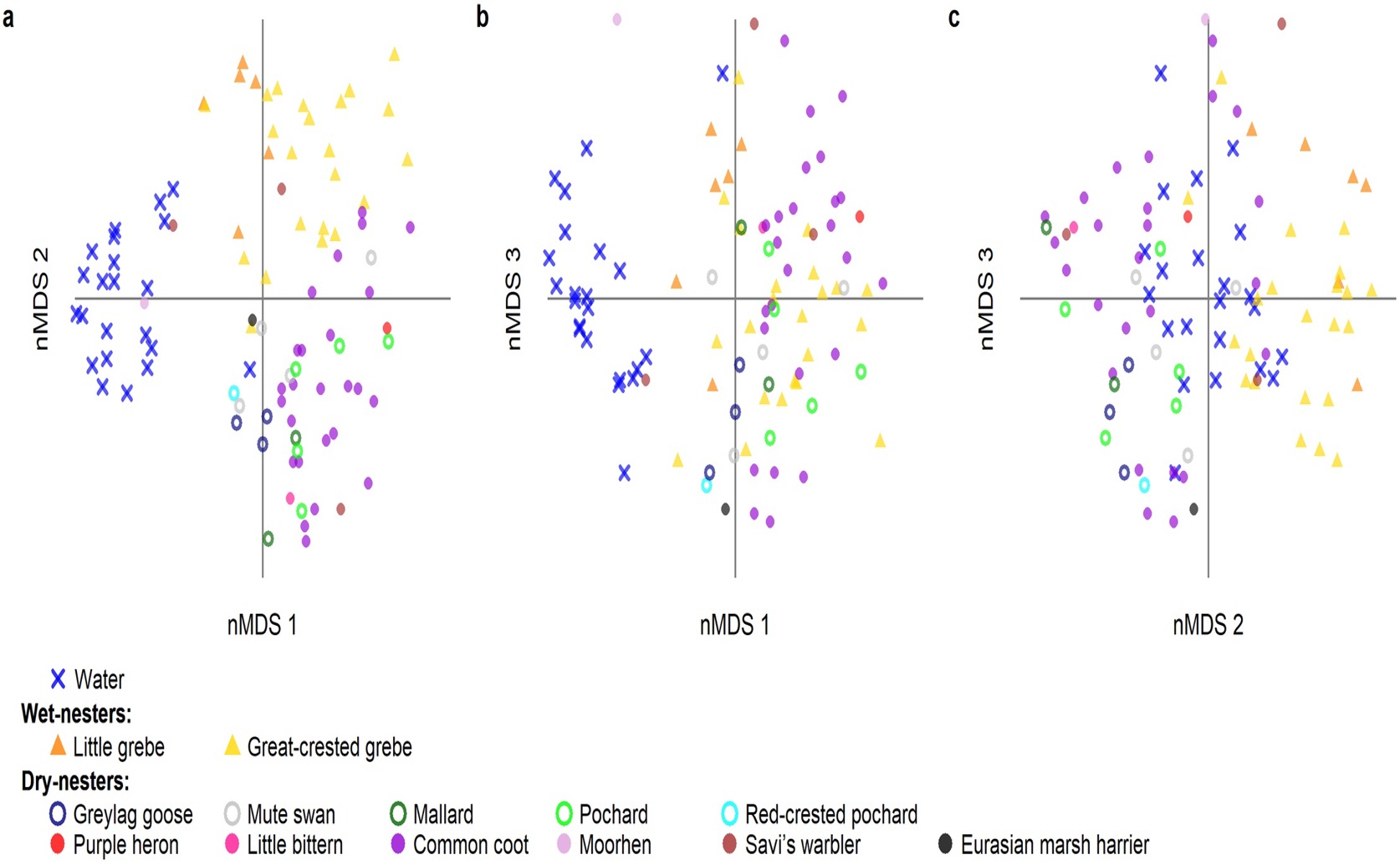
Non-metric multi-dimensional scaling along a) the first and second axes, b) the first and third axes and c) the second and third axes, outlining differences in bacterial assemblages between the eggs of various waterbird species and water samples (nMDS stress = 0.19).

Image adapted from: Dongen et al. / CC BY (Source)

Key Findings

  • Wetland birds in Slovakia had significantly more bacteria on their eggs compared to dry-nesting birds in the same areas
  • Bacterial communities on eggs differed based on nesting strategy, with wet-nesting birds hosting distinct types of bacteria
  • Eggshell bacteria were more similar within nesting strategy groups (wet vs dry) than between them, suggesting nest type influences bacterial composition
Birds rely on a complex community of bacteria for health, but these bacteria can also cause illness or death, particularly in developing embryos. It’s crucial for eggs to acquire beneficial bacteria from their mothers and the environment, but how this happens, especially in different nesting situations, isn’t well understood. Bacteria can colonize eggshells before and after they are laid, influenced by factors like the nesting environment and parental care. Because bacteria can penetrate eggshells, understanding where these bacteria come from is vital for embryonic health. Most existing research focuses on birds that build dry nests, leaving a gap in knowledge about waterbirds, where eggs are often in direct contact with water – an environment that promotes bacterial growth[1]. Researchers at the Konrad Lorenz Institute/Vet Med Vienna, the Slovak Academy of Sciences, and Charles University undertook a study to investigate this difference. The study compared bacterial levels and types on eggs from birds that build wet nests versus those that build dry nests in wetland areas. They used two main methods: traditional bacterial culture, which involves growing bacteria in a lab, and a more advanced genetic technique called automated ribosomal intergenic spacer analysis (ARISA). ARISA identifies bacteria based on their unique genetic fingerprints, allowing for a broader assessment of the bacterial community than culture methods alone. The results showed a striking difference in bacterial abundance. Eggs from wet-nesting birds had significantly more bacteria – several orders of magnitude more – than those from dry-nesting birds. This makes sense, as moist environments naturally encourage bacterial proliferation. More importantly, the types of bacteria found tended to group based on the nesting strategy. This suggests that the way a bird builds its nest plays a significant role in shaping the bacterial community on its eggs. This study builds upon previous work demonstrating the dynamic nature of bacterial communities in birds throughout their lives[2]. That earlier research on black-legged kittiwakes showed that chicks have a wider variety of bacterial types than adults, with the bacterial community becoming more stable as the bird ages. This suggests that young birds are actively acquiring bacteria from their environment, and that the adult bacterial community represents a more refined and established state. The current study extends this understanding to the earliest stages of life, showing that nesting strategy may be a key factor influencing initial bacterial colonization. Furthermore, the importance of bacterial infections in wild bird mortality is well-documented[3][4]. Research has identified various pathogens, including Campylobacter species, that can be carried by wild birds and cause disease. While the current study didn’t specifically focus on pathogens, the high bacterial loads found on wet-nesting eggs raise the possibility of increased infection risk. The research on Greater white-fronted geese, which identified Neisseria and other bacteria as causes of embryo mortality, highlights the potential for eggshell-associated bacteria to directly impact embryonic development. The findings of suggest a link between nesting strategy and eggshell-associated bacteria, but the researchers acknowledge that more work is needed to confirm this. Future studies should include more comprehensive sampling and advanced genetic approaches to fully understand the source and function of these bacteria. Investigating whether wet-nesting birds have developed specific adaptations to manage the higher bacterial loads, such as antimicrobial properties in their eggshells, could also be a promising area of research.

WildlifeEcologyAnimal Science

References

Main Study

1) Bacterial assemblages on eggs reflect nesting strategies in wetland-associated birds

Published 17th September, 2025

https://doi.org/10.1371/journal.pone.0332380


Related Studies

2) Age-related differences in the cloacal microbiota of a wild bird species.

https://doi.org/10.1186/1472-6785-13-11


3) A Systematic Review on the Role of Wildlife as Carriers and Spreaders of Campylobacter spp.

https://doi.org/10.3390/ani13081334


4) Microbial Infections Are Associated with Embryo Mortality in Arctic-Nesting Geese.

https://doi.org/10.1128/AEM.00706-15


Related Articles

An unhandled error has occurred. Reload 🗙