Plant extracts show promise in fighting common yeast infections

Greg Howard
15th January, 2026

Plant extracts show promise in fighting common yeast infections

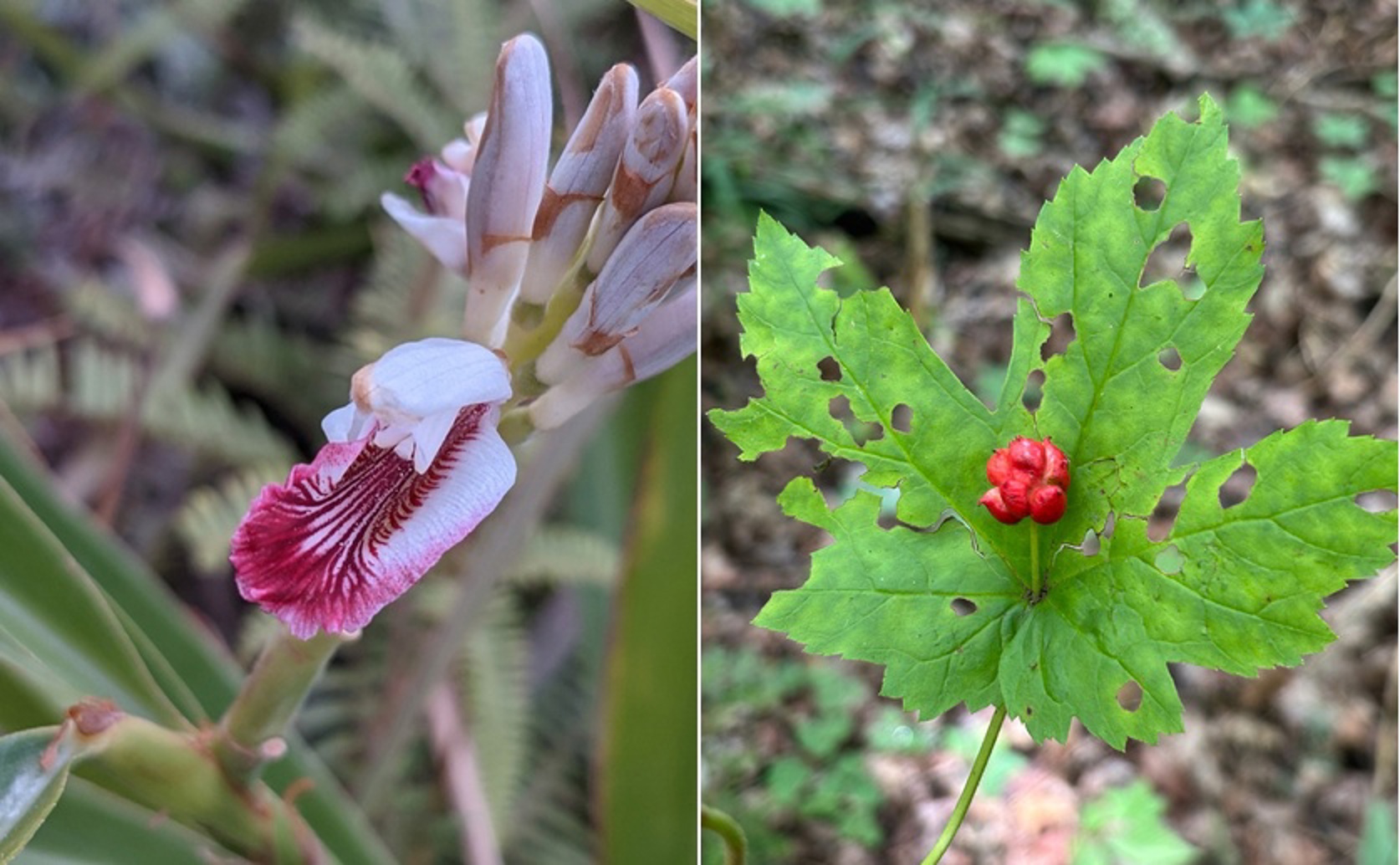
A combination of extracts from Galangal (Alpinia officinarum, left) and Goldenseal (Hydrastis canadensis, right) produced the strongest synergistic antifungal activity against Candida albicans observed in the study.

Composite: Natural Science News / CC BY. [Sources]
Adapted from photos by:

Key Findings

  • Researchers investigated plant extract combinations from nine traditionally used plants against Candida albicans, a common fungal infection
  • Combining Alpinia officinarum (galangal) and Hydrastis canadensis (goldenseal) showed the strongest synergistic antifungal effect
  • Berberine from Hydrastis canadensis and punicalagin from Punica granatum, when combined, also exhibited strong synergy, comparable to the drug econazole
Antifungal resistance is a growing global health concern, driven by the overuse of a limited range of antifungal drugs. For millennia, however, people have turned to plants for solutions to fungal infections, often using mixtures of different plant parts[2]. Researchers at Rutgers University, City University of New York (CUNY), and Mahidol University recently investigated whether combining extracts from multiple plants with known antifungal properties could create more powerful treatments against Candida albicans, a common fungus causing infections like thrush and yeast infections[1]. The study focused on nine plants traditionally used for their antifungal effects. The research team tested various combinations of ethanolic extracts – a method of dissolving plant compounds in alcohol – to see if they worked better together than individually. They used a technique called checkerboard microdilution assays. This involves growing Candida albicans in wells containing different concentrations of the plant extracts, either alone or in combination, to determine the minimum concentration needed to inhibit growth. The results are expressed as a fractional inhibitory concentration index (FICI); a FICI less than 1 indicates synergy, meaning the combination is more effective than the sum of its parts. Out of the 15 combinations tested, 11 showed additive or synergistic interactions. The strongest synergy was observed between Alpinia officinarum (galangal) and Hydrastis canadensis (goldenseal). This finding aligns with the historical use of medicinal plants, where the efficacy of a remedy often stemmed from the combined action of multiple compounds, a concept known as ‘synergism’[3]. The team then focused on Hydrastis canadensis, Eucalyptus globulus (eucalyptus), and Punica granatum (pomegranate) as they consistently produced synergistic effects with other extracts. To understand why these combinations were effective, the researchers delved into the active compounds within these plants. They isolated berberine from Hydrastis canadensis and punicalagin from Punica granatum, and found that combining these two compounds also showed strong synergy. Interestingly, eucalyptol, a major compound in Eucalyptus globulus, didn’t exhibit significant antifungal activity on its own. To investigate further, the Eucalyptus globulus extract was fractionated – separated into its component parts – using UPLC-MS (Ultra Performance Liquid Chromatography-Mass Spectrometry) to identify other active compounds. This revealed that hydrolysable tannins were the primary antifungal components, and combining these tannins with berberine also produced a synergistic effect. The most promising combinations – berberine with punicalagin, and berberine with the high-tannin fraction from Eucalyptus globulus – were effective against Candida albicans at concentrations comparable to econazole, a commonly used commercial antifungal drug. These concentrations ranged from 2–16 µg/mL, similar to the 0.5–8 µg/mL required for econazole. This suggests that these natural mixtures could potentially serve as effective alternatives to synthetic antifungals. The study builds upon the idea that looking to natural products for drug discovery can overcome challenges faced in traditional pharmaceutical development[3]. The emergence of drug-resistant parasites, like malaria[4], highlights the need for new therapeutic options. While artemisinin, extracted from Artemisia annua, remains the most effective anti-malarial, resistance is a constant threat. The success of whole plant extracts in improving artemisinin bioavailability[4] underscores the potential benefits of utilizing multiple compounds found naturally in plants. Similarly, the research at Rutgers, CUNY, and Mahidol University demonstrates that combining plant extracts can unlock synergistic effects, potentially offering a more potent and sustainable approach to combating antifungal resistance.

HerbsMedicineMycology

References

Main Study

1) Synergistic antifungal effects of botanical extracts against Candida albicans

Published 12th January, 2026

https://doi.org/10.1371/journal.pone.0340665


Related Studies

2) Historical review of medicinal plants' usage.

https://doi.org/10.4103/0973-7847.95849


3) Potentiating therapeutic effects by enhancing synergism based on active constituents from traditional medicine.

https://doi.org/10.1002/ptr.5032


4) Dried whole plant Artemisia annua as an antimalarial therapy.

https://doi.org/10.1371/journal.pone.0052746


Related Articles

An unhandled error has occurred. Reload 🗙