Moringa-derived silver nanoparticles show promise against sars-cov-2 in water

Jenn Hoskins
24th December, 2025

Moringa-derived silver nanoparticles show promise against sars-cov-2 in water

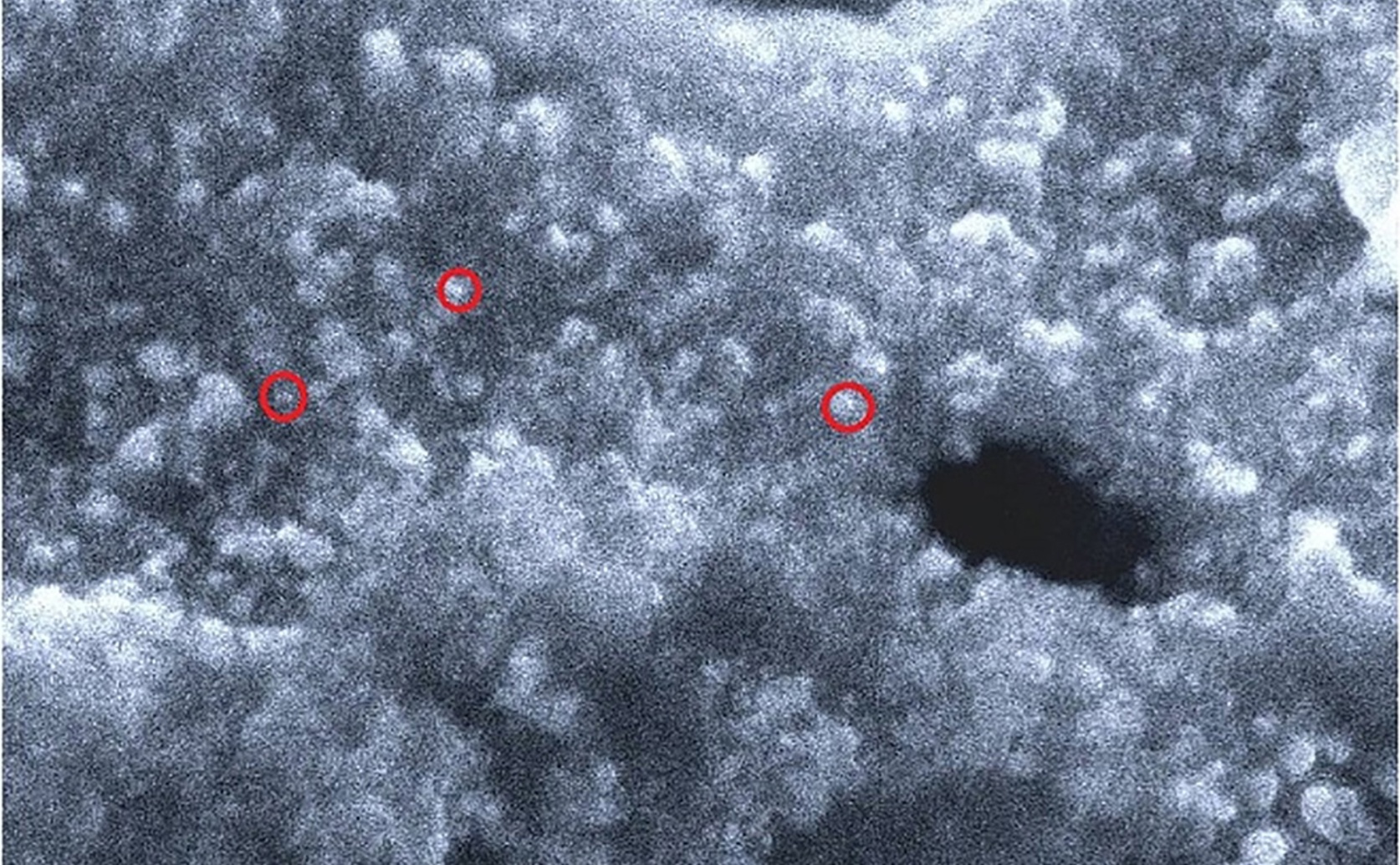
Scanning electron microscopy revealed that the silver nanoparticles synthesized from Moringa oleifera have an irregular morphology and are highly agglomerated, a characteristic that required XRD analysis for accurate size determination.

Image adapted from: Ebunoluwa et al. / CC BY (Source)

Key Findings

  • Researchers in Nigeria created silver nanoparticles (AgNPmo) using Moringa oleifera leaf extract as a sustainable alternative to traditional chemical methods
  • AgNPmo effectively killed common bacteria Pseudomonas aeruginosa and Staphylococcus aureus in lab tests, with effectiveness increasing at higher concentrations
  • AgNPmo inhibited SARS-CoV-2 replication in a lab setting, showing a stronger effect over 48 hours and exhibiting relatively low toxicity to human cells
The COVID-19 pandemic presented a significant global health crisis, demanding rapid development of effective diagnostic and therapeutic tools[2][3]. Frontline healthcare systems were overwhelmed, and researchers worldwide sought solutions to combat the rapidly mutating SARS-CoV-2 virus. Nanotechnology emerged as a promising field, with potential applications ranging from early detection to antiviral therapies[2]. However, many nanoparticle synthesis methods involve harsh chemicals, raising environmental concerns. Researchers at the University of Lagos, Redeemer’s University, and the Nigerian Institute of Medical Research have been investigating a more sustainable approach, utilizing natural plant extracts to create silver nanoparticles with antimicrobial and antiviral properties. The study focused on synthesizing silver nanoparticles (AgNPs) using aqueous leaf extracts from Moringa oleifera, a plant known for its medicinal properties[1]. This “green synthesis” method leverages compounds found naturally in the Moringa oleifera leaves – specifically phenolic and flavonoid compounds – to both reduce silver ions to their nanoparticle form and stabilize the resulting particles, preventing them from clumping together. This contrasts with traditional chemical methods, offering an eco-friendly alternative. The synthesized AgNPs, termed AgNPmo, were then tested for their ability to kill bacteria. They demonstrated antibacterial activity against Pseudomonas aeruginosa and Staphylococcus aureus, common bacteria often found in healthcare settings. The effectiveness increased with higher concentrations of AgNPmo, indicated by larger zones of inhibition – areas where bacterial growth was prevented. To ensure the AgNPmo wasn’t harmful to human cells, researchers assessed its toxicity using Vero cells, a cell line commonly used in virology. The IC50 value, representing the concentration needed to kill 50% of the cells, was determined to be 38 µg/ml, suggesting relatively low toxicity at concentrations where the nanoparticles exhibited antibacterial activity. Crucially, the team investigated the antiviral activity of AgNPmo against SARS-CoV-2. They used a technique called quantitative RT-PCR, which measures the amount of viral genetic material present. Exposure to AgNPmo resulted in a time- and dose-dependent increase in Ct values for two key viral genes, ORF1ab and N. Higher Ct values indicate less viral genetic material, meaning the AgNPmo was inhibiting viral replication. The strongest antiviral effect was observed after 48 hours of exposure. This provides direct evidence that AgNPmo can interfere with the SARS-CoV-2 life cycle. The findings build upon previous research identifying the importance of disinfection processes in mitigating viral spread, particularly in water systems[4]. While[4] focused on the survival of SARS-CoV-2 in water and the efficacy of chlorine disinfection, the current study highlights a potential alternative disinfection agent. Although direct testing in wastewater wasn’t performed, the researchers suggest that AgNPmo could be valuable for “point-of-use” disinfection – treating water immediately before consumption – and potentially for larger-scale environmental applications. The use of Moringa oleifera leaf extract aligns with the growing need for sustainable and biocompatible materials in nanotechnology, addressing concerns about the environmental impact of nanoparticle production. The study also complements earlier work showing the potential of nanotechnology in developing various detection kits and therapeutic drugs for COVID-19[2].

HerbsMedicineBiotech

References

Main Study

1) Green synthesized silver nanoparticles from Moringa: Potential for preventative treatment of SARS-CoV-2 contaminated water

Published 22nd December, 2025

https://doi.org/10.1371/journal.pone.0338800


Related Studies

2) Nanotechnology: an emerging approach to combat COVID-19.

https://doi.org/10.1007/s42247-021-00178-6


3) The origin, transmission and clinical therapies on coronavirus disease 2019 (COVID-19) outbreak - an update on the status.

https://doi.org/10.1186/s40779-020-00240-0


4) SARS-CoV-2 coronavirus in water and wastewater: A critical review about presence and concern.

https://doi.org/10.1016/j.envres.2020.110265


Related Articles

An unhandled error has occurred. Reload 🗙