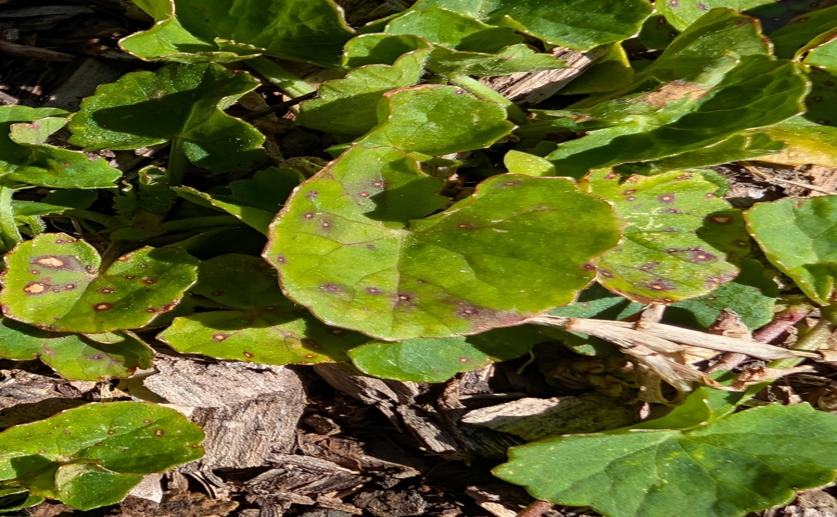
Researchers identify Gotu kola compounds with antibacterial properties

Jim Crocker
28th September, 2025

Researchers identify Gotu kola compounds with antibacterial properties

Gotu kola (Centella asiatica) may have antibacterial properties in extracts.

CC0 / iNaturalist

Key Findings

  • Centella asiatica, a plant common in Nepal, contains compounds like alkaloids and flavonoids suggesting medicinal potential
  • Extracts from the plant’s leaves showed stronger antioxidant and antibacterial activity against Staphylococcus aureus than stem extracts
  • Silver nanoparticles created using Centella asiatica extracts also demonstrated antibacterial properties against Staphylococcus aureus
Centella asiatica, a plant long used in traditional medicine, is gaining attention for its potential therapeutic benefits. Rising antibiotic resistance is a major global health concern, prompting researchers to explore alternative treatments, and this has led to renewed interest in the medicinal properties of plants and innovative approaches like metallic nanoparticles[2]. A recent study conducted by researchers at Tribhuvan University, Universitas Airlangga, and the National Institute for Materials Science (NIMS)[1] investigated the antibacterial properties of Centella asiatica and explored the creation of silver nanoparticles using plant extracts. The research focused on identifying the key chemical compounds within Centella asiatica and assessing its ability to combat bacterial infections. Plants produce a variety of compounds called secondary metabolites, which are responsible for their medicinal effects. The study confirmed the presence of alkaloids, flavonoids, glycosides, terpenoids, and phenolics in Centella asiatica extracts, indicating a high potential for therapeutic activity. Flavonoids and phenolic content were particularly high in the methanol extract of the leaves, measuring 43.73 mg GAE/g and 19.76 mg QE/g respectively. This extract also demonstrated strong antioxidant activity, with an IC50 value of 49.31 µg/mL – a lower IC50 indicates a more potent antioxidant effect. To evaluate the plant's direct antibacterial effects, the researchers tested the extracts against both gram-positive and gram-negative bacteria. The methanol leaf extract showed promising results, inhibiting the growth of Staphylococcus aureus (a common gram-positive bacterium) with a Minimum Inhibitory Concentration (MIC) of 27.5 mg/mL and a Minimum Bactericidal Concentration (MBC) of 55 mg/mL. MIC represents the lowest concentration needed to stop visible growth, while MBC is the lowest concentration needed to kill the bacteria. Building on these findings, the team synthesized silver nanoparticles using both stem and leaf extracts from Centella asiatica. Silver has well-established antibacterial properties, and creating nanoparticles increases its surface area, enhancing its effectiveness[2]. The process, known as green nano synthesis, is considered environmentally friendly and potentially less toxic than traditional chemical methods. The synthesized nanoparticles were then thoroughly characterized using several spectroscopic techniques. UV-visible spectroscopy revealed distinct absorption peaks at 405 and 408 nm, confirming the formation of silver nanoparticles through a process called surface plasmon resonance. Powder X-ray Diffraction analysis showed the nanoparticles had a face-centered cubic crystalline structure. Fourier Transfer Infrared spectroscopy indicated that organic compounds from the plant extracts were involved in the nanoparticle synthesis process. Finally, Field Emission Scanning Electron Microscopy and Transmission Electron Microscopy revealed the nanoparticles were spherical, though their size varied. The average particle size was approximately 20 nm for nanoparticles created with leaf extract and 19 nm with stem extract. These results align with broader ethnobotanical research in Nepal, which has documented the use of around 700 plant species for medicinal purposes[3]. While many of these plants haven’t been fully scientifically investigated, studies are increasingly focusing on quantifying their bioactive compounds and verifying traditional uses. For example, research on four medicinal plants – Pogostemon benghalensis, Aleuritopteris bicolor, Crateva unilocularis, and Rungia pectinata – found high levels of phenolic and flavonoid content and associated antioxidant and antidiabetic activities[4]. This demonstrates a consistent trend of valuable medicinal compounds within traditionally used Nepalese plants. The study highlights the potential of Centella asiatica as a source of both direct antibacterial agents and a template for creating effective silver nanoparticles. The fact that the plant extracts contain a range of secondary metabolites, and that the nanoparticles maintain antibacterial activity, suggests a multi-faceted therapeutic potential.

HerbsMedicineBiotech

References

Main Study

1) Phytochemical analysis and green synthesis of silver nanoparticles using Centella asiatica leaf and stem extracts: An investigation of antibacterial activity

Published 25th September, 2025

https://doi.org/10.1371/journal.pone.0321172


Related Studies

2) Medicinal plants mediated the green synthesis of silver nanoparticles and their biomedical applications.

https://doi.org/10.1049/nbt2.12078


3) Indigenous use and bio-efficacy of medicinal plants in the Rasuwa District, Central Nepal.

https://doi.org/10.1186/1746-4269-6-3


4) Analysis of Phenolic and Flavonoid Content, α-Amylase Inhibitory and Free Radical Scavenging Activities of Some Medicinal Plants.

https://doi.org/10.1155/2022/4000707


Related Articles

An unhandled error has occurred. Reload 🗙