Herbal Medicine for COPD: How it Helps and Potential Side Effects

Jim Crocker
24th September, 2025

Herbal Medicine for COPD: How it Helps and Potential Side Effects

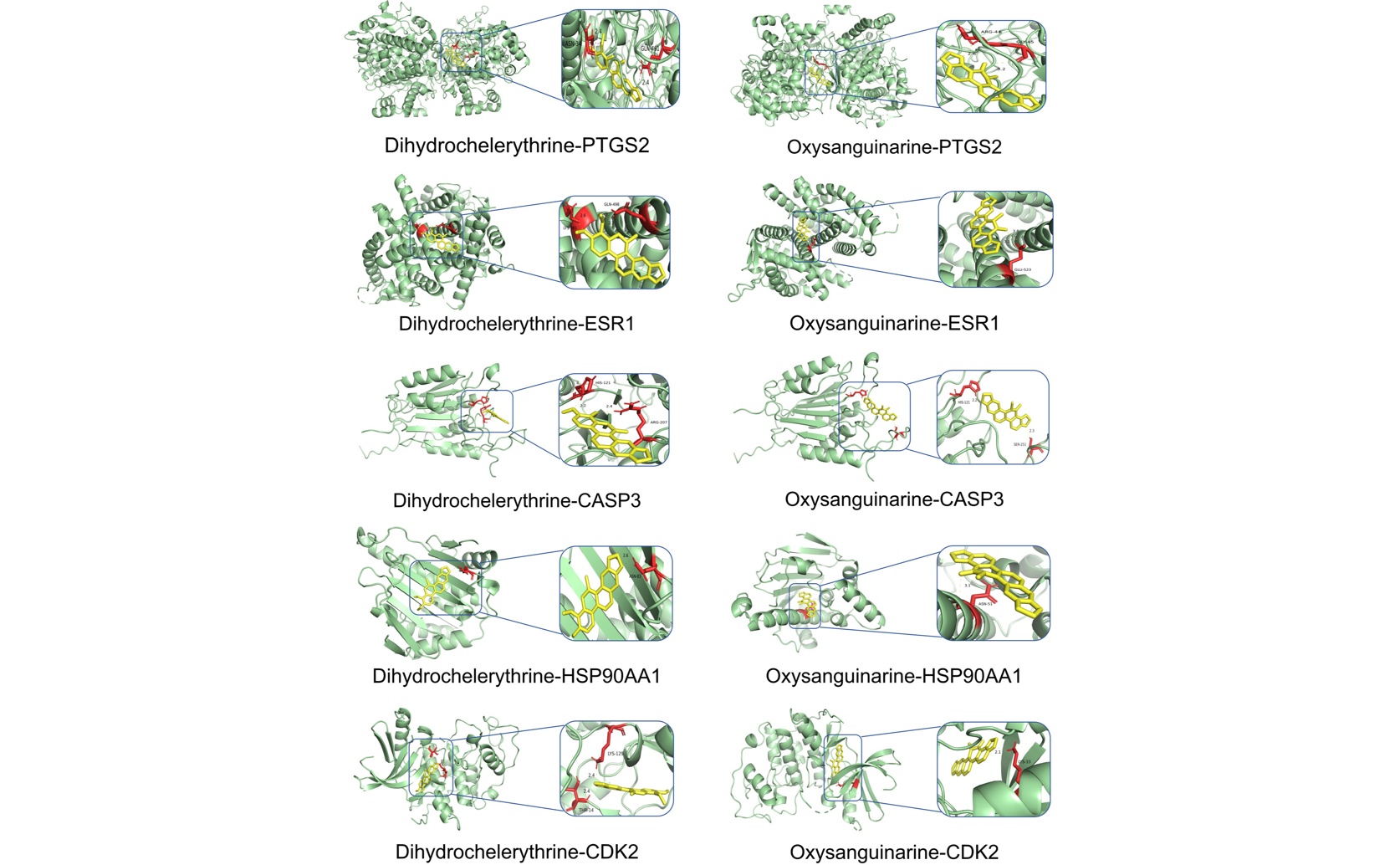
The molecular docking visualization confirms that the active alkaloids dihydrochelerythrine and oxysanguinarine form stable, high-affinity complexes with core protein targets, supporting the structural basis for the dual efficacy and toxicity of Chelidonii Herba.

Image adapted from: Chen et al. / CC BY (Source)

Key Findings

  • Researchers studied Chelidonii Herba, a traditional Chinese medicine, for its potential to treat COPD, a common lung disease
  • The study identified key compounds in Chelidonii Herba that likely fight COPD by targeting several proteins involved in inflammation and blood vessel formation
  • While promising, Chelidonii Herba also showed potential to cause liver damage by affecting different proteins and pathways, highlighting a need for careful use
Chronic Obstructive Pulmonary Disease (COPD) is a progressive lung disease characterized by airflow limitation, impacting millions globally. While treatments exist, they don’t fully address the disease’s complexity, and the condition remains a significant public health concern[2]. Traditional Chinese Medicine (TCM) offers potential therapeutic avenues, with Chelidonium majus (commonly known as greater celandine, and referred to here as Chelidonii Herba) being one such candidate. However, understanding its precise mechanisms of action and potential side effects is crucial before widespread use. A recent study conducted by researchers at Liaoning University of Traditional Chinese Medicine and Columbia University Irving Medical Center[1] aimed to dissect the pharmacodynamic material basis of Chelidonii Herba in treating COPD, identify its potential targets, and investigate its possible toxic effects, specifically concerning the liver. The research utilized a multi-faceted approach combining network pharmacology, network toxicology, and molecular docking techniques. The study began by identifying the active chemical components within Chelidonii Herba using databases like TCMSP, SwissTargetPrediction, and PharmMapper. This revealed 20 compounds believed to be biologically active. Simultaneously, the researchers compiled lists of genes associated with COPD and liver toxicity from databases like GeneCards and OMIM. A crucial step involved identifying overlapping genes – those that Chelidonii Herba’s compounds interact with and are known to be involved in either COPD or liver damage. This process pinpointed 80 shared targets related to COPD and 96 related to hepatotoxicity. To understand the interconnectedness of these targets, the researchers constructed protein-protein interaction (PPI) networks using the STRING database. These networks illustrate how different proteins interact with each other within a cell. By filtering these networks, they identified seven core targets most likely involved in COPD treatment: CASP3, PPARG, PTGS2, CDK2, ALB, HSP90AA1, and ESR1. Similarly, seven core targets were identified as potentially contributing to liver toxicity: PPARG, ESR1, CASP3, PTGS2, ESR2, CALM3, and ALB. Interestingly, several targets, like CASP3, PPARG, and PTGS2, were common to both lists, suggesting a dual effect of Chelidonii Herba. Further analysis using Gene Ontology (GO) and Kyoto Encyclopedia of Genes and Genomes (KEGG) revealed the biological pathways involved. For COPD, key pathways included the PI3K-Akt signaling pathway, the VEGF pathway (involved in blood vessel formation), and the cGMP-PKG pathway (regulating smooth muscle relaxation). For liver toxicity, the VEGF pathway, PI3K-Akt signaling, and estrogen signaling were prominent. The researchers then used molecular docking to predict how well the identified active compounds bind to these core target proteins. Compounds like dihydrochelerythrine and oxysanguinarine showed particularly strong binding affinities (binding energy ≤ −5.0 kcal/mol, with some reaching ≤ −7.0 kcal/mol), suggesting a direct interaction and potential modulation of these targets. Expanding on these findings, previous research has highlighted the anti-inflammatory properties of chelidonine, a major alkaloid in Chelidonium majus, demonstrating its ability to suppress airway inflammation in mouse models of asthma[3]. This suggests that the observed effects on pathways like PI3K-Akt in the current study could be linked to chelidonine’s known anti-inflammatory action. Furthermore, the global burden of COPD is significantly influenced by factors like smoking and air pollution[2], which can trigger inflammatory responses and oxidative stress, potentially impacting the pathways identified in this study. Finally, the researchers analyzed immune cell infiltration data (from the GSE55962 dataset) to understand the immune response associated with these core targets. They found links to macrophages M2 (involved in tissue repair) and γδ T cells (involved in immune regulation). The study concluded that Chelidonii Herba likely exerts its effects on COPD primarily through alkaloids modulating shared targets (CASP3, PPARG, PTGS2) via the PI3K-Akt signaling pathway. However, it also identified a concurrent potential for hepatotoxicity linked to the VEGF pathway and estrogen signaling. This dual efficacy-toxicity profile underscores the need for cautious clinical application and further experimental validation to establish safe therapeutic windows. The findings suggest that while Chelidonii Herba holds promise, a deeper understanding of its complex interactions is essential to harness its benefits while minimizing potential harm.

HerbsMedicineBiochem

References

Main Study

1) Dual efficacy-toxicity of Chelidonii Herba in chronic obstructive pulmonary disease: Integrated network pharmacology, immune profiling and molecular docking

Published 23rd September, 2025

https://doi.org/10.1371/journal.pone.0332750


Related Studies

2) Burden of chronic obstructive pulmonary disease and its attributable risk factors in 204 countries and territories, 1990-2019: results from the Global Burden of Disease Study 2019.

https://doi.org/10.1136/bmj-2021-069679


3) Chelidonine, a principal isoquinoline alkaloid of Chelidonium majus, attenuates eosinophilic airway inflammation by suppressing IL-4 and eotaxin-2 expression in asthmatic mice.

https://doi.org/10.1016/j.pharep.2015.04.013


Related Articles

An unhandled error has occurred. Reload 🗙