Sage extract helps heal lung damage by restoring blood vessels and gut health

Greg Howard
9th January, 2026

Sage extract helps heal lung damage by restoring blood vessels and gut health

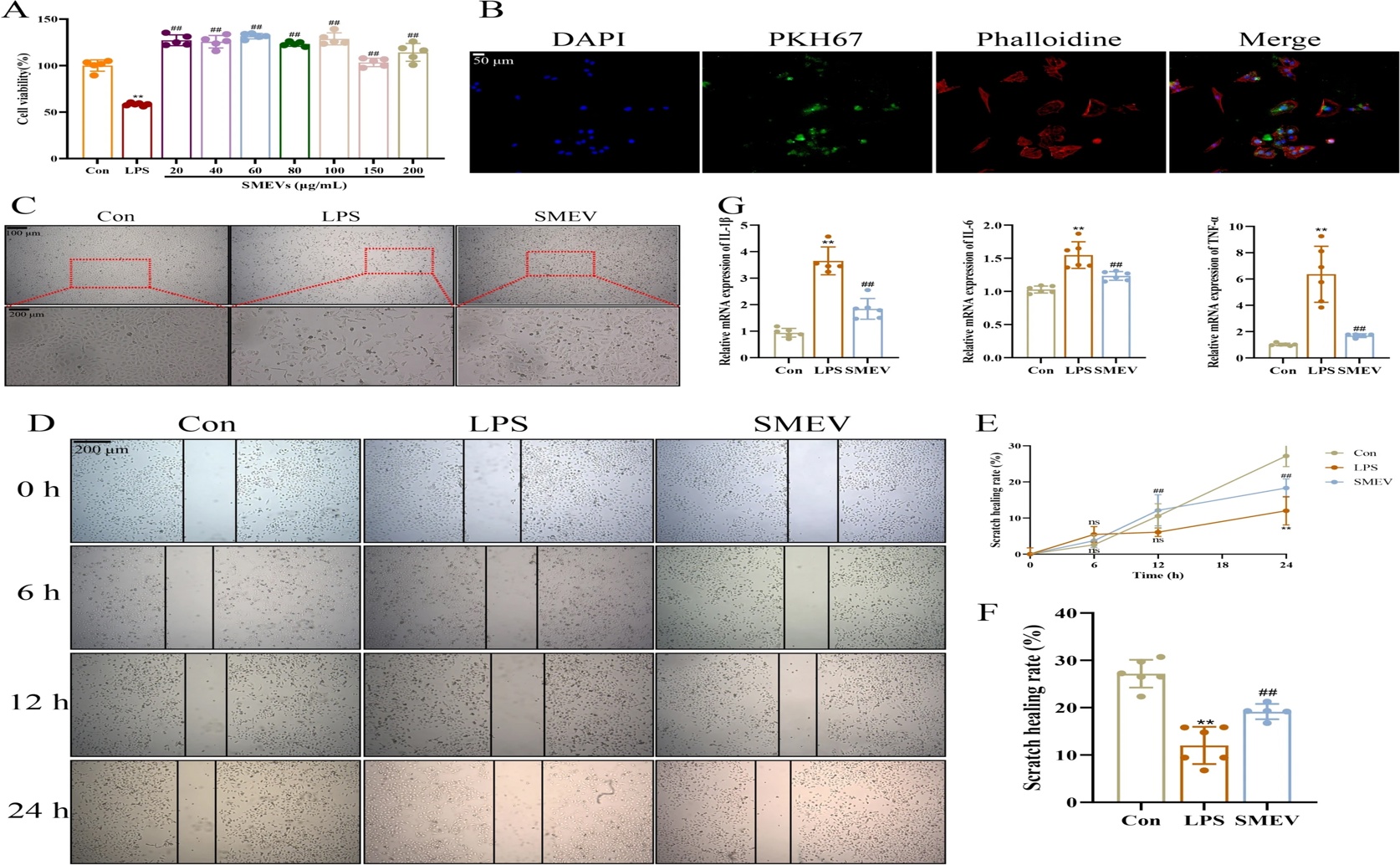
Extracellular vesicles from Danshen (Salvia miltiorrhiza) demonstrated vascular repair capabilities in vitro, as they were readily taken up by human umbilical vein endothelial cells (HUVEC) (b), subsequently improving their viability (a), morphology (c), and wound healing after LPS-induced damage (d–f).

Image adapted from: Huang et al. / CC BY (Source)

Key Findings

  • In a mouse model of acute lung injury (ALI), vesicles from Salvia miltiorrhiza (SMEVs) were found to be safe and non-toxic
  • SMEVs reduced inflammation and fluid buildup in the lungs of mice with ALI, and helped restore the integrity of blood vessel walls
  • SMEVs altered the composition of the lung microbiome in mice with ALI, decreasing harmful bacteria and improving overall microbial balance
Acute lung injury (ALI) is a serious condition where the lungs become inflamed and damaged, leading to difficulty breathing and potentially life-threatening complications. Current treatments, like steroids, can have unwanted side effects, creating a need for safer and more effective therapies. Researchers at Hunan University of Chinese Medicine have been investigating a potential new approach using tiny vesicles released from the Salvia miltiorrhiza plant, known as SMEVs[1]. These vesicles have shown promise in reducing inflammation and protecting blood vessel barriers, but the exact way they work wasn’t fully understood. The study began with isolating and carefully characterizing these SMEVs. Using techniques like transmission electron microscopy (TEM) – a powerful microscope – and nanoparticle tracking analysis (NTA), the researchers confirmed the vesicles were a consistent size (around 177.7 nanometers) and had a typical structure. Crucially, they also tested the vesicles for safety, finding no harmful effects in zebrafish embryos, mouse tissues, and human cells. This established that SMEVs were safe to use in further experiments. To understand how SMEVs impacted ALI, the researchers started with human lung cells exposed to a substance called LPS. LPS mimics a bacterial infection and causes inflammation, simulating the conditions of ALI. They found that SMEVs significantly reduced the production of inflammatory molecules like IL-1β, IL-6, and TNF-α in these cells, and also helped the cells repair themselves more quickly. Next, the team tested SMEVs in a mouse model of ALI, where mice were exposed to LPS to induce lung damage. The results were encouraging: SMEVs lessened fluid buildup in the lungs (pulmonary edema) and reduced inflammation. Importantly, they also restored levels of VE-cadherin, a protein vital for maintaining the integrity of blood vessel walls. This barrier protection is a key aspect of ALI, as damage to these walls can worsen the condition. A particularly interesting aspect of this study was the investigation into the gut-lung connection. It’s now understood that the health of the gut microbiome – the community of bacteria living in the intestines – can significantly influence lung health[2]. Using metagenomic analysis, a method to identify and quantify all the genetic material from microbes in a sample, the researchers discovered that SMEVs altered the composition of the lung microbiome in the LPS-treated mice. Specifically, they reduced the abundance of potentially harmful bacteria like g-Listeria and g-Streptococcus, and decreased overall microbial diversity. This finding aligns with previous research showing that traditional Chinese medicine formulas, like the Fuzhengjiedu formula (FZJDF), can modulate the gut microbiome to combat inflammation in ALI[2]. The FZJDF study demonstrated a link between gut bacteria changes and improvements in lung function, suggesting a similar mechanism might be at play with SMEVs. Furthermore, the current study builds upon investigations into the role of specific inflammatory pathways in ALI. For example, research has shown that the molecule dynasore can reduce inflammation by regulating macrophage activity[3], while another study highlighted the protective effects of combining hydrocortisone and vitamin C by strengthening endothelial barrier function[4]. The SMEVs appear to offer a more holistic approach, tackling both inflammation and the underlying vascular damage, and importantly, influencing the gut microbiome. Another study found that the compound Toosendanin (TSN) protects against ALI by targeting the mTOR pathway[5], which regulates cell growth and survival. While SMEVs haven’t been directly linked to mTOR yet, the researchers suggest that further investigation into the interaction between SMEVs, the gut microbiome, and the immune system could reveal additional therapeutic targets. The Hunan University of Chinese Medicine team concluded that SMEVs hold significant promise as a new treatment for ALI, working by repairing blood vessel barriers and rebalancing the lung microbiome. This research opens up exciting avenues for future studies focused on understanding the complex interplay between these vesicles, gut bacteria, and the body’s immune response to ALI.

HerbsMedicineHealth

References

Main Study

1) Amelioration of acute lung injury by Salvia miltiorrhiza-derived extracellular vesicles: through repair of the vascular barrier and modulation of lung microbiota

Published 6th January, 2026

https://doi.org/10.1186/s13020-025-01203-0


Related Studies

2) Fuzhengjiedu formula exerts protective effect against LPS-induced acute lung injury via gut-lung axis.

https://doi.org/10.1016/j.phymed.2023.155190


3) Dynasore Alleviates LPS-Induced Acute Lung Injury by Inhibiting NLRP3 Inflammasome-Mediated Pyroptosis.

https://doi.org/10.2147/DDDT.S444408


4) Hydrocortisone and Ascorbic Acid Synergistically Prevent and Repair Lipopolysaccharide-Induced Pulmonary Endothelial Barrier Dysfunction.

https://doi.org/10.1016/j.chest.2017.07.014


5) Toosendanin alleviates acute lung injury by reducing pulmonary vascular barrier dysfunction mediated by endoplasmic reticulum stress through mTOR.

https://doi.org/10.1016/j.phymed.2024.156277


Related Articles

An unhandled error has occurred. Reload 🗙