How scents affect saliva production

Jenn Hoskins
13th January, 2026

How scents affect saliva production

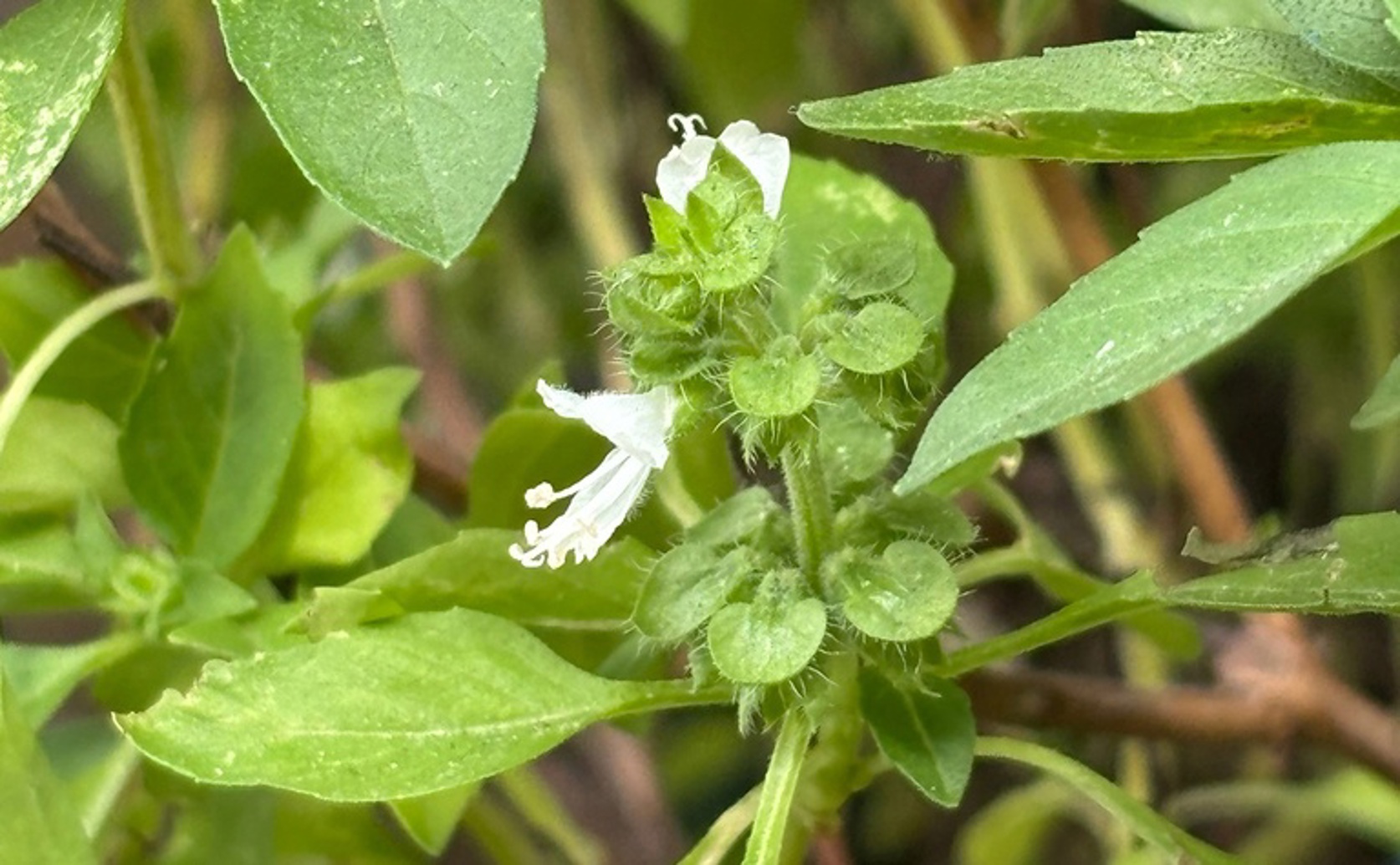
Sweet basil (Ocimum basilicum)

Photo adapted from: Ricardo Betancourt Sánchez / CC BY (Source)

Key Findings

  • Researchers in Amsterdam studied if inhaling aromas could boost saliva production in healthy people
  • Inhaling basil and guaiacol significantly increased salivary flow rates compared to a placebo
  • Basil inhalation not only increased saliva but also improved participants’ feeling of mouth moistness
Dry mouth, clinically known as xerostomia, is a common condition characterized by reduced salivary flow[2]. This can lead to difficulties with speaking, eating, swallowing, and significantly impact a person’s quality of life. The causes are varied, ranging from medication side effects and systemic diseases like diabetes to age-related changes in salivary gland function. Approximately one in four people suffer from xerostomia, with prevalence increasing with age[3]. Finding effective and convenient treatments is therefore a key area of research. Researchers at the University of Amsterdam recently investigated whether inhaling certain aromatic compounds – specifically α-pinene, basil, eugenol, and guaiacol – could stimulate saliva production[1]. The rationale behind this study stems from previous work showing that exposure to volatile compounds found in mastic resin could also increase salivary flow. This prompted a search for other compounds with similar effects, and a more standardized method of delivery. The study involved twelve healthy volunteers. Each participant inhaled each of the four aroma compounds using a nasal inhaler, and a placebo inhaler as a control. Before and after each inhalation, researchers measured salivary flow rate, the ‘spinnbarkeit’ of the saliva (a measure of its viscosity or stretchiness), and asked participants to rate their subjective feeling of mouth moistness. The results showed that inhaling basil and guaiacol significantly increased salivary flow (p ≤ 0.01 indicates a statistically significant result, meaning it’s unlikely due to chance). Importantly, basil also improved the participants’ perception of oral moisture (p < 0.05). The study found no placebo effect, meaning the observed increase in saliva wasn’t simply due to the act of inhaling something. This research builds upon existing knowledge of the connection between smell and saliva production. The act of smelling certain aromas can trigger the nervous system to stimulate salivary glands, increasing saliva output.[2] highlighted that xerostomia often has multicausal origins, suggesting that addressing the issue from multiple angles – such as stimulating saliva production – may be beneficial. While previous studies have focused on identifying the prevalence of dry mouth and associated factors[2][3][4], this study takes a different approach by investigating a potential treatment method. Interestingly,[5] demonstrated that both dry mouth and reduced saliva production negatively impact the quality of life in elderly individuals. The finding that basil can improve the sensation of moistness is particularly noteworthy, as this subjective experience is a major component of quality of life for those suffering from xerostomia. The study’s strength lies in its controlled design, using a placebo to rule out psychological effects. However, it was conducted on a small group of healthy individuals. Therefore, further research is needed to confirm these findings in a larger population, particularly in patients already diagnosed with dry mouth. Clinical trials are necessary to determine the optimal dosage, duration of effect, and long-term safety of using basil inhalation as a treatment for xerostomia.

NutritionHealthBiochem

References

Main Study

1) Orthonasal bioactive volatiles and their effects on salivation: a pilot study

Published 10th January, 2026

https://doi.org/10.1007/s00784-025-06689-4


Related Studies

2) Prevalence of xerostomia and its association with systemic diseases and medications in the elderly: a cross-sectional study.

https://doi.org/10.1590/1516-3180.2020.0616.R3.1902021


3) How Common is Dry Mouth? Systematic Review and Meta-Regression Analysis of Prevalence Estimates.

https://doi.org/10.1590/0103-6440201802302


4) Xerostomia: its prevalence and associations in the adult Australian population.

https://doi.org/10.1111/adj.12767


5) Impact of dry mouth and hyposalivation on oral health-related quality of life of elderly Japanese.

Journal: Oral surgery, oral medicine, oral pathology, oral radiology, and endodontics, Issue: Vol 103, Issue 2, Feb 2007


Related Articles

An unhandled error has occurred. Reload 🗙