Aspirin shows complex, dose-dependent effects on placental health in new preeclampsia study

Jenn Hoskins
30th September, 2025

Aspirin shows complex, dose-dependent effects on placental health in new preeclampsia study

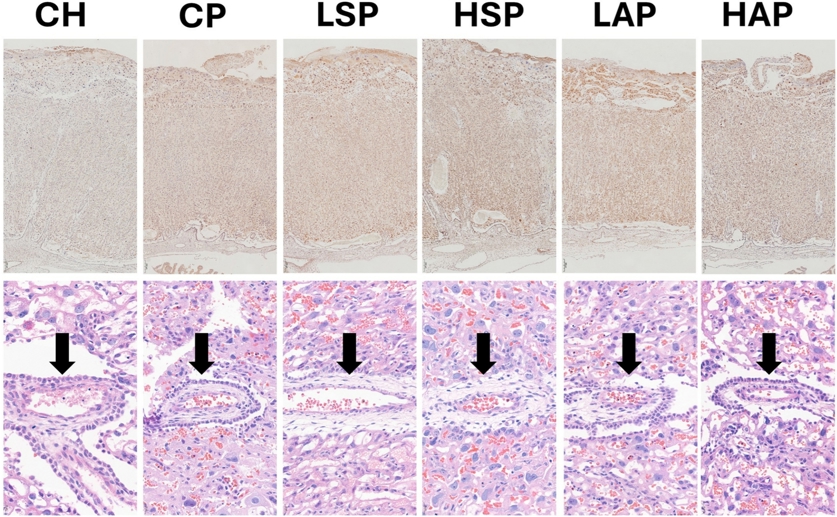
While both low (LAP) and high (HAP) doses of aspirin improved some biochemical markers of preeclampsia in rats, this figure reveals that only the high dose had a potentially harmful effect, causing a significant narrowing of placental blood vessels compared to the healthy control group (CH).

Image adapted from: Suliburska et al. / CC BY (Source)

Key Findings

  • In rats, inducing preeclampsia with L-NAME resulted in high blood pressure and an imbalance in angiogenic factors, confirming a successful disease model
  • Neither dietary salicylates nor aspirin significantly lowered blood pressure in preeclamptic rats, but low-dose salicylates reduced protein in urine
  • Both dietary salicylates and aspirin helped restore the balance of angiogenic factors (sFlt/PLGF ratio) disrupted by preeclampsia, and lessened placental damage
Preeclampsia is a serious pregnancy complication characterised by high blood pressure and signs of damage to other organs, most notably the kidneys and liver. It significantly raises the risk of both maternal illness and future cardiovascular problems[2]. While the exact causes are still being investigated, it’s understood that problems with the development of the placenta, inflammation and issues with blood vessel growth play key roles. A critical aspect of preeclampsia is the imbalance of certain proteins involved in angiogenesis – the formation of new blood vessels – specifically the soluble fms-like tyrosine kinase-1 (sFlt-1) and placental growth factor (PlGF) ratio[3]. Elevated sFlt-1 and reduced PlGF levels are often observed in preeclampsia, and measuring this ratio is now used clinically to help diagnose and assess the severity of the condition. Researchers at Poznań University of Life Sciences, Poznań University of Medical Sciences, Polish Academy of Sciences, and University of Calabria investigated whether dietary salicylates – compounds chemically related to aspirin – could help prevent preeclampsia. Aspirin, in low doses, is already known to reduce the risk of preeclampsia and fetal growth restriction in women deemed at high risk[1]. The rationale behind this study was to explore if salicylates, consumed through diet rather than as a medication, could offer similar protective benefits. The study was conducted using rats. Preeclampsia was induced in pregnant rats by administering a substance called L-NAME, which interferes with the production of nitric oxide, a molecule important for healthy blood vessel function. The rats were divided into six groups and fed diets containing different levels of salicylates (1 and 10 mg/kg) or aspirin, with aspirin doses adjusted to match the salicylate levels. The results showed that neither dietary salicylates nor aspirin had a significant impact on blood pressure in the rats with induced preeclampsia. However, the lower dose of dietary salicylates did significantly reduce the amount of albumin – a protein – found in the rats’ urine. Increased urinary albumin is a sign of kidney damage, a hallmark of preeclampsia. Crucially, both salicylate supplementation and aspirin treatment prevented the increase in the sFlt/PlGF ratio observed in the preeclamptic rats. This suggests that both interventions were able to address the angiogenic imbalance characteristic of the condition[3]. Furthermore, both treatments lessened the extent of placental damage seen in the preeclamptic rats. Interestingly, the higher dose of aspirin reduced levels of placental VEGFR2 protein, which is involved in blood vessel growth. These findings suggest that dietary salicylate supplementation, and aspirin, can mitigate some of the key features of preeclampsia in this rat model. The ability of both treatments to prevent the increase in the sFlt/PlGF ratio is particularly noteworthy, as this imbalance is increasingly recognised as a central factor in the development of the disease. This aligns with earlier research highlighting the importance of angiogenic factors in preeclampsia and the potential for interventions targeting this pathway[3]. While aspirin is already used prophylactically, this study suggests that dietary components with salicylate content may also play a role in preeclampsia prevention, although further research is needed to confirm these findings in humans. The study also builds on the understanding of risk factors identified in high-risk pregnancies, such as obesity and hypertension[2], by investigating potential preventative strategies that address underlying physiological mechanisms.

NutritionHealthBiochem

References

Main Study

1) Impact of dietary salicylates on angiogenic factors and biochemical parameters in a rat model of preeclampsia

Published 29th September, 2025

https://doi.org/10.1371/journal.pone.0333543


Related Studies

2) Preeclampsia Across Pregnancies and Associated Risk Factors: Findings From a High-Risk US Birth Cohort.

https://doi.org/10.1161/JAHA.120.019612


3) Anti-angiogenesis and Preeclampsia in 2016.

https://doi.org/10.1007/s11906-017-0706-5


Related Articles

An unhandled error has occurred. Reload 🗙