
Iron Helps Maintain Gut Health and Beneficial Bacteria in Older Adults
Jim Crocker
18th September, 2025


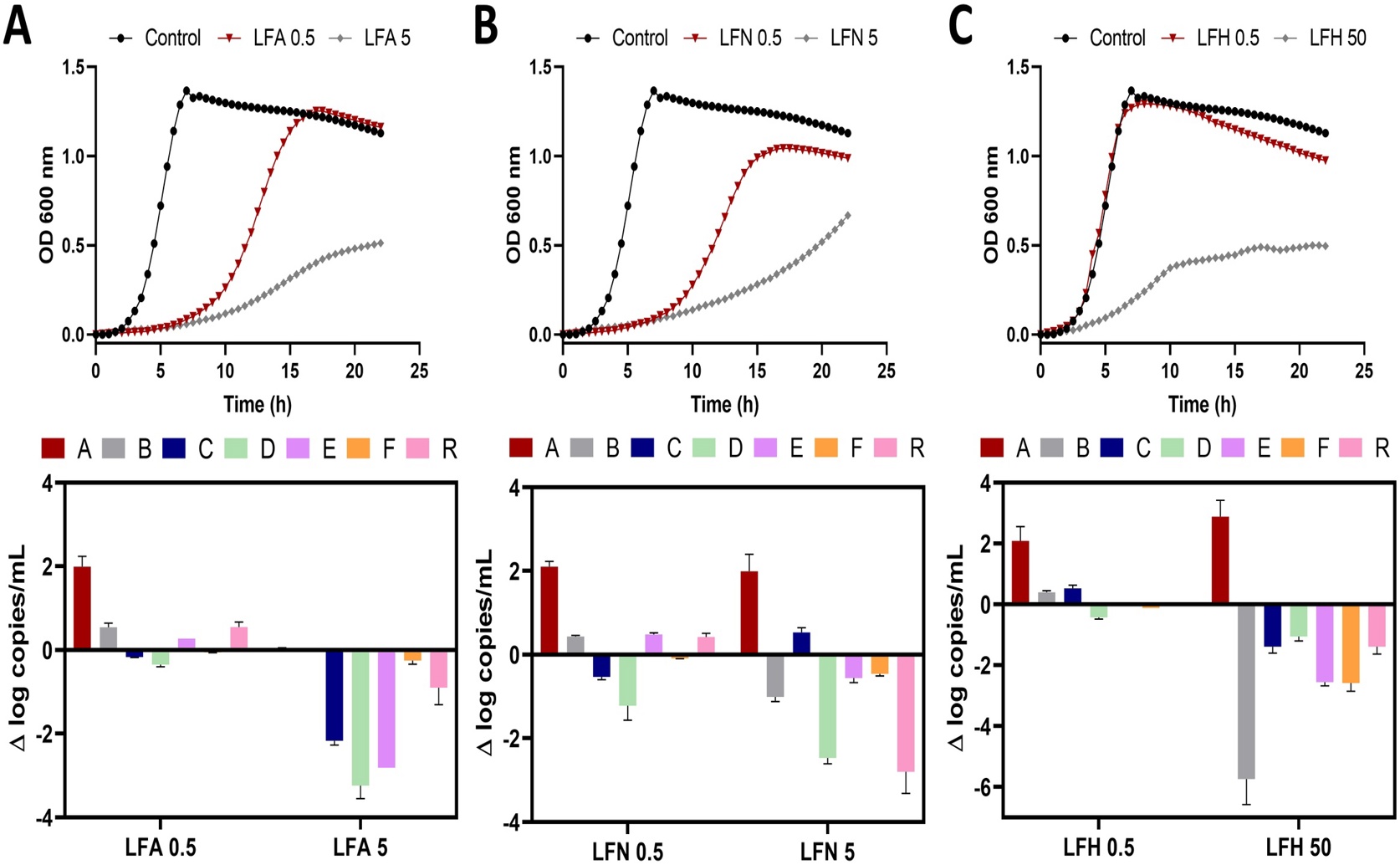
Growth curves of the S7 consortium and difference (Δ) in the log of 16S rRNA gene copy number of S7 members after incubation with (A) apo (LF-A), (B) native (LF-N) and (C) holo (LF-H) lactoferrin forms for a 24 h-period.
Key Findings
- This study, conducted with elderly participants and a simulated gut environment, investigated how different forms of lactoferrin (a milk protein) affect gut bacteria
- Iron-saturated lactoferrin slightly altered the gut microbiome composition, increasing the variety of bacterial species present, particularly in healthy individuals
- Supplementing with iron-saturated lactoferrin helped restore beneficial bacteria like Coprococcus, Alistipes, and Bifidobacterium, which often decline with age, in the simulated gut environment
References
Main Study
1) Iron-saturated bovine lactoferrin preserves microbiota diversity and healthy ageing-associated taxa in an in vitro colon model of elderly gut microbiota (Iron-saturated bovine lactoferrin impact on elderly gut microbiota)
Published 17th September, 2025
https://doi.org/10.1371/journal.pone.0332631
Related Studies
2) Prevalence and approaches to manage iron deficiency anemia (IDA).
3) Iron deficiency during the first 1000 days of life: are we doing enough to protect the developing brain?
4) Molecular Aspects and Treatment of Iron Deficiency in the Elderly.
Related Articles
 7th July, 2024 | Jenn Hoskins