Olive oil and exosomes show promise in treating fatty liver disease

Jenn Hoskins
31st October, 2025

Olive oil and exosomes show promise in treating fatty liver disease

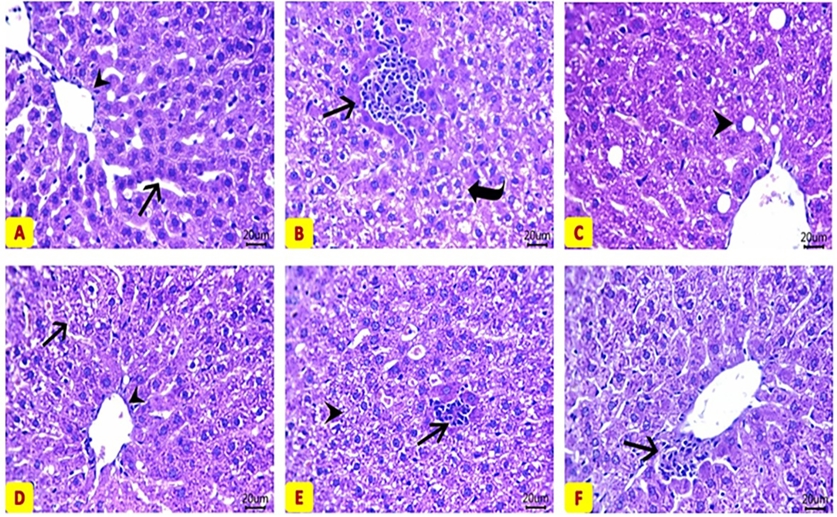
Microscopic images of rat livers reveal how combining extra virgin olive oil and exosomes preserves healthy liver architecture against the severe fatty damage caused by a high-fat diet.

Image adapted from: Alowaiesh et al. / CC BY (Source)

Key Findings

  • In rats with high-fat diet-induced liver disease, combining extra virgin olive oil (EVOO) and stem cell-derived exosomes improved blood lipid levels
  • The combined treatment reduced liver inflammation and damage, preserving normal liver structure compared to either EVOO or exosomes alone
  • This combination therapy normalized key genes involved in fat metabolism, inflammation, and antioxidant pathways within the liver
Non-alcoholic fatty liver disease (NAFLD) is a growing health concern, affecting a significant portion of the population[2]. It’s characterized by an excessive build-up of fat in the liver in individuals who consume little to no alcohol. While often asymptomatic in its early stages, NAFLD can progress to more serious conditions like non-alcoholic steatohepatitis (NASH), cirrhosis, and even liver failure. Currently, effective treatments for NAFLD remain limited, driving the need for new therapeutic strategies. Researchers at Jouf University[1] investigated a combined approach using Extra Virgin Olive Oil (EVOO) and exosomes derived from mesenchymal stem cells (MSCs-Exo) to address this challenge. EVOO has long been recognized for its positive effects on lipid metabolism and antioxidant properties, while MSCs-Exo are gaining attention for their regenerative and anti-inflammatory capabilities. The study aimed to determine if combining these two elements could provide a more robust treatment for NAFLD induced by a high-fat diet. The research team utilized a rat model, dividing 40 Sprague Dawley rats into five groups: a control group, a high-lipid diet group (HL) to mimic NAFLD, a HL group treated with EVOO, a HL group treated with MSCs-Exo, and a HL group treated with a combination of both (HL+Exo+EVOO). The results demonstrated that the combined treatment group experienced significantly better improvements in blood lipid profiles compared to either EVOO or MSCs-Exo alone. This suggests a synergistic effect, where the combined approach is more effective than individual therapies. Further analysis revealed that the combined treatment also enhanced antioxidant levels and reduced lipid peroxidation – a process where fats break down and cause cellular damage. Importantly, liver function parameters remained stable across all groups, and histopathological examination of the liver tissue showed preserved normal liver architecture in the combined treatment group, indicating a protective effect. To understand the underlying mechanisms, the researchers examined gene expression levels related to several key pathways. They found that genes involved in lipogenesis (the creation of fat – SREBP-1c, ACC, FAS, GPAT3, SCD1, and FSP27) were normalized in the combined treatment group. This suggests a reduction in fat accumulation within the liver. Additionally, genes associated with inflammation (IL-1β, TNF-α, IL-6, IL-18, CCL20, and NF-κB) were also brought back into balance, indicating a decrease in liver inflammation. Genes responsible for lipid peroxidation (CPT1A, ACOX1) were similarly regulated, further supporting the antioxidant findings. Finally, the PPAR pathway (PPARα, PPARγ), which plays a role in metabolic regulation, was also normalized. These findings build upon earlier research highlighting the complex interplay of factors contributing to NAFLD[2][3][4]. Studies have shown that insulin resistance, obesity, and metabolic syndrome are significant risk factors for developing NAFLD and its progression[2][3]. The study by Jouf University researchers suggests that the combined EVOO and MSCs-Exo treatment addresses multiple aspects of this complexity by targeting both lipid metabolism and inflammation. In particular, the normalization of gene expression levels in the PPAR pathway is noteworthy, as PPARs are key regulators of fat storage and utilization. The research from Zagazig University[3][4] underscores the importance of identifying individuals at high risk, such as those with diabetes, obesity, or metabolic syndrome, for early intervention. The current study offers a potential therapeutic avenue for these high-risk groups. The findings also align with the understanding that visceral obesity and insulin resistance are central to the development of NAFLD[4], and the combined treatment may help to mitigate these underlying factors. While further research is needed to confirm these findings in human trials, the results provide a promising foundation for the development of more effective NAFLD treatment protocols.

NutritionHealthBiochem

References

Main Study

1) Exosomes combined with extra virgin olive oil reduces lipogenesis, oxidative stress, and inflammation in non-alcoholic fatty liver disease model

Published 27th October, 2025

https://doi.org/10.1371/journal.pone.0333698


Related Studies

2) Nonalcoholic steatohepatitis: summary of an AASLD Single Topic Conference.

Journal: Hepatology (Baltimore, Md.), Issue: Vol 37, Issue 5, May 2003


3) Epidemiological modifiers of non-alcoholic fatty liver disease: Focus on high-risk groups.

https://doi.org/10.1016/j.dld.2015.08.004


4) Abdominal obesity and the metabolic syndrome: contribution to global cardiometabolic risk.

https://doi.org/10.1161/ATVBAHA.107.159228


Related Articles

An unhandled error has occurred. Reload 🗙