
How potato psyllids spread bacteria that cause zebra chip disease
Jenn Hoskins
9th January, 2026


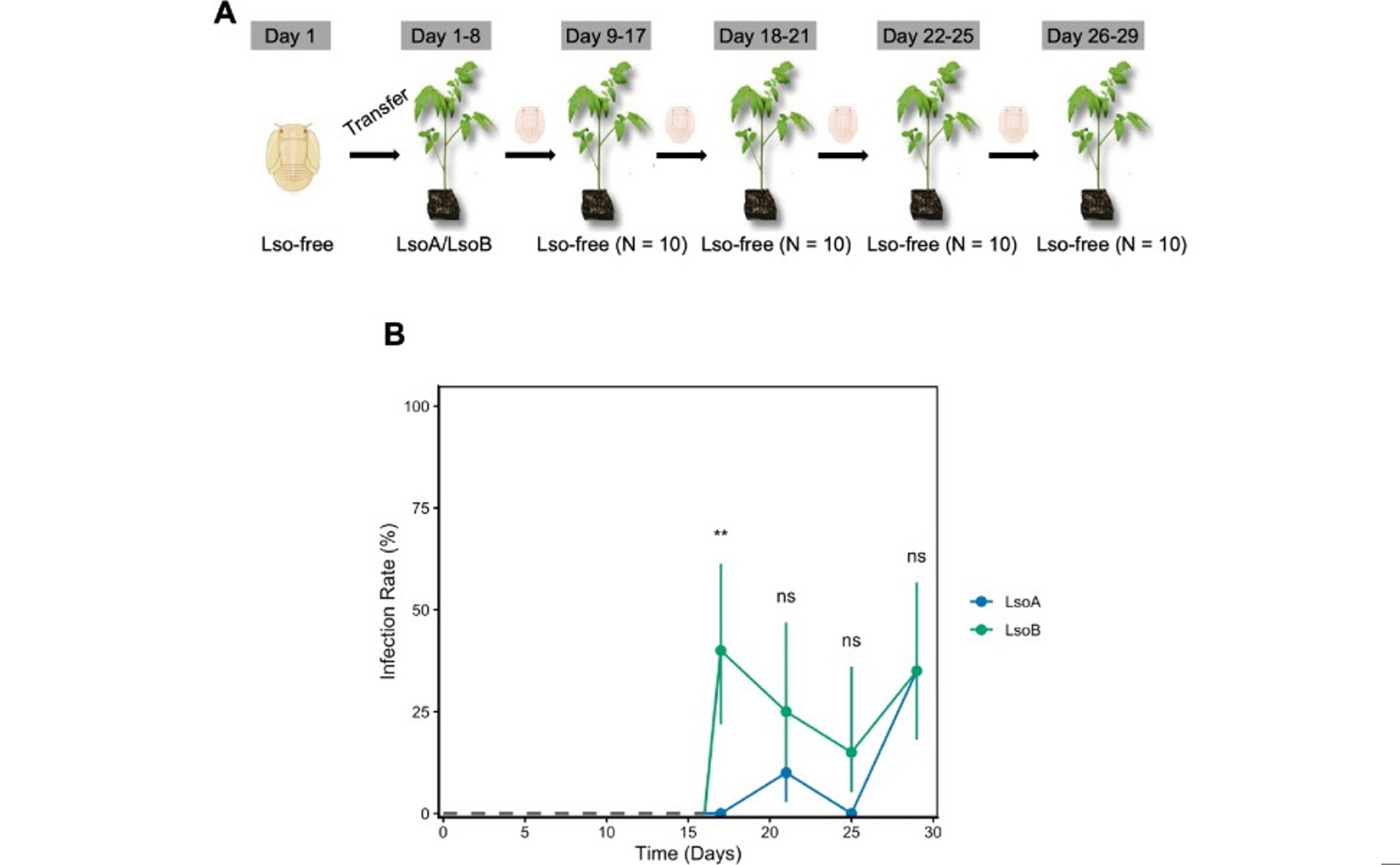
A sequential transmission assay (a) revealed that potato psyllid (Bactericera cockerelli) nymphs transmit 'Candidatus Liberibacter solanacearum' haplotype B significantly earlier than haplotype A, indicating a shorter latency period and greater transmission efficiency for LsoB (b).
Key Findings
- In Texas potato psyllids, haplotype B of Candidatus Liberibacter solanacearum (LsoB) accumulates more quickly in nymphs than haplotype A (LsoA)
- LsoB is transmitted to tomato plants earlier than LsoA by potato psyllid nymphs, indicating a shorter time between infection and spread
- Nymph guts show different gene activity changes depending on whether they are infected with LsoA or LsoB, potentially explaining the differing transmission rates
AgricultureBiotechPlant Science
References
Main Study
1) Accumulation and transmission dynamics of ‘Candidatus liberibacter solanacearum’ haplotypes A and B by potato psyllid nymphs: bioassay and transcriptomic insights
Published 6th January, 2026
https://doi.org/10.1007/s11033-025-11417-y
Related Studies
2) A New 'Candidatus Liberibacter' Species in Solanum tuberosum in New Zealand.
3) Conventional and qPCR reveals the presence of 'Candidatus Liberibacter solanacearum' haplotypes A, and B in Physalis philadelphica plant, seed, and Βactericera cockerelli psyllids, with the assignment of a new haplotype H in Convolvulaceae.
4) Genetic Variation of 'Candidatus Liberibacter solanacearum' Haplotype C and Identification of a Novel Haplotype from Trioza urticae and Stinging Nettle.
Related Articles
 19th November, 2025 | Jenn Hoskins