Deer browsing reshapes forest plant life during recovery after farming

Jenn Hoskins
27th December, 2025

Deer browsing reshapes forest plant life during recovery after farming

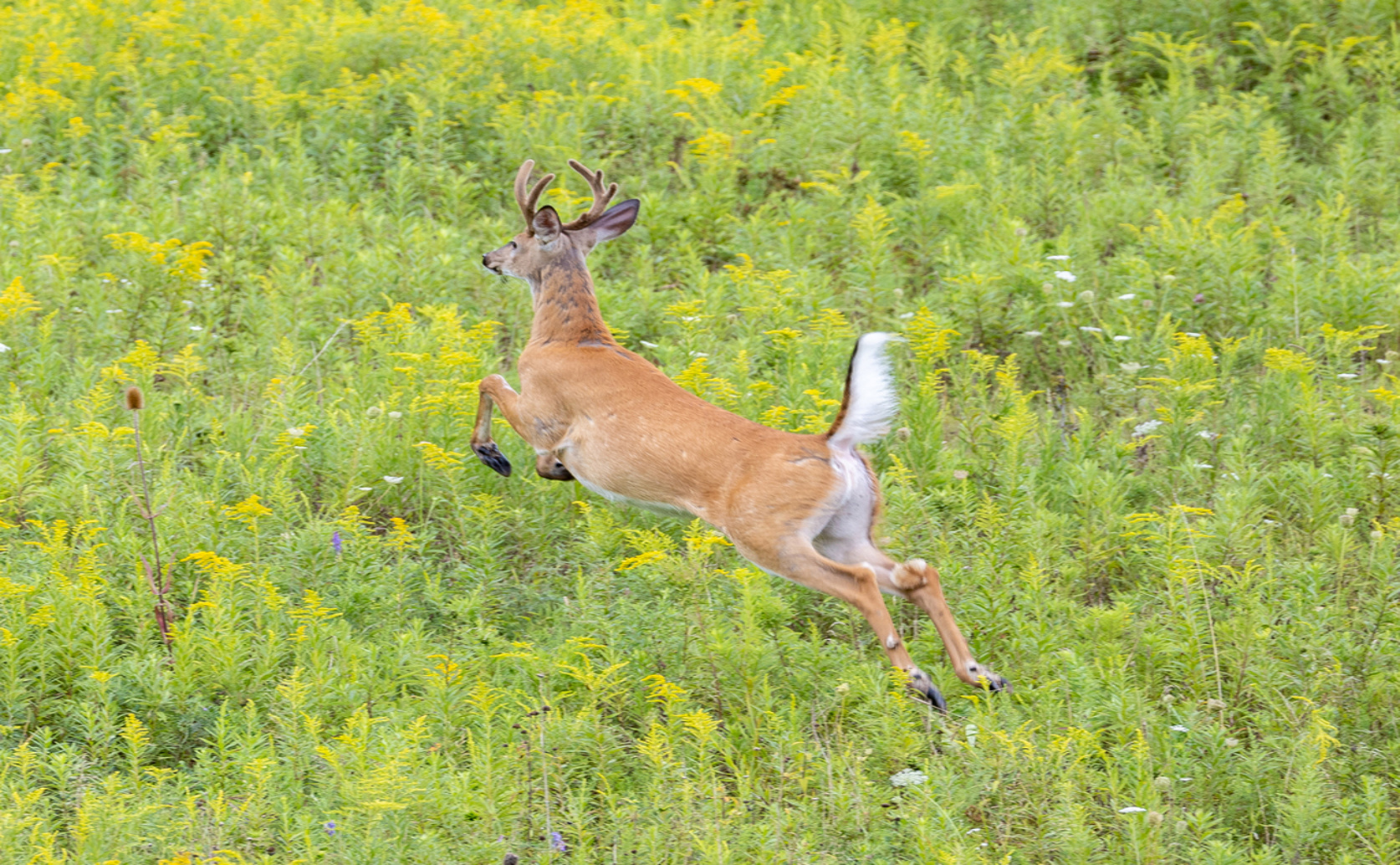
White-tailed Deer (Odocoileus virginianus)

Photo adapted from: Andrew Murray / CC BY (Source)

Key Findings

  • This 18-year study in abandoned fields near Ithaca, NY, showed deer presence initially boosted seed diversity before leveling off
  • Deer increased the variety of seeds in the soil, altering the seedbank's composition, but didn’t significantly change the total number of seeds
  • Deer browsing suppressed the growth of woody plants like trees and shrubs, preventing forest regeneration over the study period
White-tailed deer significantly impact plant life, influencing how ecosystems recover after disturbances like logging or agriculture – a process called secondary succession. Researchers at Kansas State University, Cornell University, and the University of Udine conducted an 18-year study to understand how deer affect the ‘seedbank’ – the reservoir of seeds stored in the soil – and the plant communities that emerge from them. This work, published in[1], provides valuable insights into long-term ecosystem dynamics and potential restoration strategies. The study took place near Ithaca, NY, and involved comparing areas where deer were allowed to roam freely with areas protected by deer exclosures – fences designed to keep deer out. Scientists collected seed samples annually from 2005 to 2021. They then used a ‘germination assay’ – a controlled process where seeds are encouraged to sprout – to identify the 280,674 seedlings that emerged, effectively revealing what seeds were present in the soil. Aboveground plant communities were monitored from 2019 to 2022, measuring factors like plant cover and diversity. The results showed deer presence increased the diversity of seeds germinating from the soil by 8% compared to the exclosure plots. This means there were more different types of seeds successfully sprouting in areas deer had access to. However, the total number of seeds (abundance) and the number of different species (richness) weren’t affected by deer. Deer also altered the types of seeds found in the soil, changing the overall composition of the seedbank, but didn’t impact the proportion of annual versus perennial plants, or native versus non-native species. Interestingly, deer had a limited direct effect on the aboveground plant communities measured in 2019 and 2022. The most noticeable impact was a reduction in the abundance of woody plants – trees and shrubs – by 50%. Crucially, after 16 years, only the areas protected by exclosures had trees exceeding 1 cm in diameter, indicating deer actively prevent forest regeneration. These findings build upon previous research demonstrating how herbivores can shape plant communities through selective browsing. For example, studies in the boreal forest[2] have shown that deer can drive ‘alternative successional trajectories’ – where disturbances lead to different climax states depending on colonization history. If deer heavily browse preferred tree species, they can eliminate those species, giving an advantage to browsing-resistant plants. The current study suggests this process extends to the seedbank, with deer potentially influencing which species are able to establish in the future. The study also connects to work exploring the impact of nutrient enrichment on seedbanks[3]. That research showed fertilization can decrease seedbank diversity and homogenize plant communities. While this study didn’t directly examine nutrient levels, it highlights the importance of considering multiple factors – like herbivory and nutrient availability – when assessing seedbank dynamics. Furthermore, the concept of ‘disturbance interaction’ explored in a Japanese study[4] is relevant here. That work showed canopy gaps can facilitate seed germination, but also expose seeds to grazing pressure. Similarly, the current study suggests deer may be suppressing woody plant establishment by impacting seeds after they germinate, effectively altering the impact of natural disturbance events that create opportunities for tree growth. The researchers found that both seedbank and aboveground plant communities changed over the 18-year study period, but these changes weren’t strongly linked to the presence or absence of deer. This suggests the initial impact of deer on seedbank composition may have long-lasting effects that aren’t immediately apparent in aboveground communities. Overall, the study demonstrates deer increase seedbank diversity and alter its composition, while simultaneously suppressing woody plant growth. This has important implications for secondary succession, potentially increasing the feasibility of passive restoration efforts due to the greater diversity of seeds available, but also delaying forest recovery.

WildlifeEcologyPlant Science

References

Main Study

1) Deer impact seedbanks and plant communities over 18 years of post-agricultural succession

Published 23rd December, 2025

https://doi.org/10.1371/journal.pone.0339466


Related Studies

2) A large herbivore triggers alternative successional trajectories in the boreal forest.

Journal: Ecology, Issue: Vol 94, Issue 12, Dec 2013


3) Herbivory and nutrients shape grassland soil seed banks.

https://doi.org/10.1038/s41467-023-39677-x


4) Interaction exposure effects of multiple disturbances: plant population resilience to ungulate grazing is reduced by creation of canopy gaps.

https://doi.org/10.1038/s41598-020-58672-6


Related Articles

An unhandled error has occurred. Reload 🗙