Genetics and camera traps reveal origins of Oklahoma’s expanding bear population

Jim Crocker
20th December, 2025

Genetics and camera traps reveal origins of Oklahoma’s expanding bear population

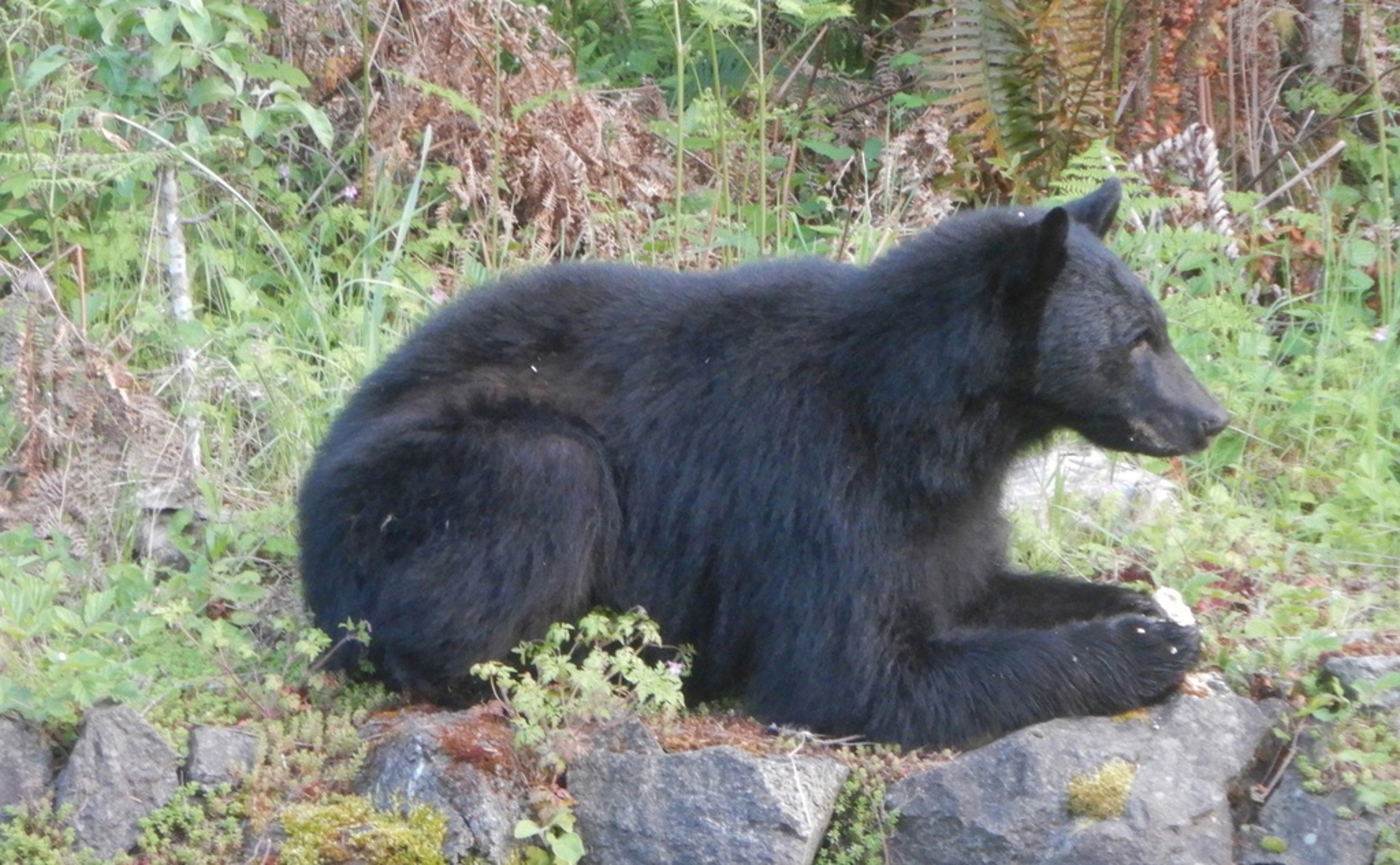
American Black Bear (Ursus americanus)

Photo adapted from: Daval Davis / CC BY (Source)

Key Findings

  • Black bears are expanding their range into western Oklahoma, an area where they weren't historically common, likely originating from a population in northern New Mexico
  • Bear activity in Oklahoma was higher in warmer, wetter conditions and earlier in the summer, suggesting food availability influences their presence
  • The Oklahoma bear population is estimated at around 26 individuals and shows limited genetic diversity, indicating a recent expansion from the New Mexico population
American black bear sightings have been increasing in the Oklahoma Panhandle, a region where they weren't historically common. This prompted researchers from Oklahoma State University, the U.S. Geological Survey, University of Idaho, and Wildlife Conservation Society Canada to investigate the bears’ presence and characteristics in the area[1]. The study aimed to understand why bears were appearing in this new territory, estimate their numbers, and assess the health of the population. The core of the research involved deploying camera traps at 160 locations across western Oklahoma over two summers, 2022 and 2023. These cameras automatically record images when motion is detected, allowing researchers to identify and track bears without directly disturbing them. Additionally, the team collected hair samples from bears using “hair snares” – strategically placed materials that bears brush against, leaving behind DNA. Genetic analysis of these samples provided information about the bears’ relatedness, diversity, and origin. The camera trap data revealed bears were detected at 20 of the 160 sites. Statistical analysis showed that bear detection rates were higher in warmer, wetter conditions and earlier in the summer. Conversely, detections decreased as the year progressed. This suggests that bears are more active when food is readily available, likely influenced by seasonal changes in resources. The analysis also indicated differences in bear activity between the two study years, hinting at potential year-to-year variations in bear behavior or population size. Looking at where bears chose to spend their time, researchers found they preferred areas with steeper slopes and more coarse woody debris – fallen logs and branches. They tended to avoid higher elevations. These habitat preferences likely relate to food availability, shelter, and potentially, thermal cover. The genetic analysis of hair samples was crucial in determining the source of these Oklahoma bears. Results indicated they weren’t a distinct, isolated population, but rather an extension of a population already known to exist in northcentral New Mexico. Researchers identified 21 bears in Oklahoma and 69 in New Mexico using genetic ‘markers’ called microsatellites, which act like unique identifiers for each bear. A slight deficiency in genetic diversity was detected within the Oklahoma population, a factor that can sometimes indicate a small or isolated group. Using the collected data, researchers estimated the bear population in western Oklahoma to be around 26 individuals (with a range of 19-43). This provides a baseline number for monitoring future population changes. This study builds upon broader understanding of how species are responding to changing environmental conditions[2]. Many terrestrial species are shifting their ranges, moving either towards higher latitudes or elevations in response to climate change, with an average elevation shift of 11 meters per decade and a latitudinal shift of 16.9 kilometers per decade[2]. The Oklahoma bear expansion could be viewed as a similar response, with bears potentially following changing food resources or seeking more suitable thermal conditions. Furthermore, the factors influencing range changes observed in other mammals – such as body size and diet[3] – offer a useful framework for interpreting the Oklahoma bear’s behavior. While the Oklahoma bears aren’t experiencing range contraction like many large mammals, their expansion is likely facilitated by their generalist diet and reproductive rates, characteristics that help species adapt to new environments. The study also echoes findings that human activity plays a role in species’ distribution[3], as habitat alteration and human population density can influence where bears are found. The research highlights the importance of understanding how species interact with their environment and each other[4]. As climate change continues to disrupt ecosystems, these interactions will become increasingly important in determining species’ fates. The data gathered by provides a starting point for managing human-bear conflicts as the population grows in western Oklahoma, and for tracking the long-term health and viability of this expanding bear population.

WildlifeGeneticsEcology

References

Main Study

1) Landscape associations and population genetics of a generalist carnivore at a range limit

Published 18th December, 2025

https://doi.org/10.1371/journal.pone.0334492


Related Studies

2) Rapid range shifts of species associated with high levels of climate warming.

https://doi.org/10.1126/science.1206432


3) Global correlates of range contractions and expansions in terrestrial mammals.

https://doi.org/10.1038/s41467-020-16684-w


4) Climate change and the past, present, and future of biotic interactions.

https://doi.org/10.1126/science.1237184


Related Articles

An unhandled error has occurred. Reload 🗙