
Rare gecko's DNA reveals clues to its survival on Reunion Island
Jim Crocker
14th December, 2025


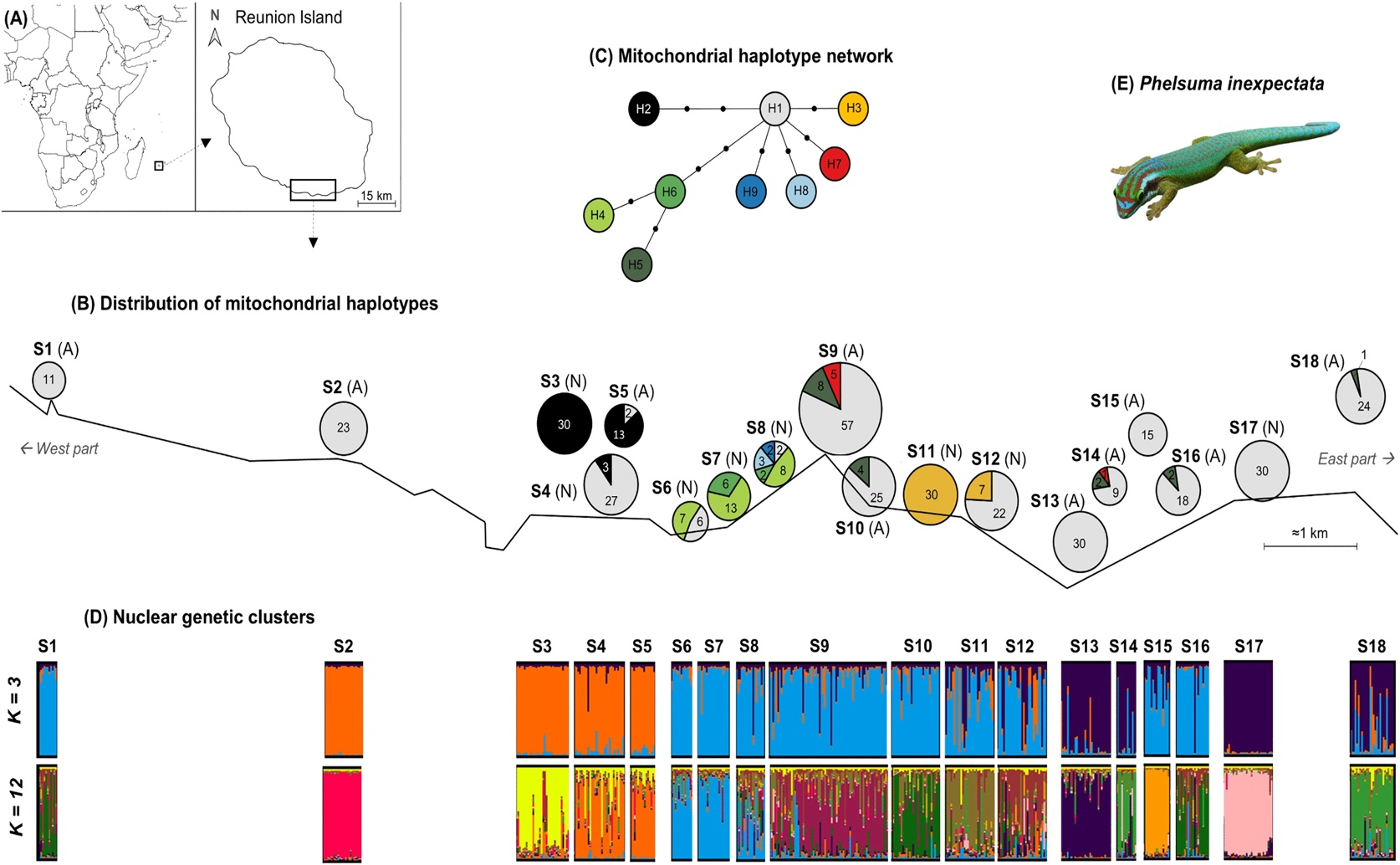
This assessment of the critically endangered Phelsuma inexpectata (E) across its narrow distribution on Reunion Island (A, B) highlights the species' low mitochondrial diversity (C) and significant fine-scale genetic structuring (D).
Key Findings
- This Reunion Island gecko, Phelsuma inexpectata, has surprisingly low genetic diversity compared to related species, potentially increasing extinction risk
- Gecko populations show genetic differences based on geographic location, with limited movement between sites due to habitat fragmentation and the gecko’s limited dispersal ability
- While overall genetic diversity is low, natural habitats harbor slightly more diversity than areas altered by humans, highlighting the importance of conserving remaining pristine environments
References
Main Study
1) First evaluation of genetic diversity and population structure of Phelsuma inexpectata (Gekkonidae), a critically endangered gecko endemic to Reunion Island
Published 12th December, 2025
https://doi.org/10.1371/journal.pone.0338217
Related Studies
2) A global reptile assessment highlights shared conservation needs of tetrapods.
3) Conservation genetics and genomics of amphibians and reptiles.
4) Mitochondrial DNA and Distribution Modelling Evidenced the Lost Genetic Diversity and Wild-Residence of Star Tortoise, Geochelone elegans (Testudines: Testudinidae) in India.
Related Articles
 14th June, 2024 | Jenn Hoskins