Hidden threat: New insights into the Bussuquara virus and its impact

Jim Crocker
7th December, 2025

Hidden threat: New insights into the Bussuquara virus and its impact

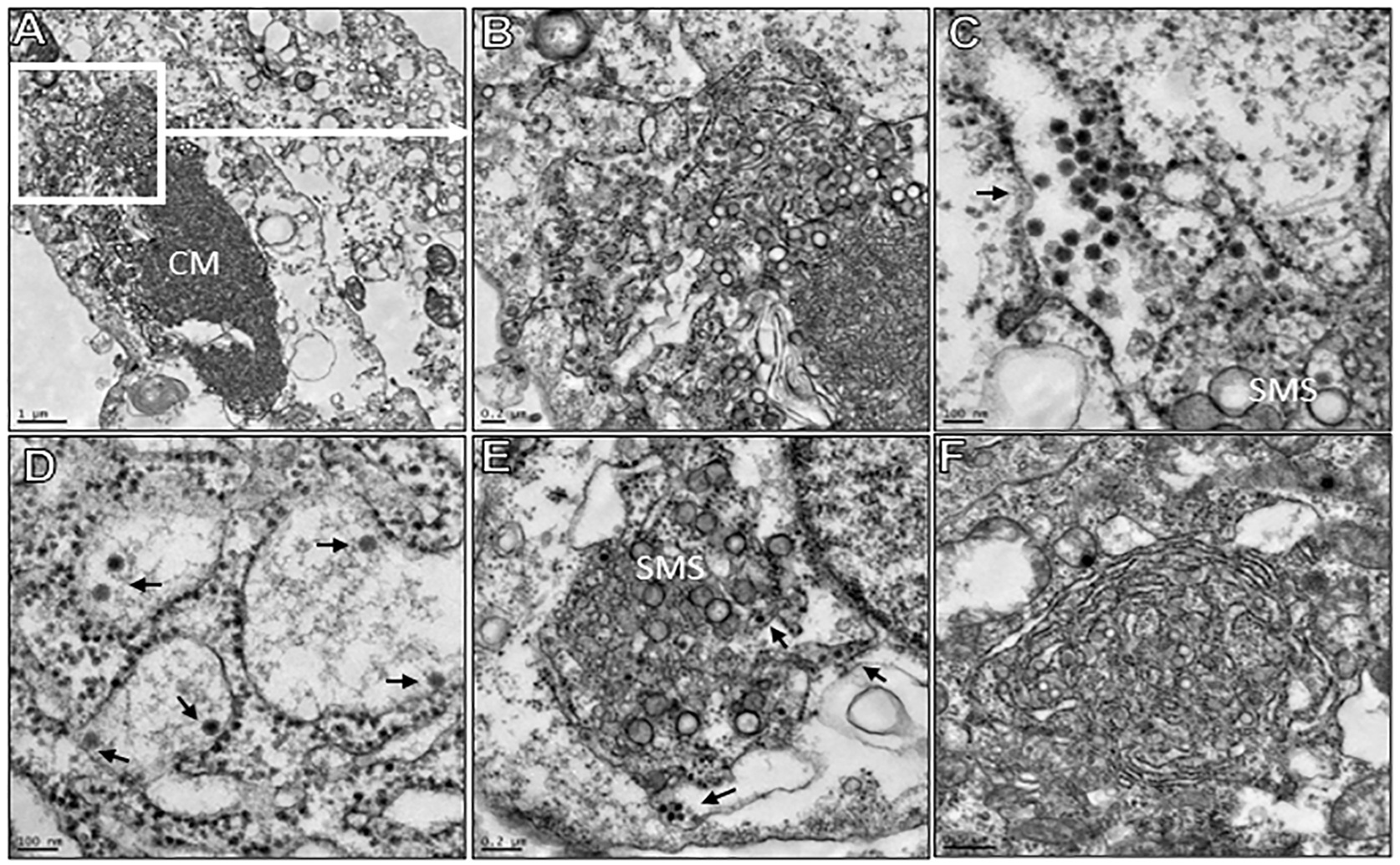
Ultrastructural analysis confirms that Bussuquara virus strains replicate via typical orthoflavivirus mechanisms, evidenced by the formation of convoluted membranes and immature virions in the endoplasmic reticulum of vertebrate (a–c, e) and mosquito (d, f) cells.

Image adapted from: Steck et al. / CC BY (Source)

Key Findings

  • This study, focused on the Bussuquara virus (BSQV) in Brazil, found the virus can infect a wide range of cells, including those from humans, raising concerns about potential disease
  • Genetic analysis confirmed BSQV belongs to the Orthoflavivirus genus and shows it’s more closely related to other viruses transmitted by Culex mosquitoes, suggesting a similar transmission pattern
  • BSQV replicates effectively in both mosquito and vertebrate cells, but causes more damage to cells from mammals, birds, and primates than mosquito cells, indicating potential for harm to these hosts
Bussuquara virus (BSQV) is an arbovirus – a virus transmitted by arthropods, such as mosquitoes and ticks – first identified in the Brazilian Amazon in 1956[2]. Despite being discovered decades ago, and detected sporadically across the Americas, including Brazil, Colombia, and Panama, BSQV remains relatively unstudied due to a lack of awareness and diagnostic tools. This is concerning given Brazil’s history as a hotspot for arbovirus emergence and spread[3]. A recent study conducted by researchers from the University of Texas-Medical Branch, Faculdade de Medicina de São José do Rio Preto, New Mexico State University, and Instituto Virologia, ARGENTINA[1], aimed to address this knowledge gap by comprehensively characterizing BSQV. The study focused on the four historical strains of BSQV available for research. A key problem in understanding BSQV’s potential to cause outbreaks is the limited information on its ability to infect different species and its impact on those it infects. The researchers used advanced techniques, including next-generation sequencing – a method for rapidly determining the genetic makeup of an organism – to reconstruct the complete genetic code of each strain. This allowed them to compare BSQV to other related viruses and understand its evolutionary relationships. They also used transmission electron microscopy, a technique that uses beams of electrons to create highly magnified images, to visualize the virus’s structure. The genetic analysis revealed that BSQV shares characteristics common to other viruses in the Orthoflavivirus genus, confirming its place within this viral family. One strain showed greater similarity to Naranjal orthoflavivirus and was excluded from further experiments. Importantly, the study demonstrated that all remaining BSQV strains were capable of robustly infecting a wide range of cell types, both from mosquitoes (the vectors that transmit the virus) and from various animals, including humans. This broad host range suggests BSQV is a “generalist” virus, meaning it isn’t highly specialized to infect only a few species. The researchers observed that BSQV caused minimal damage to mosquito cells, but moderate to significant damage to cells from mammals, rodents, birds, and primates. This “cytopathic effect” – the visible changes in cells caused by viral infection – indicates that BSQV can actively replicate and cause harm within these hosts. This is particularly relevant considering the findings of a meta-analysis of Ilheus virus (ILHV), another arbovirus found in Latin America, which showed that clinical symptoms often included fever, headache, and, in a significant proportion of cases, encephalitis (inflammation of the brain)[4]. While BSQV’s specific clinical effects in humans are still unknown, its ability to infect human cells in vitro (in a laboratory setting) raises concerns about its potential to cause disease. The findings build upon earlier work highlighting the complex interplay between landscape changes and arbovirus emergence in Brazil[3]. Deforestation, urbanization, and agricultural expansion can bring humans into closer contact with both the virus and its mosquito vectors, increasing the risk of transmission. The study also contextualizes the emergence of other arboviruses in the region, such as Zika virus (ZIKV), which caused a major epidemic in Brazil starting in 2015[5]. Understanding the characteristics of viruses like BSQV is crucial for predicting and preventing future outbreaks. The research from the University of Texas-Medical Branch and collaborating institutions provides a crucial foundation for future studies investigating BSQV’s potential to cause epizootic (animal) and urban transmission cycles. Further research is needed to determine how BSQV spreads in nature, which mosquito species are most effective at transmitting it, and what the clinical outcomes of infection are in humans.

WildlifeGeneticsEvolution

References

Main Study

1) Hiding in plain sight: Genomic and phenotypic characterization of mosquito-borne Bussuquara virus

Published 5th December, 2025

https://doi.org/10.1371/journal.pntd.0013774


Related Studies

2) Bussuquara Virus: A Neglected Orthoflavivirus with Broad Distribution Across Central and South America and the Caribbean.

https://doi.org/10.3390/v17020183


3) (Re)Emerging Arboviruses of Public Health Significance in the Brazilian Amazon.

https://doi.org/10.3390/microorganisms13030650


4) Clinical Landscape and Rate of Exposure to Ilheus Virus: Insights from Systematic Review and Meta-Analysis.

https://doi.org/10.3390/v15010092


5) Zika virus in the Americas: Early epidemiological and genetic findings.

https://doi.org/10.1126/science.aaf5036


Related Articles

An unhandled error has occurred. Reload 🗙