Do moon jellyfish prefer to be alone? New research explores social behavior.

Jim Crocker
12th December, 2025

Do moon jellyfish prefer to be alone? New research explores social behavior.

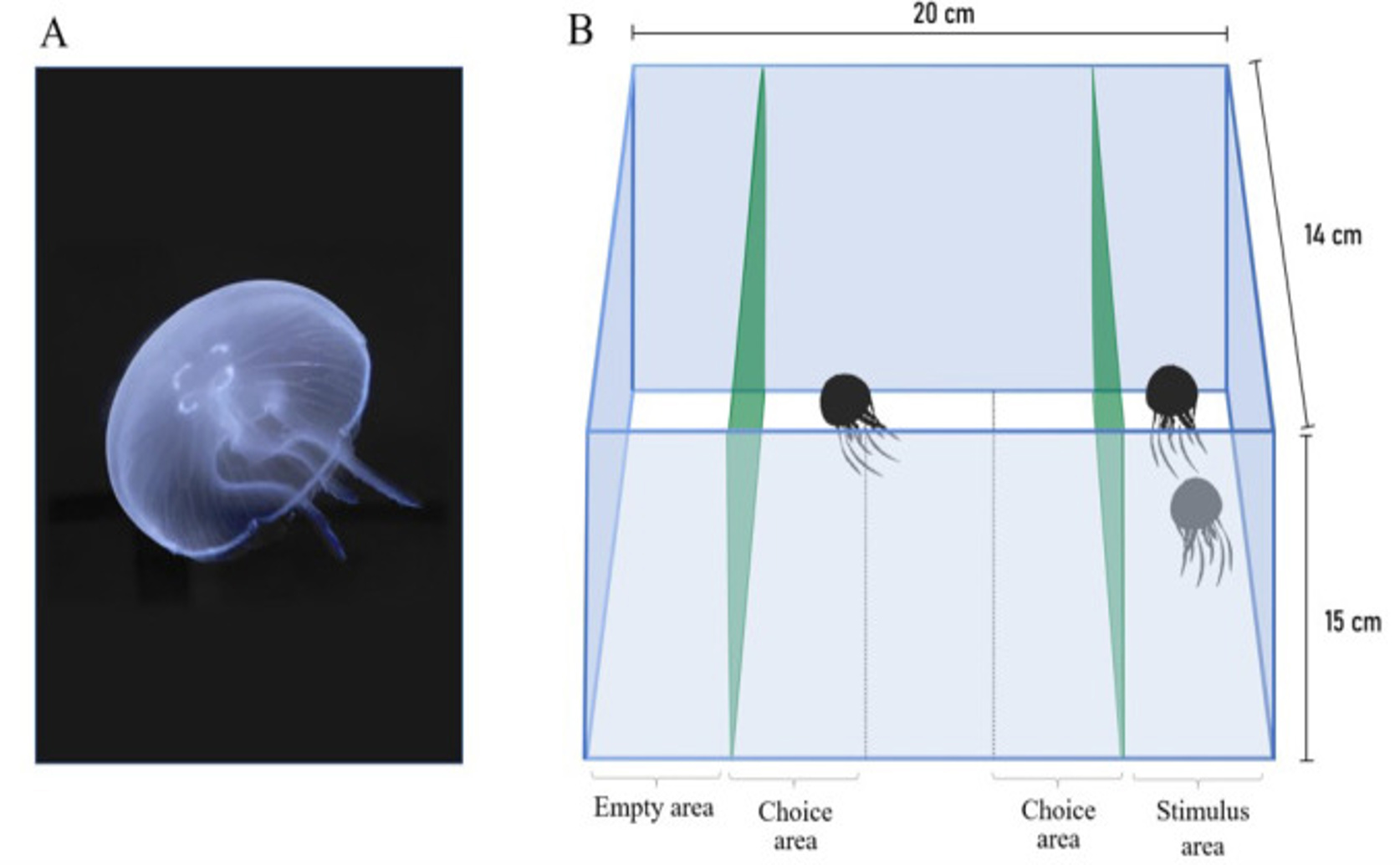
Contrary to the "safety in numbers" hypothesis, moon jellyfish (Aurelia spp.) demonstrated clear non-social behavior by consistently spending more time away from their companions throughout the entire observation period.

Image adapted from: Pecunioso et al. / CC BY (Source)

Key Findings

  • Moon jellyfish were studied in Padova to see if they actively join others when in a new place
  • Contrary to expectations, jellyfish consistently moved away from other jellyfish in the experiment
  • Aggregation in nature likely results from environmental factors, not a strong desire for social interaction
Jellyfish are frequently observed in groups, leading scientists to investigate the reasons behind this common behavior. One prominent theory, known as ‘safety in numbers’, proposes that aggregating reduces individual risk from predators. However, the underlying mechanisms driving this aggregation – whether it’s a passive response to environmental conditions or an active choice by the jellyfish themselves – remained unclear. Researchers at the University of Padova[1] recently explored whether jellyfish actively seek out other members of their species when faced with new surroundings. The study focused on moon jellyfish (Aurelia spp.), a widely distributed and common species known to form large aggregations. The experiment involved placing individual jellyfish into an unfamiliar tank and observing their movements in relation to other jellyfish introduced into the same tank. The core question was whether the jellyfish would spend more time near conspecifics (members of the same species) – indicating active social attraction – or remain isolated. The findings were unexpected. Instead of gravitating towards their own kind, the moon jellyfish consistently moved away from other jellyfish throughout the observation period. This contrasts sharply with the ‘safety in numbers’ hypothesis, suggesting that aggregation isn’t necessarily driven by a desire for social companionship, at least not in novel environments. This research builds upon a growing understanding of jellyfish behavior. Previous work on Aurelia sp. has demonstrated that these animals are capable of surprisingly complex responses to their environment[2]. They aren't simply reacting to stimuli with basic reflexes; they exhibit coordinated movements and adjust their behavior based on sensory feedback, indicating a functioning nervous system capable of adaptive responses. This is particularly noteworthy given that jellyfish lack the centralized brain structures common in many other animals. Interestingly, the study’s results also add nuance to our understanding of population structure in jellyfish. While moon jellyfish possess the potential for wide dispersal, meaning they could theoretically mix freely across large areas, genetic studies have revealed localized recruitment and relatedness within blooms[3]. Researchers found evidence of siblings remaining close to one another, suggesting that behavioral factors – like individual cohesiveness – contribute to genetic patchiness despite the species’ dispersive capabilities. The University of Padova study doesn’t directly address the genetic component, but it raises the possibility that the observed avoidance behavior in novel environments might contribute to these localized groupings. Perhaps jellyfish are actively maintaining familial bonds within blooms, even if they don’t actively seek out other jellyfish in entirely new locations. Another relevant finding comes from research on the box jellyfish, Tripedalia cystophora, which demonstrated the capacity for associative learning[4]. This suggests that jellyfish are not simply responding to stimuli passively, but can actively modify their behavior based on experience. While the current study doesn’t explore learning directly, it highlights the potential for complex neural processing in jellyfish. The observed avoidance behavior could be a learned response, or it could be a species-specific reaction that is independent of learning. The researchers acknowledge that jellyfish aggregation in nature is likely influenced by a multitude of factors, including ocean currents, food availability, and predator distribution. This study doesn't negate the ‘safety in numbers’ effect entirely, but it does suggest that active social attraction isn’t a primary driver of aggregation, particularly when jellyfish encounter unfamiliar environments. Further research is needed to understand the specific mechanisms underlying this avoidance behavior and how it interacts with other ecological factors.

WildlifeEcologyMarine Biology

References

Main Study

1) Safety in numbers? Evidence of non-social behaviour in the moon jellyfish Aurelia spp.

Published 9th December, 2025

https://doi.org/10.1007/s10071-025-02023-3


Related Studies

2) What's on the mind of a jellyfish? A review of behavioural observations on Aurelia sp. jellyfish.

https://doi.org/10.1016/j.neubiorev.2010.06.001


3) First evidence of inbreeding, relatedness and chaotic genetic patchiness in the holoplanktonic jellyfish Pelagia noctiluca (Scyphozoa, Cnidaria).

https://doi.org/10.1371/journal.pone.0099647


4) Associative learning in the box jellyfish Tripedalia cystophora.

https://doi.org/10.1016/j.cub.2023.08.056


Related Articles

An unhandled error has occurred. Reload 🗙