How Ocean Nutrients Affect Island Reptiles That Eat Insects and Plants

Greg Howard
23rd August, 2025

How Ocean Nutrients Affect Island Reptiles That Eat Insects and Plants

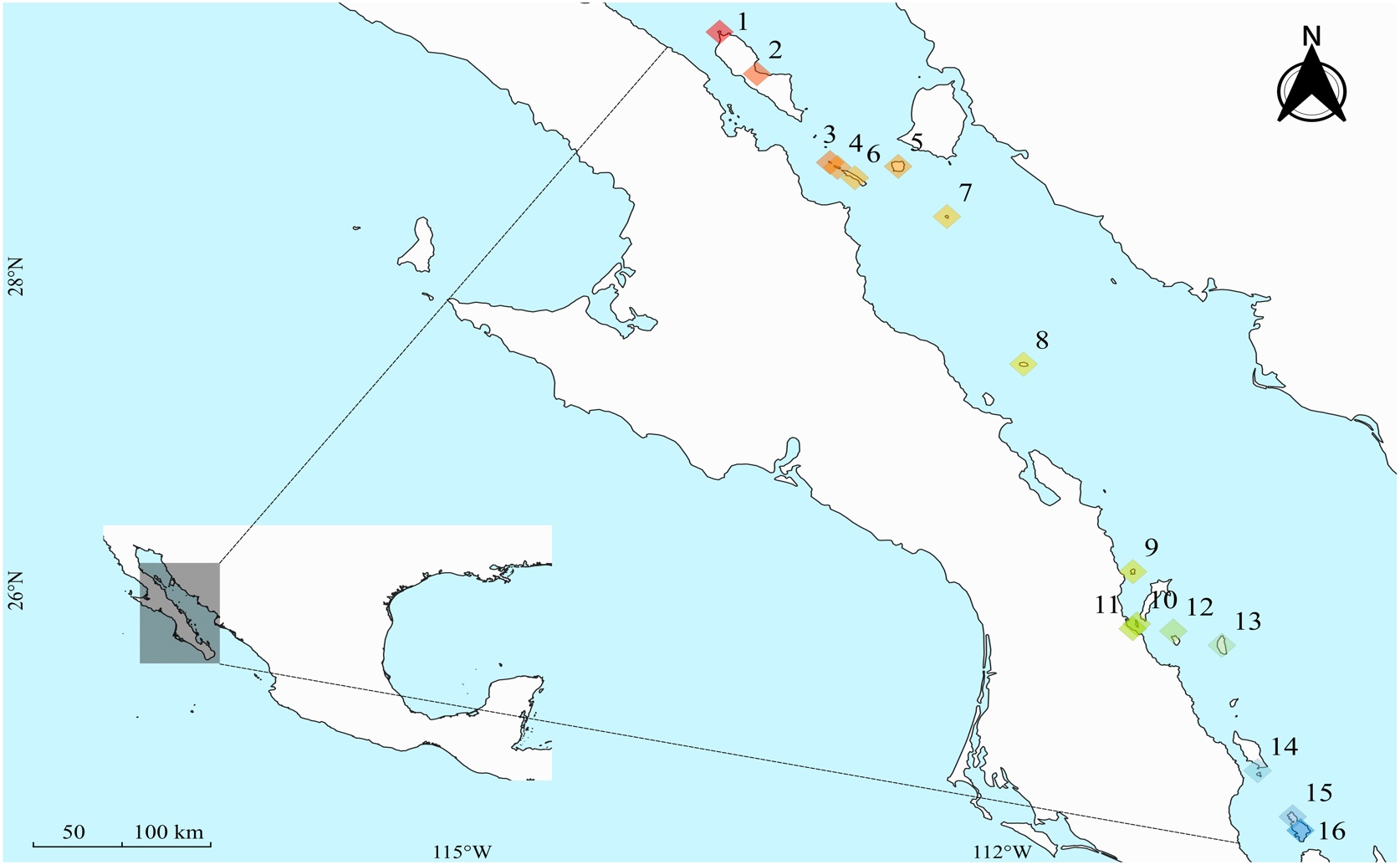
This study sampled 16 islands across a distinct north-south aridity gradient in the Gulf of California, a key environmental factor found to drive the incorporation of marine nutrients into terrestrial lizard diets.

Image adapted from: Barraza-Soltero et al. / CC BY (Source)

Key Findings

  • Lizards across Gulf of California islands incorporate marine nutrients into their diets
  • Insectivorous lizards from drier islands showed greater reliance on marine food sources
  • Seabird colonies significantly increase nitrogen levels in lizards’ tissues, supporting both insectivorous and herbivorous diets
Marine subsidies, resources originating from outside a particular ecosystem, are increasingly recognized as crucial for supporting life in otherwise limited environments. This is especially true in arid islands, where terrestrial food webs can be significantly bolstered by inputs from the sea[2]. Recent research by scientists at Centro de Investigaciones Biológicas del Noroeste, Universidad de Guadalajara, Instituto Andaluz de Ciencias de la Tierra, and University of Hyogo[1] has investigated the extent to which marine-derived nutrients are utilized by lizards across a wide range of islands in the Gulf of California, and how this usage varies with environmental factors. The study focused on two groups of lizards: insectivorous Uta lizards and herbivorous iguanas from Dipsosarus, Ctenosaura, and Sauromalus genera. The researchers hypothesized that the incorporation of marine nutrients into lizard diets would be greatest on islands with higher aridity, smaller size, and closer proximity to seabird colonies. Seabird colonies represent a key pathway for marine energy to enter terrestrial ecosystems, primarily through the deposition of nutrient-rich guano (seabird excrement). To determine the extent of marine nutrient uptake, the research team analyzed the “isotopic niches” of lizard populations across 16 islands spanning a significant geographic area. Isotopic analysis relies on the principle that different environments leave unique “fingerprints” in the tissues of organisms based on the ratios of stable isotopes – different forms of the same element with varying numbers of neutrons. Specifically, they measured the ratios of carbon-13 (δ13C) and nitrogen-15 (δ15N) in lizard tissues. These isotopes are incorporated into lizard tissues through their diet, and their ratios can reveal the source of those nutrients. The results strongly supported the researchers’ hypothesis regarding the importance of seabird colonies. A clear northward gradient was observed, with islands in the northern Gulf showing a greater reliance on marine subsidies for both insectivorous and herbivorous lizards. This correlation aligns with the higher aridity levels found in the northern part of the Gulf, suggesting that marine resources become increasingly important as terrestrial resources become scarcer. The δ13C variation in insectivorous lizards was significantly correlated with island aridity and latitude, while δ15N variation was significantly correlated with the presence of nearby seabird colonies. Interestingly, the study also revealed a substantial overlap (70%) in the isotopic space shared by insectivorous and herbivorous lizards. This suggests that both groups are tapping into the same marine nutrient pool, though the precise mechanisms are still unclear. The incorporation of the enriched 15N isotope could be occurring through two primary pathways: direct fertilization of plants by guano, making them more nutritious for herbivores, or through the consumption of insects that are themselves associated with seabird colonies – either by feeding on guano or on the birds themselves (or their eggs and carcasses).[2] highlighted the complex interplay between pulses and subsidies, and this study further demonstrates how multiple resource pathways can converge within an ecosystem. While island size was initially hypothesized to play a role, the study found no significant correlation between island area and marine nutrient uptake. This may be due to the specific sampling design employed, and further research is needed to fully assess the influence of island size.[3] provides a useful framework for understanding how individual consumer responses to resource pulses can influence community-level processes, and future studies incorporating data on plant and arthropod isotopic signatures, as well as a coast-inland gradient, could provide a more detailed picture of nutrient flow within these island ecosystems. The findings from build upon previous research demonstrating the critical role of seabird guano in supporting terrestrial plant communities in the Gulf of California[4]. The distinctively high δ15N values observed in plants and cacti on seabird islands underscore the allochthonous (externally sourced) nature of this nutrient input. This study expands on this knowledge by demonstrating that the benefits of this marine subsidy extend to a wider range of terrestrial consumers, including both insectivorous and herbivorous lizards, and are particularly pronounced in arid environments.

WildlifeEcologyMarine Biology

References

Main Study

1) Understanding the influence of marine nutrients on insectivorous and herbivorous reptiles in the Gulf of California islands

Published 22nd August, 2025

https://doi.org/10.1371/journal.pone.0329414


Related Studies

2) Resources from another place and time: responses to pulses in a spatially subsidized system.

Journal: Ecology, Issue: Vol 89, Issue 3, Mar 2008


3) Marine subsidies change short-term foraging activity and habitat utilization of terrestrial lizards.

https://doi.org/10.1002/ece3.3560


4) Marine subsidies produce cactus forests on desert islands.

https://doi.org/10.1038/s41598-022-21133-3


Related Articles

An unhandled error has occurred. Reload 🗙