
Key Movement Traits for Conservation and Fisheries Management
Jim Crocker
10th February, 2025


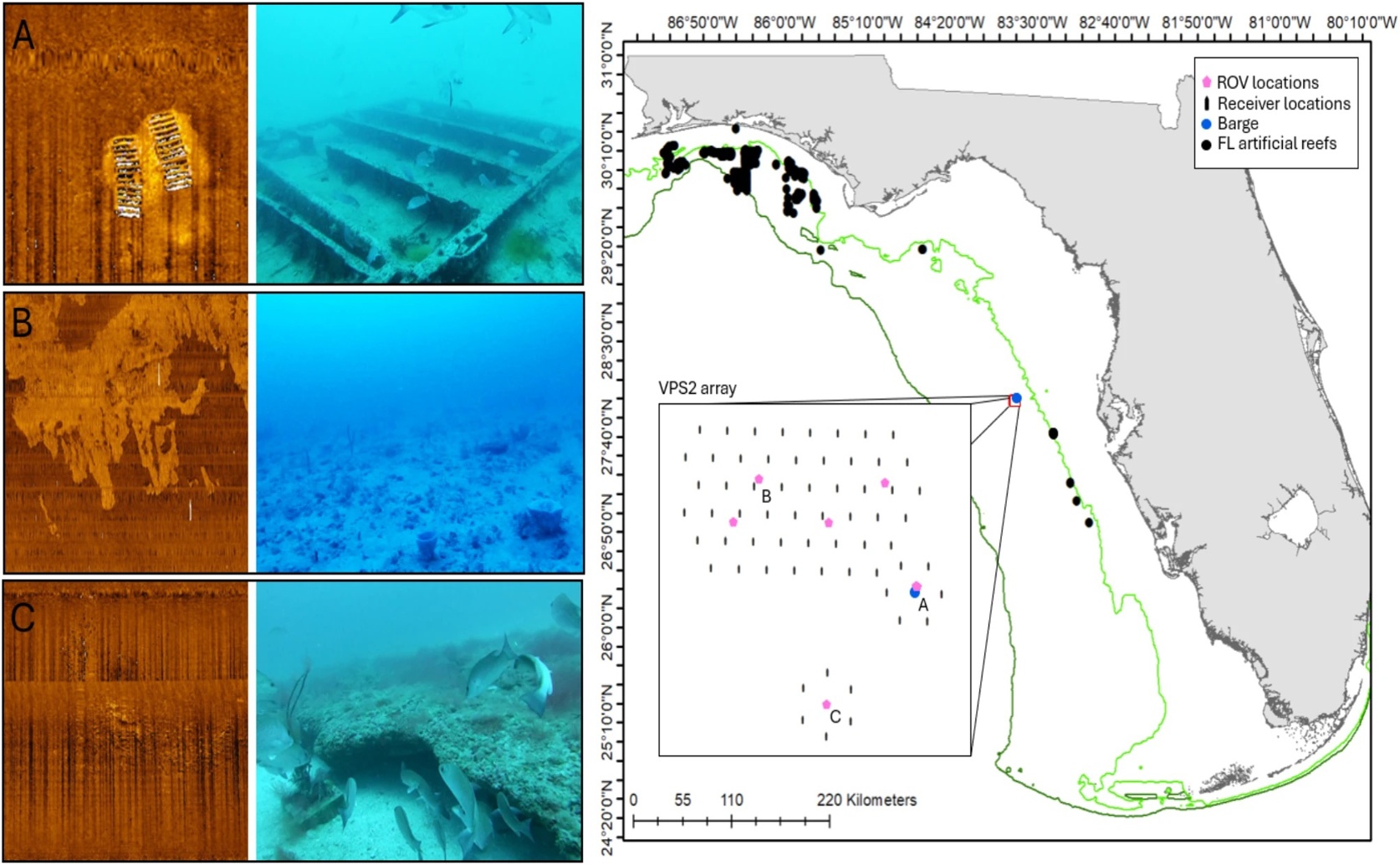
This study investigated the movement ecology of Red snapper (Lutjanus campechanus) within a large acoustic array on the west Florida shelf, specifically designed to compare fish behavior across an artificial reef (a), extensive hard bottom (b), and a natural reef ledge (c).
Key Findings
- Researchers tracked red snapper in a 12-square-kilometer area with diverse habitats to study their movement and habitat use
- About 54% of red snapper showed annual site fidelity, but storms and early summer increased their movement out of the area
- Red snapper preferred smaller habitat patches, and some traveled long distances, highlighting the need for both local and regional conservation strategies
References
Main Study
1) Movement traits important to conservation and fisheries management: an example with red snapper.
Published 7th February, 2025
https://doi.org/10.1038/s41598-025-86892-1
Related Studies
2) ECOLOGY. Aquatic animal telemetry: A panoramic window into the underwater world.
3) Acoustic telemetry and fisheries management.
4) Global trends in aquatic animal tracking with acoustic telemetry.
Related Articles
 29th April, 2024 | Jenn Hoskins