Viral Diversity Revealed in Bat Populations Using DNA Analysis

Jim Crocker
24th September, 2025

Viral Diversity Revealed in Bat Populations Using DNA Analysis

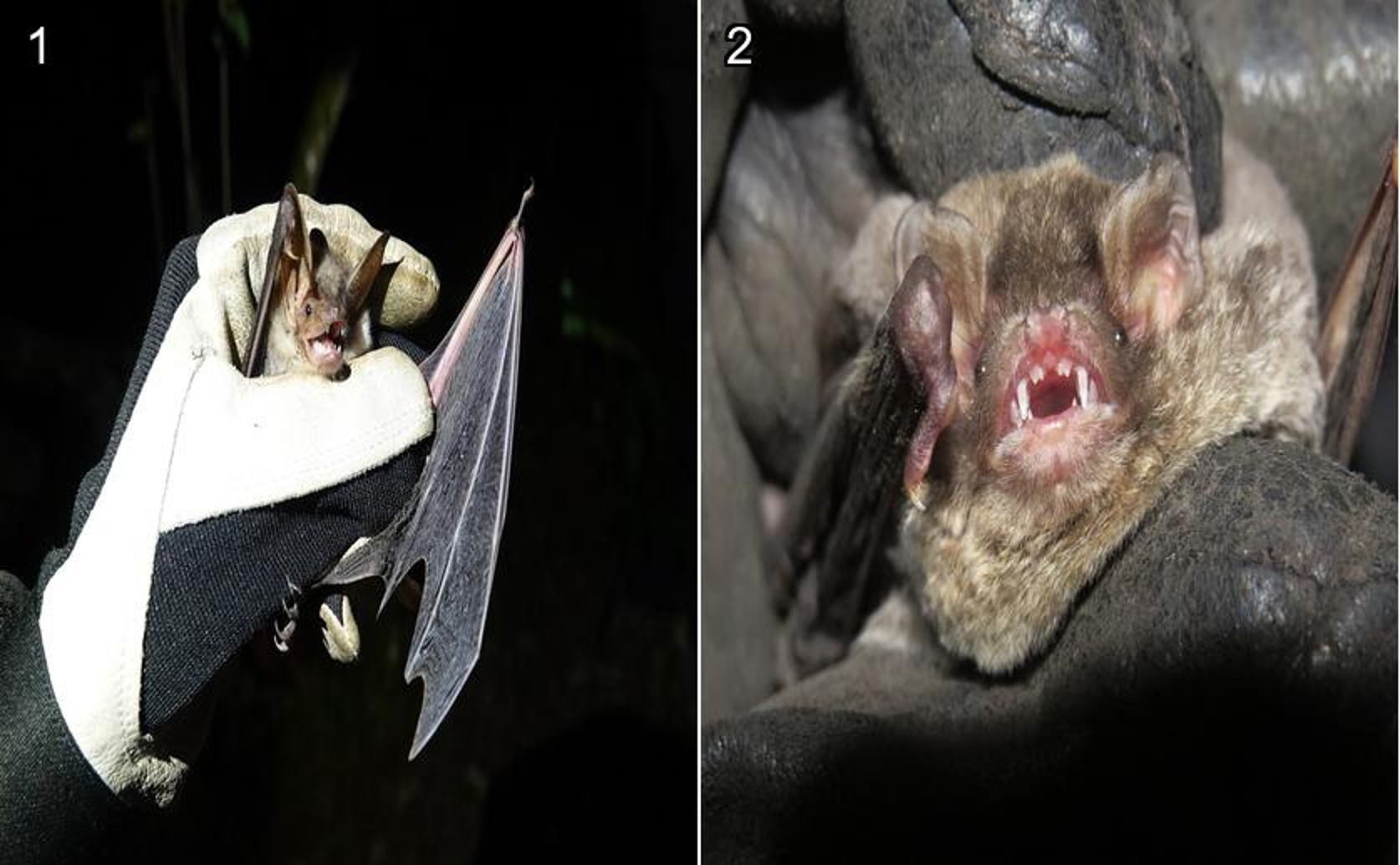
Mouse-eared Bat Myotis myotis (1) and Schreibers' Long-fingered Bat Miniopterus schreibersii (2)

Composite: Natural Science News / CC BY. [Sources]
Adapted from photos by:

Key Findings

  • This study in Portugal identified novel coronaviruses (CoVs) in greater mouse-eared and common bent-wing bats, highlighting their role as viral reservoirs
  • Genetic analysis revealed these bat CoVs have a strong potential to bind to receptors in bats, pigs, and humans, suggesting possible cross-species transmission
  • Beyond CoVs, the bats also carried picornaviruses, adenoviruses, and dependoparvoviruses, demonstrating a complex and diverse viral community within these bat populations
Bats are frequently implicated in the spread of zoonotic viruses – diseases that can jump from animals to humans. Their ability to carry and transmit viruses without showing severe symptoms makes them crucial to understanding and preventing future outbreaks[2]. Identifying the viruses present in bat populations, and how easily they could infect other species, is therefore a key step in public health preparedness. A recent study conducted by researchers at Porto University[1] investigated the occurrence of coronaviruses (CoVs) in bats from Portugal, and assessed the potential for these viruses to infect other species. The study focused on two common European bat species: the greater mouse-eared bat (Myotis myotis) and the common bent-wing bat (Miniopterus schreibersii). Ten bats were captured from an underground roost in central Portugal, and samples including feces, oral swabs, and anal swabs were collected. These samples were initially screened for the presence of CoVs using a technique called Pan-CoV nested RT-PCR – a method designed to detect a wide range of coronaviruses. The initial screening identified three positive samples. Further analysis, using a technique called viral metagenomic sequencing, was then performed on the fecal samples and one positive oral swab. Metagenomic sequencing involves analyzing all the genetic material in a sample to identify the viruses present, even those that haven't been previously characterized. This allowed the researchers to determine the near-complete genetic sequences of two novel CoVs belonging to the Alphacoronavirus genus. These represent the first complete genome sequences of Alphacoronaviruses identified in Portuguese bats. Importantly, the study didn't stop at simply identifying the viruses. Understanding how a virus infects a host is critical. CoVs infect cells by binding to specific proteins on the cell surface – receptors. One important receptor is aminopeptidase N (APN). The researchers used a computational technique called in silico protein docking to predict how strongly the spike protein of the newly identified bat CoV would bind to APN receptors from bats, pigs, and humans. Spike proteins are the part of the virus that mediate entry into cells, and docking studies simulate this binding process using computer models. The results of the protein docking studies were concerning. They predicted strong binding affinity between the bat CoV spike protein and APN receptors in all three species – bats, pigs, and humans. This suggests a potential for cross-species transmission, meaning the virus could potentially infect both pigs and humans. However, the researchers emphasize that this is just a prediction based on the structure of the proteins. Actual infection requires more complex interactions and isn’t guaranteed. Beyond CoVs, the metagenomic sequencing also revealed the presence of other viruses in the bat samples, including picornaviruses, adenovirus, and dependoparvovirus. This highlights the complex viral community – or virome – found in these cave-dwelling bats. This finding is consistent with previous research demonstrating that bats frequently carry multiple viruses[2]. The ability of bats to tolerate these viruses, and even recover from infections, is an area of intense research interest. The challenges of studying protein-protein interactions are well-documented[3]. The flexibility of proteins makes accurately modelling their binding affinity difficult. The use of in silico docking, combined with genomic sequencing, represents a powerful approach to address this complexity. The findings of this study build upon prior research identifying bats as reservoirs of CoVs[4], and contribute to a better understanding of the potential risks of viral spillover. While the study doesn't confirm transmission, it provides a critical first step in assessing the threat posed by these viruses and prioritizing future research.

WildlifeGeneticsEcology

References

Main Study

1) Metagenomic analysis of viral diversity in Portuguese bats

Published 20th September, 2025

https://doi.org/10.1007/s11259-025-10888-5


Related Studies

2) A tale of endurance: bats, viruses and immune dynamics.

https://doi.org/10.2217/fmb-2023-0233


3) Principles of flexible protein-protein docking.

https://doi.org/10.1002/prot.22170


4) Bats and Coronaviruses.

https://doi.org/10.3390/v11010041


Related Articles

An unhandled error has occurred. Reload 🗙