
How surroundings influence anthrax bacteria’s ability to create toxins
Greg Howard
4th December, 2025


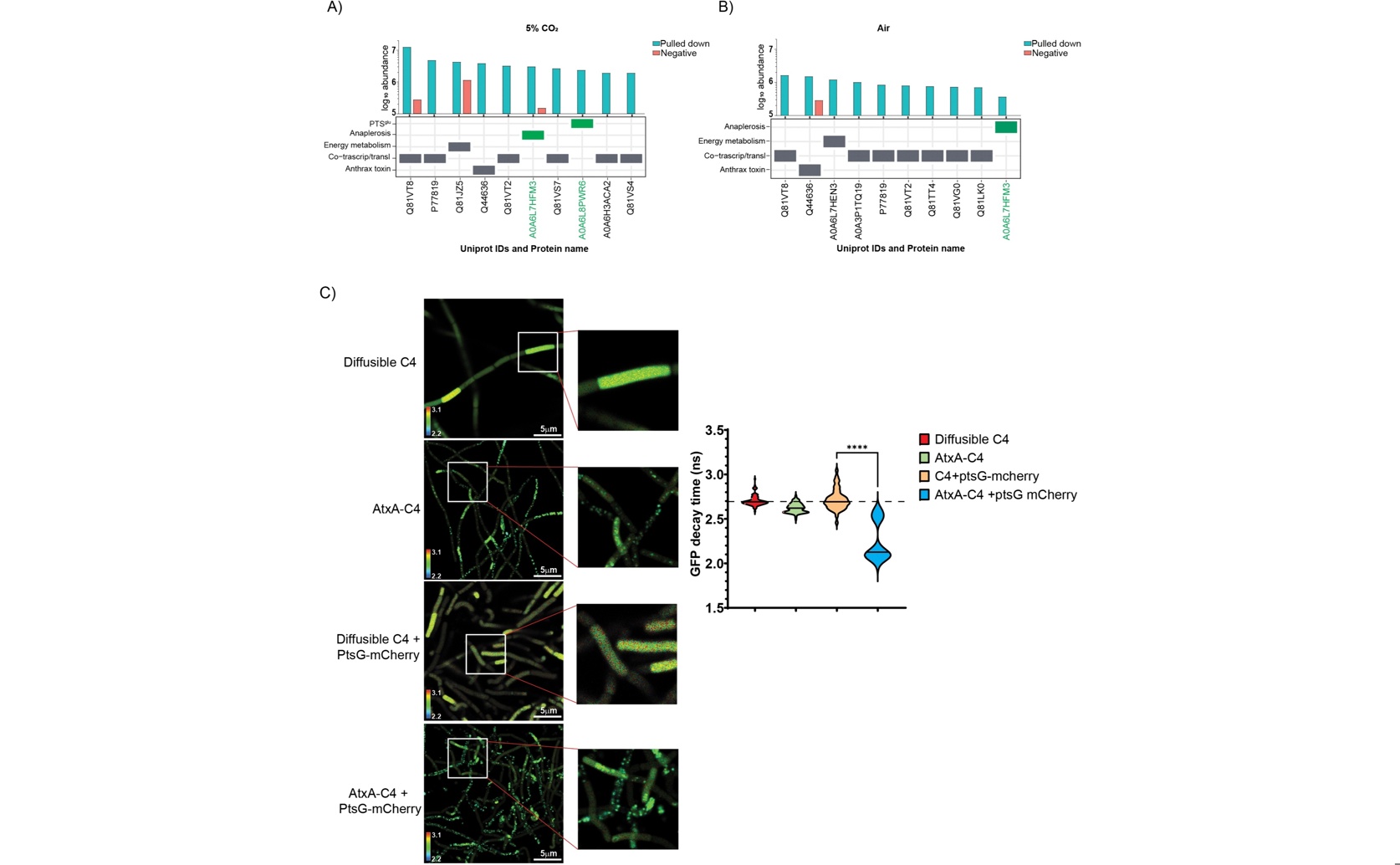
The master virulence regulator AtxA directly links carbon metabolism to virulence in B. anthracis by physically interacting with the glucose transporter PtsG and the metabolic enzyme Pyc, an association demonstrated through co-affinity purification (a, b) and confirmed in live cells with fluorescence microscopy (c).
Key Findings
- Anthrax toxin production is significantly boosted by glucose alongside carbon dioxide, highlighting a key metabolic link to virulence
- The AtxA protein, crucial for anthrax toxins, physically interacts with PtsG—a glucose transporter—and Pyc, an anaplerotic enzyme, linking metabolism directly to toxin activation
- Disrupting PtsG or Pyc significantly reduces anthrax toxin production and severely weakens the bacteria’s ability to cause disease in animal models
EnvironmentGeneticsAnimal Science
References
Main Study
1) Environmental regulation of toxin production in Bacillus anthracis
Published 1st December, 2025
https://doi.org/10.1371/journal.ppat.1013587
Related Studies
2) Bacillus anthracis Virulence Regulator AtxA Binds Specifically to the pagA Promoter Region.
3) Influence of the phosphoenolpyruvate:carbohydrate phosphotransferase system on toxin gene expression and virulence in Bacillus anthracis.
4) Glucose-dependent activation of Bacillus anthracis toxin gene expression and virulence requires the carbon catabolite protein CcpA.
Related Articles
 15th November, 2024 | Jim Crocker