New growing mixes from chia seeds boost oyster mushroom yields

Greg Howard
19th November, 2025

New growing mixes from chia seeds boost oyster mushroom yields

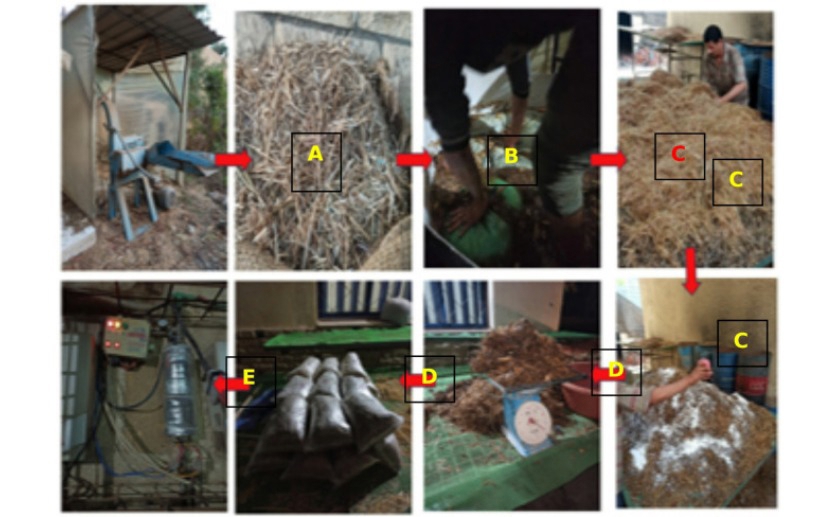
Preparation of mushroom substrates by chopping, washing, mixing with supplements, bagging, and steam-sterilizing rice straw, corn stalks, and chia residues.

Image adapted from: Azzam et al. / CC BY (Source)

Key Findings

  • This Egyptian study investigated using leftover chia seed material as a growth medium for oyster mushrooms
  • Combining chia residue with rice straw (especially 64% chia residue and 22% rice straw) resulted in faster mushroom growth and higher yields
  • Mushrooms grown with chia residue showed improved nutritional qualities, including increased protein and beneficial compounds like antioxidants
The global demand for protein is increasing, driven by population growth and changing dietary habits. Traditional protein sources, like meat, can be resource-intensive and have environmental drawbacks. Finding sustainable and nutritious alternatives is therefore crucial[2]. Mushrooms are emerging as a promising solution, offering a high-quality protein source with a relatively small environmental footprint[2][3]. Simultaneously, agricultural waste presents a significant disposal challenge, but also a potential resource. Researchers at the Agricultural Research Center (ARC) in Egypt have investigated a novel approach to address both issues: using residue from chia seed production as a growth medium for oyster mushrooms[1]. The study focused on utilizing the leftover biomass after chia seeds are processed – termed ‘chia residue’ (CR) – as a substrate, or growing medium, for Pleurotus ostreatus, a common oyster mushroom species. Substrates are crucial for mushroom cultivation, providing the necessary nutrients for growth. Traditionally, substrates include materials like straw and wood chips. The ARC team aimed to determine if CR could effectively replace or supplement these traditional substrates, reducing waste and potentially enhancing the nutritional value of the resulting mushrooms. The researchers experimented with ten different combinations of CR, rice straw (RS), and corn stalks (CS), varying the percentages of each. They also added wheat bran, gypsum powder, and calcium carbonate to optimize the nutrient content. This process utilized “JUNCAO technology,” a cultivation technique known for its efficiency and suitability for various agricultural residues. JUNCAO involves preparing and sterilizing the substrate, inoculating it with mushroom spawn (the equivalent of seeds for mushrooms), and then managing the environmental conditions for optimal growth. The key finding was that formulations containing either a high percentage of rice straw (86%) or a balanced mix of 64% chia residue and 22% rice straw resulted in the fastest and most complete growth of the mushroom mycelium – the vegetative part of the fungus, similar to roots. Mycelial colonization, where the mushroom spreads throughout the substrate, occurred within 23 days in these formulations. Furthermore, these balanced mixtures (64:22 or 22:64 CR:RS) yielded the highest mushroom harvests and demonstrated improved nutritional qualities. This research builds upon existing knowledge regarding the nutritional benefits of both chia and oyster mushrooms[2][3]. Chia seeds are already recognized as a valuable source of nutrients, including flavonoids[4]. Oyster mushrooms themselves are rich in protein, fiber, vitamins, and minerals[3]. By utilizing chia residue as a substrate, the study effectively combines these benefits, potentially creating a mushroom product with an enhanced nutritional profile and increased bioactive compound content. The success of using chia residue aligns with the broader understanding of oyster mushrooms’ ability to break down lignocellulosic materials – the complex compounds found in plant cell walls[3]. This ability makes them ideal for converting agricultural waste into a valuable food source. The study demonstrates that agricultural by-products, previously considered waste, can be effectively repurposed, contributing to a more sustainable food system. The ARC’s work also highlights the potential for marker-assisted selection in chia breeding programs, as demonstrated in a separate study on chia genotypes[4]. While not directly related to the mushroom cultivation aspect, this underscores the broader trend of utilizing scientific advancements to improve agricultural practices and resource utilization. The findings suggest that optimizing chia varieties for residue production could further enhance the viability of this mushroom cultivation approach.

AgriculturePlant ScienceMycology

References

Main Study

1) Novel chia (Salvia Hispanica L.) residue-based substrate formulations for oyster mushroom (Pleurotus ostreatus) cultivation

Published 15th November, 2025

https://doi.org/10.1007/s11274-025-04645-8


Related Studies

2) Nutritional Quality and Biological Application of Mushroom Protein as a Novel Protein Alternative.

https://doi.org/10.1007/s13668-023-00468-x


3) Comprehensive review on oyster mushroom species (Agaricomycetes): Morphology, nutrition, cultivation and future aspects.

https://doi.org/10.1016/j.heliyon.2024.e26539


4) Characterization of two novel chia (Salvia hispanica L.) white and black genotypes via DNA barcoding, physiological, and agronomic traits.

https://doi.org/10.1016/j.jgeb.2025.100545


Related Articles

An unhandled error has occurred. Reload 🗙