Surprising Variety of Powdery Mildew Types Affecting Legumes

Jim Crocker
16th May, 2025

Surprising Variety of Powdery Mildew Types Affecting Legumes

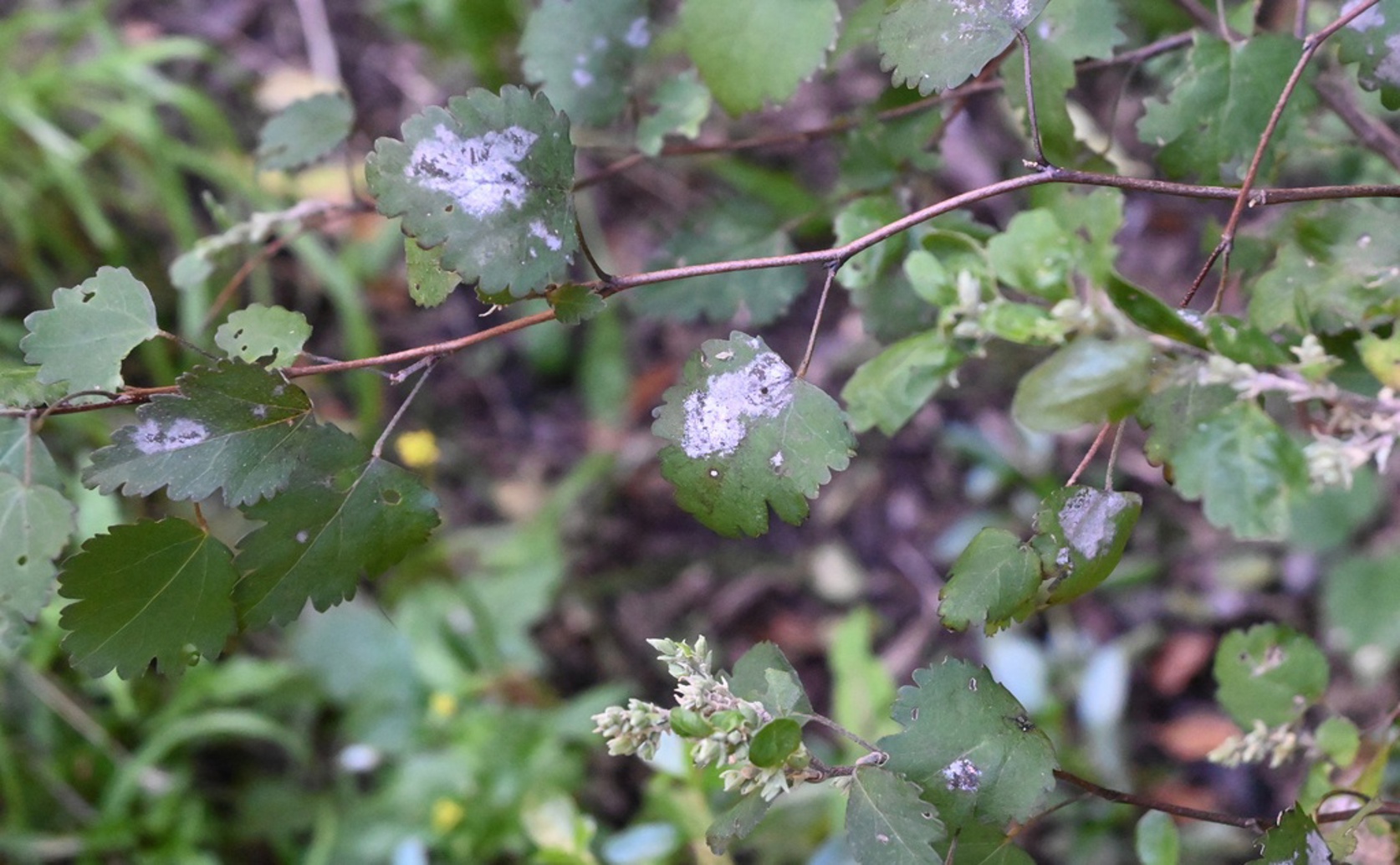
Podosphaera xanthii

Photo adapted from: Jon Sullivan / CC BY (Source)

Key Findings

  • Researchers in Australia identified 11 types of powdery mildew fungi affecting local legume crops using DNA testing and visual inspections
  • The most common fungus, Podosphaera xanthii, was found on 18 different legume species, including key crops like beans and peas
  • These findings help farmers effectively manage mildew and develop legume varieties that are resistant, improving crop health and yields
Powdery mildew is a significant fungal disease affecting a wide range of legume crops worldwide. These pathogens, belonging to the family Erysiphaceae, can severely impact crop yields and quality, posing challenges for agricultural production. Accurate identification of powdery mildew species is crucial for managing the disease and developing effective control strategies. However, this task is complicated by the high diversity and morphological similarities among different mildew species. A recent study conducted by researchers at the University of Southern Queensland[1] aimed to address this issue by identifying powdery mildew species infecting legume hosts in Australia. Australia, with its diverse climates and agriculture systems, hosts a variety of Fabaceae species, making it an ideal location for such a comprehensive study. The research focused on both native and weedy legume species, investigating their susceptibility to different powdery mildew pathogens that could potentially affect crop health. The researchers analyzed 34 fresh and 40 herbarium specimens of powdery mildew collected from 51 different Fabaceae species across Australia. They employed ribosomal DNA internal transcribed spacer (ITS) sequencing, a molecular technique that helps in accurately identifying fungal species by examining specific genetic markers. Additionally, they assessed the morphological characteristics of the mildew samples to complement the genetic data. This dual approach ensured a more reliable identification of the powdery mildew species present. The study identified a total of eleven powdery mildew species infecting 51 Fabaceae species. Among these, Podosphaera xanthii emerged as the most prevalent, infecting 18 host species across ten genera. This finding aligns with previous research highlighting the widespread occurrence of P. xanthii in various agricultural settings[2]. The study also confirmed the presence of ten Erysiphe species on 37 host species spanning 17 genera. Notably, Erysiphe diffusa and Erysiphe cf. trifoliorum were the most common within this group, reflecting patterns observed in other regions and plant hosts[3][4]. Understanding the diversity of powdery mildew species is essential for developing targeted disease management strategies. The identification of specific mildew species allows for the implementation of appropriate fungicides and cultural practices tailored to each pathogen’s characteristics. Furthermore, knowledge of the host range of these pathogens can help in predicting and preventing potential outbreaks in legume crops. This comprehensive catalogue of powdery mildew species on Fabaceae in Australia builds upon earlier studies that have explored the genetic and phylogenetic aspects of these pathogens. For instance, prior research has delved into the genetic mechanisms of resistance in legumes, such as mutations in the MLO1 gene in garden peas that confer resistance to powdery mildew[2]. By identifying the prevalent mildew species in Australia, the current study provides a foundation for further genetic studies aimed at enhancing disease resistance in legume crops. Additionally, understanding the phylogenetic relationships among powdery mildew species, as explored in previous genome-scale analyses[3], can inform breeding programs and the deployment of resistant cultivars. The findings of this study have significant implications for Australian agriculture. By identifying the specific powdery mildew species affecting legume crops, farmers and researchers can better monitor disease spread and implement effective control measures. This is particularly important for maintaining the health of both native and commercial legume species, which are integral to Australia’s agricultural economy and biodiversity. Moreover, the study highlights the importance of integrating molecular techniques with traditional morphological assessments to achieve accurate pathogen identification. This approach not only enhances the reliability of species identification but also contributes to a deeper understanding of the epidemiology and evolution of powdery mildew fungi. Such comprehensive identification efforts are essential for managing emerging diseases and safeguarding legume crops against future threats. In conclusion, the research conducted by the University of Southern Queensland represents a significant advancement in the study of powdery mildew on Fabaceae in Australia. By providing a detailed inventory of the powdery mildew species present, the study supports the ongoing efforts to manage and control this pervasive disease in legume agriculture. Building on previous genetic and phylogenetic studies[2][3][4], this work paves the way for more effective disease management strategies and the development of resistant legume varieties, ultimately contributing to sustainable agricultural practices and food security.

AgriculturePlant ScienceMycology

References

Main Study

1) An unexpected diversity of powdery mildew species infecting the Fabaceae in Australia

Published 15th May, 2025

https://doi.org/10.1371/journal.pone.0323505


Related Studies

2) War and Peas: Molecular Bases of Resistance to Powdery Mildew in Pea (Pisum sativum L.) and Other Legumes.

https://doi.org/10.3390/plants11030339


3) Beyond Nuclear Ribosomal DNA Sequences: Evolution, Taxonomy, and Closest Known Saprobic Relatives of Powdery Mildew Fungi (Erysiphaceae) Inferred From Their First Comprehensive Genome-Scale Phylogenetic Analyses.

https://doi.org/10.3389/fmicb.2022.903024


4) Phylogeny and taxonomy of powdery mildew caused by Erysiphe species on Lupinus hosts.

https://doi.org/10.1080/00275514.2021.1973287


Related Articles

An unhandled error has occurred. Reload 🗙