Root Fungi Improve Phosphorus Absorption and Soil Health in Salty Soils

Greg Howard
1st September, 2025

Root Fungi Improve Phosphorus Absorption and Soil Health in Salty Soils

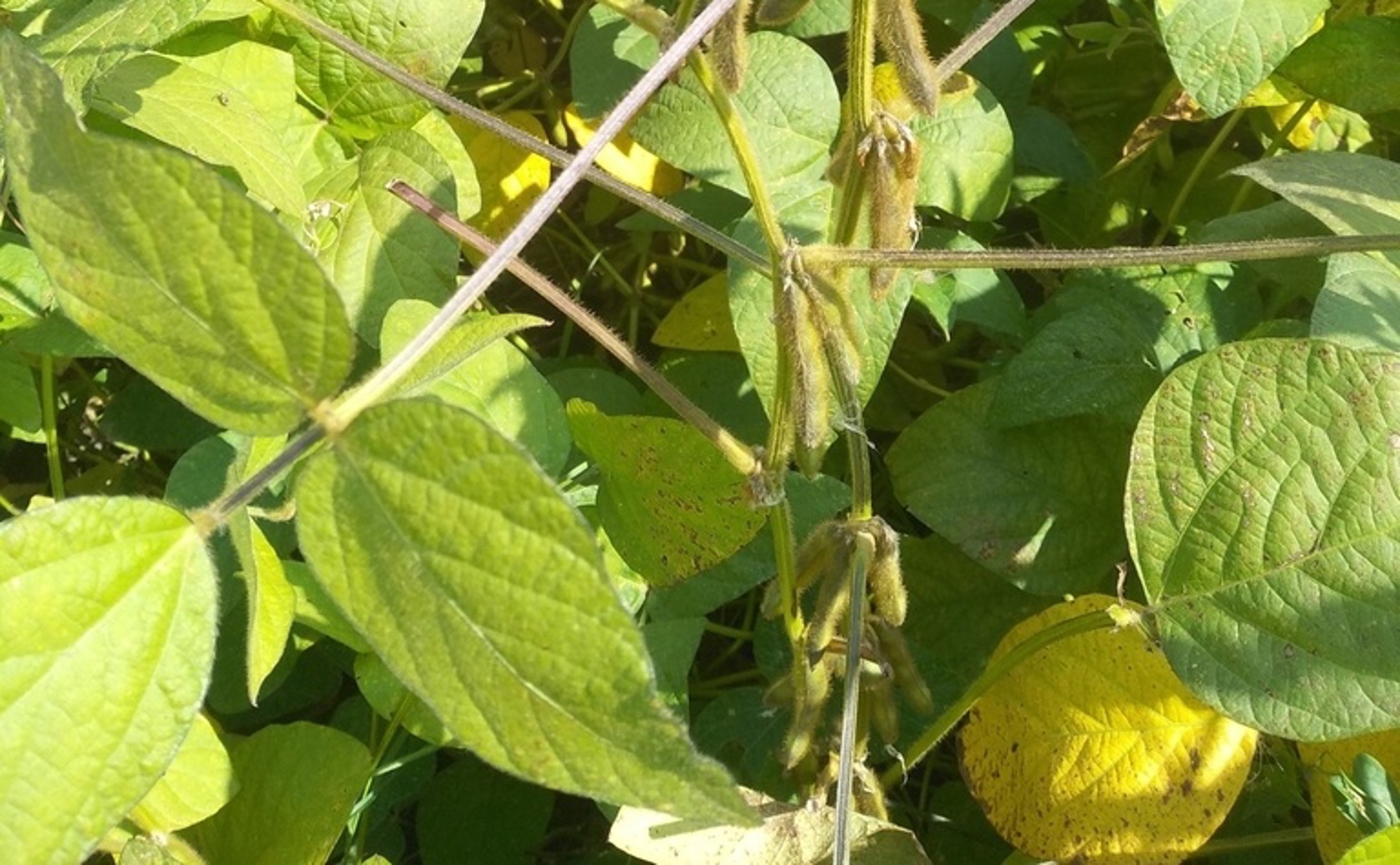
Soybean (Glycine max)

Photo adapted from: radek_sokol / CC0 1.0 (Source)

Key Findings

  • In a study conducted at Shihezi University, combining beneficial fungi (AMF) with low phosphorus fertilizer improved soybean growth in salty soil
  • Adding AMF to soil with low phosphorus (50 mg/kg) increased available phosphorus by over 23% and doubled leaf phosphorus content compared to soybeans without fungi and high phosphorus
  • AMF inoculation helped soybeans efficiently use phosphorus, directing more of it to the stalks for grain development and reducing the need for high fertilizer levels to achieve optimal biomass
Ensuring global food security faces ongoing challenges, particularly due to soil conditions that limit crop growth. Salinity – a high concentration of salt in the soil – is a major issue, impacting agricultural yields in many regions[2]. Traditional methods to combat salinity often have limited success, leading researchers to explore biological solutions, specifically the use of beneficial fungi that live in plant roots, called endophytes[2]. These fungi can improve plant health and resilience, and recent work has focused on extracting them from plants that naturally thrive in salty environments to help other crops cope with similar stress[2]. Researchers at Shihezi University recently investigated how combining these fungi with phosphorus fertilizer could improve soybean growth under saline conditions[1]. Soybeans are a vital crop, but are sensitive to salt stress, making them a good candidate for this type of study. The research team conducted a pot experiment, testing different combinations of three arbuscular mycorrhizal fungi (AMF) – Funneliformis mosseae, Rhizophagus intraradices, and Diversispora epigaea – with varying levels of phosphorus (P) fertilizer. They used a salt-sensitive soybean variety, ‘Wuxing No.2’, and monitored nutrient levels in the soil and plants at different stages of growth: flowering, pod development, and harvest. The study found that introducing the AMF mixture had a significant impact, especially when phosphorus levels were low. Specifically, at a low phosphorus application of 50 mg P kg−1, the amount of available phosphorus in the soil increased by over 23% compared to soybeans grown without the fungi. This increase in available phosphorus directly translated to greater nutrient uptake by the plants. Nitrogen, phosphorus, and potassium levels all increased substantially, with leaf phosphorus content nearly doubling – reaching 4.72 mg·g−1 – compared to soybeans receiving high phosphorus without the fungal inoculation. This improved nutrient uptake wasn’t just about how much phosphorus the plants absorbed, but also where it went. The AMF inoculation optimized nutrient partitioning, directing more phosphorus to the stalks, which is crucial for grain development. The phosphorus transport rate in the stems increased by 37.27% in the inoculated soybeans receiving the low phosphorus treatment. This suggests the fungi helped the plants efficiently allocate resources to where they were most needed. Interestingly, the uninoculated soybeans required a much higher phosphorus level – 250 mg P kg−1 – to achieve comparable biomass. Root fresh weight peaked at 13.71g under these conditions. This highlights the efficiency gains achieved through AMF inoculation; the plants were able to thrive with less fertilizer input. These findings build upon earlier research demonstrating the benefits of AMF in mitigating salt stress[3][4]. Studies have shown that AMF enhance nutrient acquisition – particularly phosphorus, nitrogen, magnesium, and calcium – in plants exposed to salinity[4]. They also help maintain a healthy potassium-to-sodium ratio within the plant, which is critical for salt tolerance, and trigger biochemical and physiological changes that improve stress resistance, like increased production of proline and carbohydrates[4]. The research from Shihezi University extends this knowledge by specifically examining the interaction between AMF and phosphorus, demonstrating that this combination can be particularly effective in soybean cultivation. The study’s results suggest that using AMF inoculation, especially in conjunction with lower phosphorus fertilizer applications, can improve soil fertility, enhance plant nutrient uptake and utilization, and promote more efficient use of agricultural resources. This is particularly relevant given the increasing need for sustainable agricultural practices and the desire to reduce reliance on chemical fertilizers.

AgriculturePlant ScienceMycology

References

Main Study

1) Arbuscular mycorrhizal fungi enhance soybean phosphorus uptake and soil fertility under saline-alkaline stress

Published 29th August, 2025

https://doi.org/10.1038/s41598-025-15910-z


Related Studies

2) The Potential of Endophytes in Improving Salt-Alkali Tolerance and Salinity Resistance in Plants.

https://doi.org/10.3390/ijms242316917


3) Effect of Arbuscular Mycorrhizal Fungi (AMF) on photosynthetic characteristics of cotton seedlings under saline-alkali stress.

https://doi.org/10.1038/s41598-024-58979-8


4) Arbuscular mycorrhizal fungi in alleviation of salt stress: a review.

https://doi.org/10.1093/aob/mcp251


Related Articles

An unhandled error has occurred. Reload 🗙