Snake venom changes blood and spleen function, and antivenom shows promise

Greg Howard
13th November, 2025

Snake venom changes blood and spleen function, and antivenom shows promise

Histological analysis reveals that while antivenom treatment reduces systemic toxicity from Macrovipera lebetina obtusa venom, splenic tissue damage persists even after recovery.

Image adapted from: Avagyan et al. / CC BY (Source)

Key Findings

  • This study, conducted in Armenia, investigated how Macrovipera lebetina obtusa venom affects blood and spleen function in rats and mice
  • The venom disrupts blood clotting, prolonging clotting times even after antivenom treatment, suggesting current antivenoms don’t fully reverse this effect
  • Despite antivenom use, venom causes lasting damage to the spleen and skin tissues, including hemorrhage and inflammation, indicating incomplete recovery
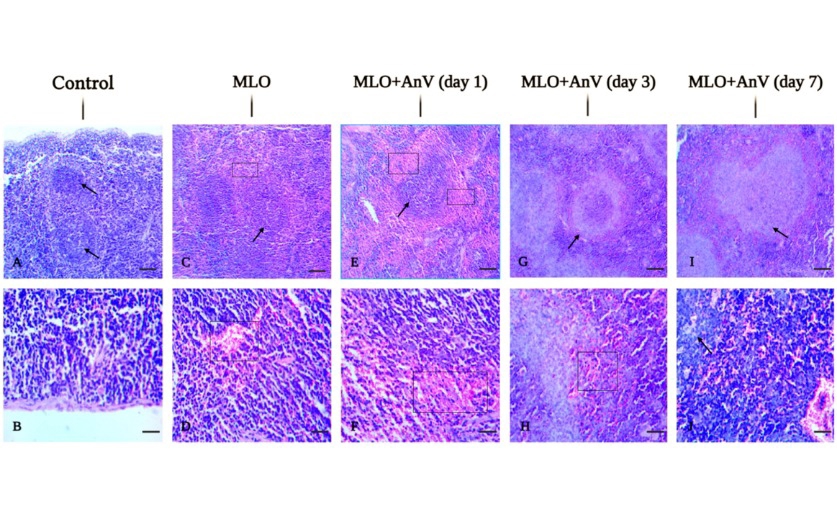
Snakebite envenomation remains a significant, yet often overlooked, global health concern[2]. Millions of bites occur annually, resulting in tens of thousands of deaths and lasting disabilities, particularly in rural areas with limited access to healthcare[2]. Effective treatment relies heavily on antivenoms – the only specific antidote – but these can be expensive to produce, have limited availability, and sometimes aren’t fully effective against the diverse range of snake venoms[2][3]. A recent study conducted by researchers from Yerevan State University, Yeolyan Hematology Center, Orbeli Institute of Physiology, Yerevan State Medical University, and Fundacao de Medicina Tropical Dourado[1] investigated the effects of venom from the Macrovipera lebetina obtusa viper, a particularly dangerous species found in Armenia and surrounding regions, and tested the effectiveness of a potential new antivenom. The study focused on understanding how the venom impacts the body, specifically looking at blood, blood clotting, and tissue damage in laboratory rats and mice. Researchers observed that the venom caused an increase in red blood cell concentration and hemoglobin levels, suggesting fluid leaked from blood vessels into surrounding tissues – a process known as hemoconcentration. Simultaneously, the venom significantly disrupted the blood’s ability to clot normally, prolonging the time it took for blood to coagulate. This disruption was particularly pronounced in the prothrombin time (PT) test, a measure of how long it takes blood to clot, and this abnormality persisted even after treatment with the experimental antivenom. Further investigation involved examining tissue samples from the spleen and skin. These revealed progressive damage, including bleeding, swelling (edema), and an abnormal increase in the size of lymphoid follicles – structures within the spleen involved in immune responses. These tissue changes were still present up to seven days after the snakebite, indicating long-lasting effects of the venom. The experimental antivenom, derived from sheep (ovine), offered some protection, improving certain blood parameters. However, it wasn’t able to completely reverse the venom’s effects on blood clotting or the observed tissue damage. This highlights a critical issue: current antivenoms, often produced using horses or sheep[2], may not fully neutralize all the toxic components within a snake’s venom. The enormous complexity of snake venoms, varying even within the same species, necessitates a continuous reassessment and potential redesign of antivenom production[2]. This research builds upon the understanding that antivenom efficacy needs rigorous preclinical testing, evaluating not just the ability to prevent death, but also the neutralization of specific venom activities like those causing bleeding, muscle damage, and clotting disorders[4]. The findings also emphasize the need for exploring additional treatments alongside antivenom therapy. The study suggests that therapies targeting blood vessel integrity and the body’s immune response could be beneficial in managing viper envenomation. The challenges in providing adequate antivenom supplies are well-documented[3][5]. Public manufacturing laboratories play a crucial role in ensuring availability, but often face difficulties[5]. The study’s findings reinforce the importance of investing in research to improve antivenom effectiveness and exploring strategies to lower production costs, making this life-saving treatment more accessible[3]. The persistence of clotting abnormalities despite antivenom administration suggests that a more comprehensive approach to treatment, potentially including adjunctive therapies, is needed to improve outcomes for patients suffering from Macrovipera lebetina obtusa envenomation.

MedicineBiochemAnimal Science

References

Main Study

1) Hematological and coagulation alterations and splenic response following Macrovipera lebetina obtusa envenomation: Evaluation of ovine-derived experimental antivenom

Published 11th November, 2025

https://doi.org/10.1371/journal.pntd.0013724


Related Studies

2) Clinical aspects of snakebite envenoming and its treatment in low-resource settings.

https://doi.org/10.1016/S0140-6736(23)00002-8


3) Antivenom: the most cost-effective treatment in the world?

https://doi.org/10.1016/j.toxicon.2010.02.012


4) Preclinical Evaluation of the Efficacy of Antivenoms for Snakebite Envenoming: State-of-the-Art and Challenges Ahead.

https://doi.org/10.3390/toxins9050163


5) Global Availability of Antivenoms: The Relevance of Public Manufacturing Laboratories.

https://doi.org/10.3390/toxins11010005


Related Articles

An unhandled error has occurred. Reload 🗙