
Using Metabolic Networks to Study Salmonella Growth in the Intestine
Jenn Hoskins
12th March, 2025


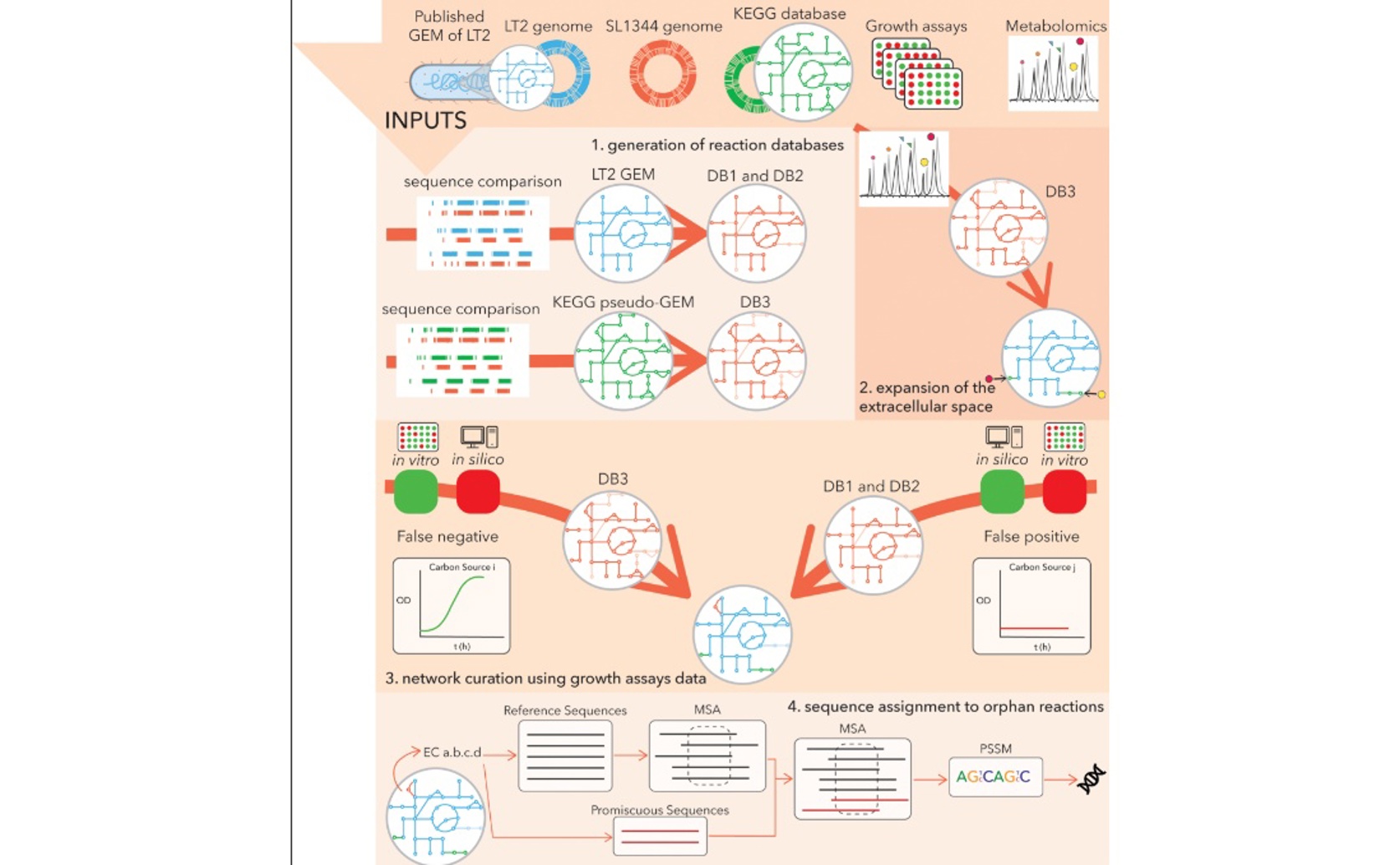
The iNTS_SL1344 genome-scale metabolic model was reconstructed through a four-step workflow integrating KEGG-based genome annotation, pathway expansion for gut-relevant metabolites, curation against in vitro growth data, and bioinformatic prediction of catalyzing genes, enabling analysis of Salmonella Typhimurium SL1344 metabolism in the murine intestinal environment.
Key Findings
- Researchers at EPFL, ETH Zurich, and University of Delaware developed a detailed model of Salmonella bacteria in the mouse gut
- They identified essential nutrients and genes Salmonella needs to grow, pointing to new targets for treatments
- The study suggests enhancing beneficial gut bacteria could naturally inhibit Salmonella, offering alternative prevention methods
References
Main Study
1) Metabolic network reconstruction as a resource for analyzing Salmonella Typhimurium SL1344 growth in the mouse intestine
Published 11th March, 2025
https://doi.org/10.1371/journal.pcbi.1012869
Related Studies
2) Salmonella Typhimurium Diarrhea Reveals Basic Principles of Enteropathogen Infection and Disease-Promoted DNA Exchange.
3) Import of Aspartate and Malate by DcuABC Drives H2/Fumarate Respiration to Promote Initial Salmonella Gut-Lumen Colonization in Mice.
4) Microbiota-derived hydrogen fuels Salmonella typhimurium invasion of the gut ecosystem.
5) A community effort towards a knowledge-base and mathematical model of the human pathogen Salmonella Typhimurium LT2.
Related Articles
 13th July, 2024 | Jenn Hoskins