Structure of scent glands in Japanese martens revealed by detailed study

Jenn Hoskins
11th November, 2025

Structure of scent glands in Japanese martens revealed by detailed study

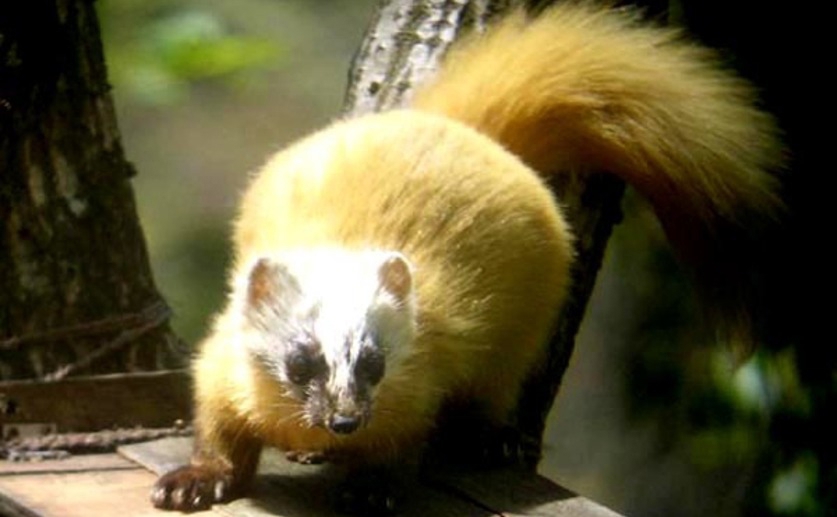
Japanese Marten (Martes melampus)

Photo adapted from: lvovl2 / CC BY (Source)

Key Findings

  • Japanese martens, found in Japan, possess abdominal scent glands regardless of sex, season, or subspecies
  • These glands contain both typical sebaceous glands—producing oily scents for long-lasting marking—and unique specialized glands
  • Specialized glands likely secrete a different chemical composition than typical oils, potentially enabling complex scent communication for territory maintenance
Scent marking is a common behaviour in many mammals, used for communication relating to territory, mating, and individual recognition. While it’s known that Japanese martens maintain territories, whether they use scent marking to do so, and if so, how, was previously unknown. A recent study conducted by researchers from Obihiro University of Agriculture[1] investigated the presence and nature of scent glands in this species. The study focused on abdominal glands found in nine Japanese martens – eight Martes melampus tsuensis and one Martes melampus melampus – all of which were animals found deceased after being hit by vehicles. The researchers discovered that all martens, regardless of sex, season, or subspecies, possessed these abdominal glands. These glands were located near the genitals and visibly secreted a brown substance onto the surrounding skin. Microscopic examination revealed the glands were composed of two main types of glands: sebaceous and specialized glands. Sebaceous glands are common in mammals and produce an oily secretion, often containing pheromones – chemical signals that trigger a social response in other members of the species. These glands were widespread throughout the abdominal glands. The specialized glands were more concentrated in specific areas and appeared to be connected to the sebaceous glands via ducts. Interestingly, the specialized glands didn’t appear to function in the same way as typical sebaceous glands. Sebaceous glands use a process called holocrine secretion, where the entire cell breaks down to release its oily contents. However, staining techniques used in the study indicated the specialized glands likely use a different method. While sebaceous glands strongly stained with Oil Red O (a dye that highlights fats), the specialized glands barely stained at all. This suggests the specialized glands secrete something other than a simple oil, potentially a more complex mixture of chemical compounds. This finding builds on previous research into scent glands and pheromones in other mammals. For example, studies on goats demonstrated that pheromones responsible for reproductive behaviour are produced in sebaceous glands, and their production is dependent on the hormone testosterone[2]. Similarly, research on ring-tailed lemurs identified specific aldehydes – a type of chemical compound – secreted from scent glands that attract females during the breeding season, also in a testosterone-dependent manner[3]. The Japanese marten study suggests a similar system may be at play, with the specialized glands potentially producing unique chemical signals. The study also touches upon the importance of the vomeronasal organ (VNO) in detecting these chemical signals. The VNO is a specialized sensory structure that detects pheromones and other chemical cues, and is particularly well-developed in many mammals[4]. While this study didn’t directly investigate the VNO in Japanese martens, the presence of specialized glands suggests the potential for complex scent communication that would rely on such a system. The researchers propose that the specialized glands may have evolved from sebaceous glands, adapting to produce a different type of secretion. The connection between the two types of glands via ducts supports this idea. Further research is needed to identify the exact chemical composition of the secretions from both the sebaceous and specialized glands, and to determine how these scents are used by Japanese martens in their social lives. This could involve behavioural studies to observe how martens respond to different scents, and chemical analysis to identify the specific compounds present in the secretions.

WildlifeAnimal ScienceEvolution

References

Main Study

1) Morphological and histological features of abdominal glands in Japanese marten (Martes melampus)

Published 7th November, 2025

https://doi.org/10.1371/journal.pone.0334743


Related Studies

2) Testosterone-dependent primer pheromone production in the sebaceous gland of male goat.

Journal: Biology of reproduction, Issue: Vol 62, Issue 3, Mar 2000


3) Key Male Glandular Odorants Attracting Female Ring-Tailed Lemurs.

https://doi.org/10.1016/j.cub.2020.03.037


4) Morphological and histological features of the vomeronasal organ in the brown bear.

https://doi.org/10.1111/joa.12673


Related Articles

An unhandled error has occurred. Reload 🗙